Sunday, April 09, 2006

Talie Synchronicity: Part 2


Izzy Talie (here spelled Taly) was one of my father's and my Uncle Hy's best friends. He was also a favorite of mine and my cousins' because every Hanukkah, celebrated at 765 FDR Drive, he would bring us really great gifts. Talie never married and always had different, usually Hispanic girlfriends. He still has one, over 25 years his junior, even at age 85. He drove a sporty Pontiac and knew how to fix cars and other mechanical devices- an awe inspiring skill to a Jewish kid. He was truly the Fonz, before the Fonz ever existed. When I found Talie's card among the dumpster mix I was floored. I had been meaning to get together with Talie for a while. When my father died about three years ago I called him. It took some doing to track him down. He felt bad that he wasn't at the funeral and I felt guilty I hadn't been more determined in finding him. Little did I know that the opportunity to call him would come under sad circumstances, the death of my Uncle Hy.

52 Cleanup and Talie: Another Synchronicity Tale

One of the earliest initiatives of a new principal was an anti-clutter campaign. Granted teachers are notorious hoarders, but somehow the vast energy invested in this effort paled in comparison to many long time successful initiatives that were eliminated, like student of the month and attendance award certificates. These awards were matched with hard wrought gift coupons from local merchants. Another empty and gratuitous initiative was an essay contest where kids had to write about what made our school great. However, any submission that mentioned the previous principal and the popular programs he put in place were mysteriously eliminated from the competition. One day while dumpster diving among some of the anti-clutter treasures thrown out on the sidewalk (foamboard one of my chief sought materials) I found an old file cabinet marked S-T with crumbling student record cards, some of them going back to the early 1900's-truly an archivists wet, in this case dry, dream. More to come

52 Pickup

The Sunday Times' article on yet another DOE reorganization: The usual media puff piece for the suits that run Tweed-but there were a few jibes towards the end. "Skeptics say that the administration is wasting time and money on the consultants and that the mayor, a businessman, and the chancellor, a lawyer, remain fixated on systems and structure, rather than the interactions inside classrooms."Isn't it insane to play 52-pickup another time when structure is far less important, far less consequential, than the daily dealings between teachers and students?" asked Diane Ravitch, the education historian and frequent critic of the administration. Noting that the city's four-year high school graduation rate of about 53 percent had barely budged during Mr. Bloomberg's tenure, Ms. Ravitch added: "It is hard to see why this number will increase as the result of yet another massive upheaval in the structure of governance." And Randi Weingarten, the president of the city teachers' union, said: "Joel and all his management guru types never talk to anyone who actually does the work — that's what so mind-boggling. Our mission isn't constantly trying to reinvent ourselves into an entrepreneurial model that will get golden globes at the Harvard Business School. How do we help all 1.1 million kids get a decent high school education?" BTW that's Sir Michael Barber on the left, Tony Blair's adviser called in to help-as if we didn't have enough of these yutzes of our own.

Uncle Hy

From the newletter of the sisterhood of Kehila Kedosha Janina: “On Monday, February 13th, the President of Kehila Kedosha Janina, Hy Genee, died.  At least his body did.  His spirit will live on with us forever.  Those who were privileged to know Hy will truly miss this exceptional man.  Hy had no fancy degrees.  His knowledge was learned from 83 years of experience and an innate perception that came from the heart.  He did not acquire vast amounts of monetary wealth over the course of his life.  His wealth was measured by his loving family and the extended family of those he personally touched over the years.  Hy truly exemplified in everything he did what a man, especially a Jewish man, should be.  He took the tenets of his faith seriously, not only lovingly observing the rituals, but living his Judaism on a daily basis, observing the true essence of his faith in how he treated his fellow man.”
 

Saturday, April 08, 2006

Inside Schools

An excerpt from insideschools.org concerning PS20: "The day of our visit, the gym of PS 20 had been transformed to resemble the school's surrounding community. Instead of leading to storefronts, however, hand-constructed street signs and sidewalks led to class projects celebrating the Lower East Side's history and diversity. Class representatives, from kindergartners to 6th graders, eagerly showed off their projects to visitors, guiding them through laptop computer presentations made using PowerPoint business software. A 3rd grade class had created telephone booth-shaped time machines that transported users to Delancey Street, circa 1983; a 6th grade class had documented examples of neighborhood street art and created a mural reflecting a message they wanted to convey, peace; Chinese bilingual students displayed a history of Chinatown's Mott Street. This bubbly "learning fair" was a project characteristic of PS 20, a school that emphasizes both art and a strong sense of community. Thanks to grants secured by principal Leonard Golubchick, professionals from the Henry Street Settlement, a venerable Lower East Side social service organization, work on all kinds of activities with the kids. The day we visited, for example, 5th graders were learning fundamentals of architecture and split up into teams to propose plans for redesigning part of the school building. Another instructor had first graders doing warm up exercises, allowing them to move around the room and use up excess energy before they began composing a story together. In classrooms of the younger grades, we heard a lot of music. Students read from genuine literature, not textbooks, but the school also places emphasis on phonics. A full-time staff developer for literacy told us that teachers were trained in the Orton-Gillingham method of reading instruction, which relies on structured lessons in phonics and encourages children to see, hear, and even touch letters.

The above was written about PS20 in 2003. I am proud to say that I had a lot to do with the technology aspect of PS20's learning fair over the last several years. I submitted this entry, my name included, to inside schools two weeks ago. So far it has not been posted. "Mindful of the fact that I am a "disgruntled" former staff member, (a part-time retired, mostly pro bono, technology and social studies specialist who was asked to leave for whistle blowing) a visit to this school today would find a place stripped of many of the special things mentioned above. With the retirement of the maverick Dr. Golubchick, the inexperienced and untenured administration is at the mercy of a regional leadership that forces a lock step approach to literacy, i.e. teacher's college reading writing workshop.The "jewel" of the lower east side that Mr. Winerip describes, has probably the most up to date technology equipment in the city. Yet that equipment is used now primarily for programmed fluency instruction instead of constructivist projects. The famed annual learning fair in the gym has had its over ten year history ended.

Monday, April 03, 2006

Marinella

It's been about two months since my last post. A lot has been on my mind: The passing of my Uncle Hy (that's him in the photo), my daughter having a serious operation (she's fine), leaving my old school and my beloved lower east side (more to come on that). After my father died I tried to fill in gaps about my father's life by questioning my Uncle. In the last year of my father's life when he was pretty ill, any attempt to talk about the old days was thwarted with, "Who cares about that!" Unfortunately, I didn't persevere. Here's one gem. One of my uncle's favorite songs (at least of the non-Greek variety) was a little known Artie Shaw number called Marinella. My father and uncle were childhood friends and as well sons of immigrants from Janina, Greece. They married two "yid" sisters. They belonged to a social club on East Broadway in December 1941. I think it might have been named the Allbros (short for Allen and Broome Street, the vicinity from where many of the Greek Jews lived. Marinella was near the top of the charts on December 7th. When news of Pearl Harbor reached home the club members knew things would change and that they would all eventually be drafted. They played Marinella, with it's strange haunting melody, over and over that day. Here's Marinella

Sunday, February 05, 2006

Super Bowl Sunday In Detroit

More from alternet via Dave Zirin and a further argument of why the need for Black History month. "As the Associated Press wrote, "Much of the rest of Detroit is a landscape dotted with burned-out buildings, where liquor stores abound but supermarkets are hard to come by, and where drugs, violence and unemployment are everyday realities." Ryan Anderson of Detroit, wrote me a chilling email saying, "The mood is one of Orwellian-flavored siege: dire warnings of a 30-day police speeding ticket bonanza, designed to raise $1 million for the construction of a damn bridge welcoming out-of-towners to the Motor City; the mayor, the governor, and every other notable on the radio urging us all to 'show 'em what we got' [read: Don't further sully our already bad reputation]; and the homeless being taken to a three-day 'Superbowl Party,' where they'll get the actual food and shelter they need until the big game's over, after which they'll be kicked back out on the streets. Welcome to the Poorest City in America, sponsored and enabled by lily-white Oakland County." Anita Cerf, a teacher in Detroit also wrote to me, "I am appalled by the living conditions of its residents as contrasted with the hype for the Super Bowl and the fancying up of downtown for all the rich out-of-town guests. I live on the East Side, which probably has one of the highest poverty rates in the country, and I teach high school dropouts on the Southwest Side. My students have horrific problems, many of which stem from these economic and social conditions. It's disgusting." Here's Zirin's site

Groundhog Day

I love this movie. I don't know all the reasons, but Andie MacDowell, I'm sure is part of the reasoning. Here's some "pseudo-intellectuallist" reasoning from transparency.now,"In telling this story, the movie hits on a message that is commonly found elsewhere and that appears to express an essential truth. When we get beyond denial and resentment over the conditions of life and death, and accept our situation, it tells us, then life ceases to be a problem and we can become authentic and compassionate. Murray's character makes two such breakthroughs: first he accepts being condemned to being stuck in the same day, then he accepts the fact that everyone else is condemned to die." The rest of it can be found here Of course, some others can consider themselves authentic and compassionate if they attend church and synagogue regularly and know the torah chapter and verse.

Who Needs Black History Month?

From Paul Halley: "During an interview with Mike Wallace on "60 Minutes" last month, Academy Award winning actor Morgan Freeman called Black History month "ridiculous," igniting a firestorm of debate about its observance. Freeman told a visibly shocked Wallace, "I don't want a Black History month. Black History is American History. There's no white history month........I don't know about you, but I simply cannot agree with Freeman. We will not solve racial issues in this country by putting our collective heads in the sand and hoping they will go away. We can't run from our own racial past and delude ourselves that everything is ok in America. Our society still remains segregated in many ways, from where we live and where we worship, to who survives a hurricane. We like to think that we are a society beyond racism, but reality doesn't bear that out. Race is America's great taboo, and the fact is that there are differences -- cultural and physical -- between people of different races. We need to acknowledge those differences. Pretending like they don't exist is ignoring the elephant in the room. Mike Wallace is a white guy. Morgan Freeman is a black guy. Why ignore the facts? It's been said that history is written by the victors. Until American history becomes more inclusive of the contributions of all its citizens, Black History Month remains one of the few tangible ways that we can keep our nation's history accurate." for the full story go here

Wednesday, February 01, 2006

The Hidehoblog

It's nice to know that someone besides an assorted collection of doe and cuny yutzes, who check for updates on my disses of them, read my blog on a regular basis. A blogger, from the French hidehoblog, appreciated the Calloway stuff and also Letterman's poke at O'Reilly. I discovered some great rare Calloway images there and put together a Calloway slide show to honor the occasion

Wednesday, January 18, 2006

Zorro and History


Far from 6th grade ss scope and sequence, but who cares at this stage, I tried to work in a combined Zorro history/literacy/tech lesson with the largely Spanish ELL learner's in Ms. Diaz's class. I used the 1940 movie previously mentioned and did an activity where they used a word template to explain some of the spanish expressions used in the movie dialogue. Here's some info on the real Zorro and Isabel Allende's recent book on the tale: "The recent release of a new Zorro movie has rekindled interest in the masked freedom fighter of colonial Mexico. Stars of the big screen Antonio Banderas and Sir Anthony Hopkins are the central characters of the hit film “The Mask of Zorro,” but behind the mask of the real Zorro was an Irish Soldier of Fortune, a native of Wexford. The masked hero and freedom fighter “Zorro” was the creation of Johnson McCulley, and first appeared in August 1919 as a serial in a pulp fiction journal entitled All-Story Weekly. Originally featured as a 5-part tale entitled “The Curse of Capistrano,” numerous pulp fiction magazines carried the various tales of Zorro between 1922 and 1959, including Argosy, West, Short Stories for Men and Cavalier Classics. Historically, whenever and wherever oppression exists, the people who are subject to it look for a heroic figure to defend them and to punish their persecutors. Such a paladin was Robin Hood, another is the legendary Zorro. One of my favorite authors, Isabel Allende, has reached deep into her ample well of talent and brought forth a hero who is more human than demigod. She has breathed fresh life into the Zorro of myth, and gifted him with a heart, a soul, a good mind, an indomitable spirit and human fallibilities. This beautifully told tale of adventure and classical romance is chock-full of swashbuckling swordplay, ocean voyages, pirate attacks, Native American lore and rites, detailed fencing episodes, social injustice, secret underground societies, evil villains, duels at dawn, damsels in distress, unrequited love, gypsy camps, noble drawing rooms, drama, rollicking humor, vivid characters, tremendous energy...and so much more."

Zorro

I remember, as a kid, watching The Mark of Zorro with my father and crying at the ending. That's the part where father and son are fighting together against the Spanish soldiers led by the evil Basil Rathbone. My father would cry too, as tough a guy as he was, at a lot of sentimental war movies. Maybe with Zorro it touched me that I imagined us joining together in some way, which we rarely did. Here's the rousing theme by Alex Newman. More on Zorro later.

An Infomercial

For those of you that are non-sirrius users who are looking for a replacement for Howard Stern, (BTW, I'm just as immature as the next guy and I listened to Stern years ago, but my god isn't it boring after awhile!) from Time Out Magazine: "Rachel Maddow WLIB (1190 AM), Mon–Fri 7–9am Right-wingers like Rush Limbaugh make fun of Air America's low ratings, as well as the liberal radio network's reliance on "celebrity" hosts like Al Franken and Janeane Garofalo. But Air America's future is found in Rachel Maddow, a fast-talking, openly gay 32-year-old former Rhodes Scholar, who talked her way from a Western Massachusetts AM station to a cohosting slot on Air America's Unfiltered (with Chuck D and Daily Show cocreator Lizz Winstead) on the occasion of the network's launch in 2004. After Unfiltered dissolved early last year, Maddow was given her own hour-long news program at the ungodly time of 5am—but apparently people were listening. As of this month, The Rachel Maddow Show has been promoted to a two-hour slot in the middle of radio's morning prime time. "With Howard off the air, it's going to blow open the way people try to get ratings in the morning," says Maddow. "Everybody's going to be trying something different. We'll have quite a bit of absurdity but the point is to be a news show, with interviews. People want to hear news on the radio and right now the news on the radio blows."

Monday, January 16, 2006

Martin Luther King


I was looking through my files for Dr. King resources to post and wanted to supplement one of my slide shows. I did a search.
Well, if you go to martinlutherking.com you get redirected to a porn site. If you go to martinlutherking.org you get a racist, anti-semitic site. The latter, a David Duke work, mentions Kings' tie in with "commies" like Bayard Rustin and Stanley Levinson.
Well, so what. I was watching Cinderella Man and the scenes of despair caused by the depression (which I'm sure were a lot worse than those portrayed) were really upsetting. If it weren't for the "commie" influences on FDR we wouldn't have social security and other safety net programs. And what about those "horrible" things called trade unions? Yes, in the name of communism millions were slaughtered in Russia. How many in the world's history have been slaughtered in the name of religion or democracy? Here's two slide shows-one uses resources from kids discover magazine and the scholastic site on Rosa Parks.The other comes from this excellent site which has history in the form of comics.

Saturday, January 14, 2006

Walking Tour: Architectural Scavenger Hunt

So here's my idea. Part of the proposed Harlem/LES collaborative project could be neighborhood walking tours. On those that I have been on with kids there has been the usual talking and explaining, but also an activity. (You need something more interesting than just taking notes). In these instances the additional activity has been drawing. I thought that with some prior knowledge of architectural terms, along with the viewing of images from the proposed walk, there could be a scavenger hunt. The kids could have thumbnail pictures of some buildings and they would have to figure out their addresses as well as define the architectural term highlighted in the picture. Not every sheet would be the same. It could be configured as a smaller group activity and a hint given that the answers could be found in a geographically limited area that could also coincide with an adult fellow traveler. Here's the sheet for a Mount Morris tour in Harlem

New York Detail: A Treasury of Ornamental Splendor

This is a beautifully photographed book by Yumiko Kobayashi and Ryo Watanabe. In my opinion I think it lacks sufficient explanations of the multitude of architectural objects present in the photographs. For a slide show I combined some of the book definitions with those found on the illustrated glossary from a Buffalo website. The book uses two buildings to highlight some of the terms, 106 Forsythe Street and 376-80 Lafayette Street. I took pictures of these buildings to supplement the drawings. In this slide show I used Forsythe, on this I used Lafayette. There's a logic for all this.

Harlem On My Mind: Children's Literature, Dinner At Aunt Connie's House

From childrenslit.com: "Faith Ringgold grew up during the Depression years and was nurtured by hope. Now she creates bold, brilliant children's books that shine with color. Ringgold celebrates the hope that once nurtured her, and offers it to children living in another difficult era. Ringgold's finds a new freedom when she writes for children. "One of the things you can do so well with children is to blend fantasy and reality. Kids are ready for it, they don't have to have everything lined up and real. It's not that they don't know it's not real, they just don't care." Dinner at Aunt Connie's House (1993, Hyperion, Ages 6 and up, $14.95) Ringgold's third children's book, is a story built on concentric rings of hope. First, Ringgold offers hope to Lonnie, an orphan newly adopted by Aunt Connie. The story is told by his cousin Melody, who falls "in love with him the first time I saws him." Not only does Ringgold sustain Lonnie with a caring cousin and the magic of immediate relationship, she fortifies him with the strong Swahili proverb "A good tree grows among thorns." Readers get the sense that he's taken the strength to heart. During a game of hide-and-seek, Lonnie and Melody discover portraits created by their Aunt Connie. From the walls of Aunt Connie's attic gallery, twelve African-American women speake with an inspiration as strong as Ringgold's art. Ringgold introduces children to Fannie Lou Hamer, civil rights activist; sculptor Augusta Savage; actress Dorothy Dandridge, and others including well-known figures like Harriet Tubman and Sojourner Truth. All the women faced difficult situations and have an important message of hope to bring to today's children.
Ringgold believes, "since we are going to encounter scary situations, we need reinforcement when we do. We need to be aware that life is very scary. We also need to understand what other people have gone through in their lives-to understand who they are and why they are as they are. Children learn by seeing people doing things. If all they see are people that don't try, it's going to be difficult for them to try. People who reinforce us in these desperate times are to be celebrated, like Harriet Tubman, they came through." Ringgold's art provides her with hope too. "Hope isn't something you get, and then you've got it, and you don't need it anymore. You need a daily dose of it. Sometimes you need it three, four, five times a day."
Here's part of the book in slide show form

Mount Morris Walking Tour

A couple amazing things about living in New York City. There are 8 million people here, but the connections that exist between people are countless. Also, you can live here your whole life-58 years worth, and still discover new and amazing places. I took my new digital camera, an excellent value-a Panasonic Lumix, up to the Mount Morris area to take some pictures. I followed Andrew Dolkart's walking tour book. I saw brownstones more beautiful than I have ever seen in my neighboring Park Slope. Here's a slide show of my pictures.. Next, here's a slide show from an excellent site that the nyc planning commission created on Harlem

LES-Harlem Connection

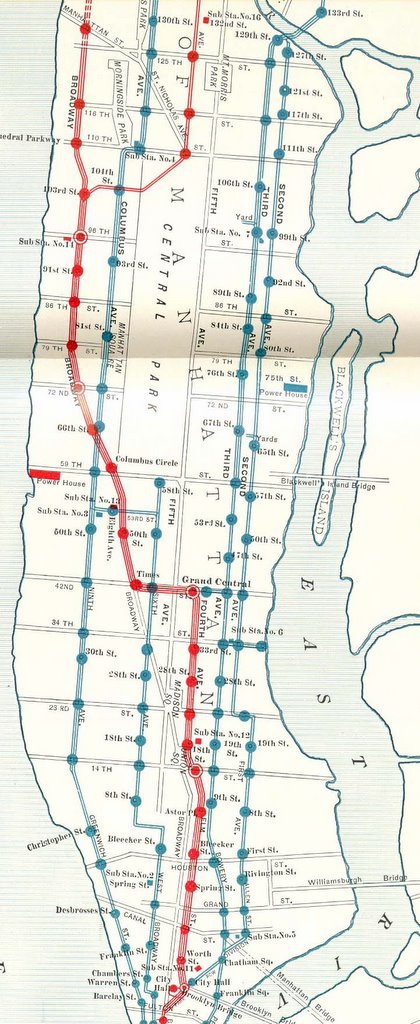
Here I'll try to explain the synchronicity referred to before. I'll begin working up in Harlem in a little while. I've been planning a Harlem Renaissance unit. In looking for children's literature to support this topic I discovered, "Dave At Night." I found it amazing that Dave's story closely paralled my own family history. Dave Karos' father came from Greece, he was a Sephardic Jew. So did my grandfather, who was named David Belelis. Dave Karos' family came from Salonika, my grandfather came from neighboring Janina. The main reason for immigration was the same-a war over control of the territory between Turkey and Greece. Dave Karos' father died in a fall in building accident. My grandfather died almost the same way in an elevator collapse. Dave was left fatherless at 8, My own father was left fatherless at 10. Dave went to an orphanage. My father didn't, but my aunt on my mother's side did when my mother's father died father in 1926 (the same year that Dave's father dies). Pretty spooky, isn't it? I'm "migrating" my work location from the LES to Harlem as Dave is migrated his life. The experience of the early immigrants to the LES at the turn of the last century is that once they were able to secure some economic stability for themselves they moved to a better neighborhood, Harlem. Why Harlem? Ease of transportation, IRT Elevated Lines connected the areas. Many people continued to work on the LES, but lived in Harlem. Wouldn't it be great to get the Harlem School I'll be working in do a joint immigration/migration project with some kids from PS42? They can even read Dave At Night together digitally. They can visit each other's neighborhood and do walking tours. On Friday, I after a year and a half, I visited principal Rosa O'Day again and explained my plan and she loved it. I love her. The map attached is a 1904 subway and trolley map. Click on it to expand it. The trolley lines are in blue.

Friday, January 13, 2006

Dave At Night

The main character of this book attends PS42 on Hester Street. Here's a portion of the review: "In Dave at Night, Newbery Honor award– winning author Gail Carson Levine brilliantly describes in gritty detail an orphan’s journey from loss to fulfillment. Fans of her previous novel, Ella Enchanted, might be surprised at Gail Carson Levine's departure from the world of fantasy with her realistic new book, Dave at Night. Inspired by Ms. Levine's father's experience in the Hebrew Orphan Asylum in New York, this is the story of eleven-year-old Dave Caros.The year is 1926. Dave’s beloved father is dead, and his stepmother doesn’t want him. Only the HHB will take him in. Hebrew Home for Boys. Hell Hole for Brats. Dave is tough, a troublemaker. He can take care of himself. If he doesn’t like the Home, he’ll run away and find a better place. Only it’s not that simple. . . .This stunning new novel by Newbery Honor award–winning author Gail Carson Levine takes Dave from the poverty of the Lower East Side of New York City to the misery of the Hebrew Home for Boys to the hope and magic of Harlem during the Harlem Renaissance. It tells a tale of terrible loss and hard-won gains, of cruel relations and kind strangers, of great poverty and great wealth. Most of all, though, it tells a tale about the power of friendship." Here's the first few chapters as a slide show. I'm on my way to whole book. What's great about this book is that it has an audio version. Here's a segment as an mp3.

The Benjamin Altman School: PS42

Anyone who actually reads any of this blog knows the high cynic factor (not to be confused with the O'Reilly Factor), so here's a refreshing change of pace about a wonderful school: "Kids learn at impressive rates here. Test scores have so improved that PS 42 is on the state's list of most improved schools and the chancellor's list of 209 schools exempted from having to install a new standardized curriculum. At the same time, Principal Rosa O'Day insists that staffers "take teaching and learning very seriously, but not at the expense of humanity." During our visit to the school, we were glad to see teachers get excited over children's fluffy renderings of baby chicks or comment knowledgeably about students' home lives and work. The warmth apparently starts at the top. When O'Day entered a first grade classroom during our visit, children eagerly swarmed around her to show off a project they were working on -- creating tiny folded slips that opened to reveal drawings of the people they wanted to be when they grow up. Despite coping with a cold, O'Day listened patiently as each student -- including those struggling with English -- described his or her aspirations. One boy hopes to be mayor one day. In another first grade class, we saw three teachers and a staff developer taking notes on the math lesson being presented. These teachers were using the "Japanese lesson study" method, in which they jointly draw up lesson plans and then observe their strengths and flaws. The point is to figure out what works and what doesn't in teaching their kids. In a 3rd grade class, some students read on their own, others read aloud with the teacher, and the rest wrote responses to their books -. Fifth graders publishing a class newspaper were researching story topics of their choice in order to draft articles. An English-as-a-second-language class wrote letters to Mayor Bloomberg protesting the closing of a neighborhood firehouse that the kids had visited earlier in the year. The arts propel literacy. The parent community stands behind PS. 42's belief that the arts serve as a wonderful vehicle for developing literacy, self-esteem, cultural and cross-cultural appreciation. "My personal goal," Rosa said, "is to educate the whole child. Children don't know what they're good at or what they like until they're exposed to a lot of different things." The print-rich environment of PS. 42 exposes students to new ideas with every turn in the five-story building's hallways. Here, as at every great school we've visited, student artwork springs to life; vibrantly colored walls and enormously high ceilings showcase projects; and children's books wallpaper every available surface - at heights advantageous for both kindergartners and fifth graders, of course. Teachers skillfully take advantage of the rich opportunities that lie just beyond the school's walls, too. As residents of one of the most culturally diverse cities, students only need to walk a few feet to be in another world. Around the corner from the school, for example, the Eldridge Street Synagogue stands as a reminder of the neighborhood's Jewish roots. Second graders explored the synagogue this year and sketched its elaborate exterior. Two years ago a week before the school year was to begin I walked into this school's office and shared with Rosa Casiello O'Day the excitement of my Al Schacht story and she actually didn't think I was nuts. She even called down her 5th grade teachers to listen. I was invited back to come look for any record cards in the basement that might belong to Al and his teammate Robert Berman. I never did, but... anyway here's a PS42 slide show.

Synchronicity Explosion: Al Schacht, PS 42, Dave At Night, Harlem

Now what would these four things possibly have in common? In August of 2004 The American Jewish Historical Society created a commemorative baseball card set, called "Jewish Major Leaguers: America’s Jews in America’s Game." Each set contained 142 cards of every identifiable Jewish Major League baseball player from 1871 to the 2003 All-Star break. After reading online the biographies many of the players I discovered this gem about a Robert Leon Berman: "Berman, a catcher who played two games for Washington in 1918, later became a physical education instructor in the New York City public school system. Career Highlights: Born on New York's Lower East Side to Russian immigrants, Berman began playing baseball at P.S. 42 with future major leaguer (and Clown Prince of Baseball) Al Schacht. A catcher, he played through high school and then attended CCNY (City College of New York) for two years before he was signed by the Washington Senators in 1918.On June 12, 1918, Berman played the ninth inning of a 6-4 Washington victory over the St. Louis Browns. Although he did not bat, he was fortunate enough to catch the great Walter Johnson during his inning of work -- Johnson won 23 games for the Senators that year. Berman later appeared in one other game as a pinch-runner. He played errorless ball in his two-game major league career.Berman played in the minors for the next few years and then returned to college. In 1925, he graduated from the Savage School of Physical Education and became a health education teacher and baseball coach. Berman eventually became the Dean of Boys for the New York City Board of Education. He retired after 43 years." This sounds a lot like a Jewish Moonlight Graham of Kinsella's great book, "Shoeless Joe." But more amazing to me was the knowledge that Baseball Hall of Famer, A Schacht, attended PS42 in the heart of the LES on Hester Street. Uncle Hyman Genee (aka the King of the Romaniotes) attended PS42, so did many of the Confinos from Tenement Museum fame. More on the synchronicity theme later. In the meantime here's a Jewish Baseball inspired slide show I did in August 2004. It's one of my favorites.

Tuesday, January 10, 2006

Post Game Interview

Rafael's post game interview never recorded so we caught up with the two stars of the victory in the school yard on Monday. We were rushing because it was time to line up.

Saturday, January 07, 2006

5835 Osage Avenue, Part 3

While in Philly I purchased "The Jewish Community of West Philadelphia" at the U of Penn bookstore to learn more about the Ferman side of my family. Fascinating stuff. When you think about the history of neighborhoods in our big cities, so much of it is the same. The early immigrants left the Lower East Side when the subways provide a way out. In Philly the move from south and central Philly was helped by the trolley system. Later there's that whole unfortunate white flight phenomenom to the suburbs. Here's a slide show from part of the book.

Letterman's Kahones

Speaking of Cindy Shehhan...Well, maybe Letterman only "whipped out one" of them, because he did get slightly rattled unnecessarily so by that degenerate creep. In any case, a rare show of conscience by the mainstream media. This is a 2.4 clip of part of the interview which is available at Letterman's site. You'll wait a long time to see Jay Leno do that.

The Mummer's Parade

While in Philly during the New Year's weekend I caught my first glimpse of the Mummer's Parade. I kept asking myself,
"Isn't this politically incorrect? Mostly Philly white ethnics getting a chance to be minstrels and strut? The guy pictured is safe to say not a big fan of Cindy Sheehan. Nevertheless, the whole Philly experience sure beats the crap out of watching a parade in New York-No fighting for space and food at reasonable prices. The cooks from the Ritz Carlton were selling huge egg and sausage sandwiches for $5 on Broad Street. Here's the "podcast"

Basketball Victory

The Silver Stars beat PS34 on Thursday, 57-35. The game was close for the first half, but Steven went on a scoring tear towards the closing minutes of the half to start a roll that continued into the second. Some great passing and teamwork. Chris, Angel, Dennis, Joshua, Jonathan and Terrence all contributed as well as the reserves. Chris was especially tough off the boards. The spirited cheerleaders also provided a lift for the team. I got Rafael and David involved in the post game interview with a couple of wise-ss 34ers. Here's the "podcast"

Tuesday, January 03, 2006

Hanukkah at the Kranks

You've heard of Christmas at the Kranks, now we have ....

Monday, January 02, 2006

5835 Osage Avenue, Part 2

I refused to pay for Internet service at the very nice, but overpriced hotel we were staying at, Sofitel. I relied instead on the concierge for advice on the best way to get to 5835 Osage, which was in the poor West Philadelphia section. While I was talking to him one of the other hotel staff chimed in, "Why are you interested in Osage Avenue?" I told him of the family link and he said that he lived right around there. He also mentioned that the 6200 Osage block was the sight of the Move Fire! For those of you who are unfamiliar or forget that incident here's a pdf package of articles about it as well as articles on West Philly history. Another interesting tidbit I acquired was that Paul Robeson lived his last years less than a mile away from 5835 Osage on 50th and Walnut. The image shown is the census page for the 5800 Osage block, with the Ferman's circled in red. Here's a slide show of pictures I took on our drive through along with others found on the web

5835 Osage Avenue, Part 1

So we're off to Philadelphia for the New Year's weekend (aka "taking the dysfunctional family on the road"), and I remembered the unfinished business with my Ferman family roots. The story was a major one in the early days of this blog "Celebrity" Cousin Michael Lemonick had left me on the trail of a great aunt who might fill in some major family history blanks, but a system crash lost the phone number and it was too late to contact him again. Instead I did a census search for an Uncle Isadore Ferman. It found him living in 1930 with his parents and a sister at 5835 Osage Avenue in Philly. I knew it was the right Isadore since his age at the time, 35, matched with his social security death index file. I had met Isadore as a teenager when my mother and I once took a trip to Philly. I knew that he married and had a family relatively late in life. I now discovered for the first time what my great grandparents' names were: Morris and Rebecca. Morris was a presser in a clothing factory. He was 60 years old then and it appeared from the records that he either owned the home valued at $4,000 or rented it for that much a year. I then used Google Maps to locate where 5835 Osage was. The image attached shows that along with a photo I took of it when I got there. But there's more to the story to follow.