Thursday, December 20, 2007

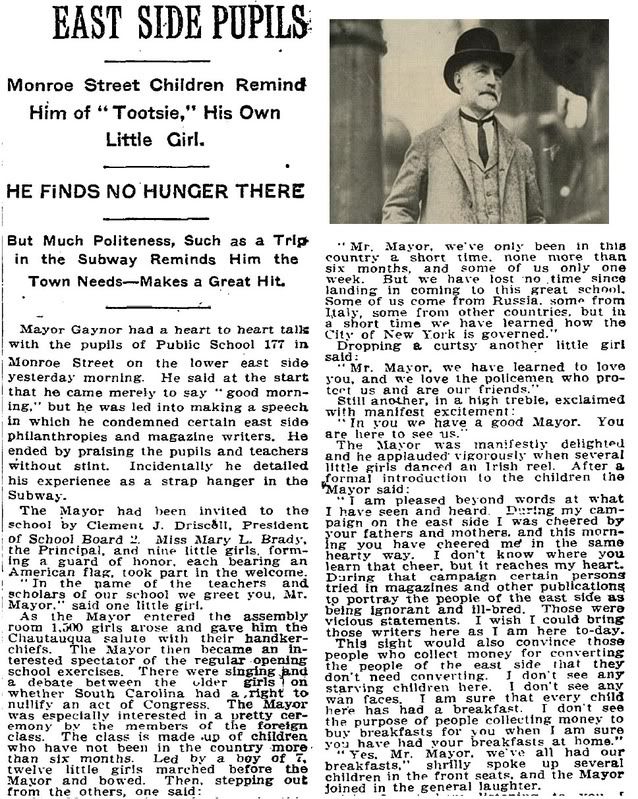
Not Necessarily This Day In KV History: Mayor Gaynor Addresses Students At PS 177, March 4, 1910

The Mayor, who later in his term would be shot by an assassin, mentions the Chautauqua salute. I never heard of it. Here's a reference from a book about Chautauqua
"The very same, they tell me. The Bishop opened the responsive reading with the words : ' The day goeth away; the shadows of the evening are stretched out.' But what I started to describe was the memorial scene. Do you know the ? Then you understand what a strange effect is produced by the simultaneous flutter of countless white handkerchiefs. Can you imagine what it would be to see at least five thousand of them held aloft motionless for a single solemn minute, the only sound in the great assembly coming from the great organ softly tolling out a requiem? That is the way they paid tribute to the Bishop's co-laborer, and to other great souls who put their shoulders to the wheel in the early days of the enterprise. I never saw a more impressive sight in my life. By the way, there is to be a unique salute today; where is my purple program? Ah, here it is; Stebbins is most anxious that we should help to swell the wave. You see they have imitated the colors of the pansy in their programs --yours is amber, isn't it?--and at a given moment they are to be gracefully waved; see that you do your part."

The article is from the nytimes archive. This is just a partial posting of it. I added the image of Mayor Gaynor

Speaking Out Against NCLB


from youtube:
After meeting at the White House to celebrate their selections as Teachers of the Year, 50 of the educators called for major changes to the so-called No Child Left Behind law as it heads for debate in Congress

Yesterdays


A great article in the nytimes city section this past weekend on a house on Clinton
Street in Brooklyn that has been owned by one family since 1866. I modified the slide show that accompanied it
The Ghosts of Clinton Street
NORA GERAGHTY and Dan Kahn moved into the four-story brick house on Clinton Street in the summer of 2001, a week after graduating from college. By day, their life resembled that of any young couple in Cobble Hill, Brooklyn: coffee from a patisserie on Court Street and commutes on the F train to entry-level jobs in Manhattan.
That was by day.

By night, the couple retreated to a world suspended in time, a house in which virtually nothing had changed in the hundred or so years since a construction crew had arrived at the door bearing a supply of the miraculous invention known as electrical wiring.

Ms. Geraghty’s great-great-great-grandmother bought the house at 312 Clinton Street for $4,000 in 1866. At the time, an outhouse stood in the backyard and horses were quartered next door.

For the next 140 years, a period spanning Brooklyn’s consolidation with New York, the family discarded practically nothing: not the trunks of hand-woven bedspreads and frilly Victorian undergarments, not the boxes of handwritten grocery receipts dating to the 1880s, not the chunks of petrified laundry starch now piled in a 19th-century beer pail called a growler.

Last year, the house underwent an extensive and much-needed renovation. A water-damaged beam was braced with pillars, and an old sofa was heaved onto the sidewalk decades after collapsing in the parlor during a wake.

Yet 312, as the family calls it, remains the rarest of places, a Brooklyn home whose residents eat at the same oak table, within the same brick walls, and among many of the same well-worn possessions as no fewer than five generations of ancestors. I came to know the house because my parents have known Ms. Geraghty’s parents for many years. Without the personal connection, her family might never have shown anyone their collections of bottled fainting remedies, thigh-high men’s socks, and mint-green sales slips for coal.

The couple acquired this inheritance not because they had any plans for their accumulated top hats and tax forms, but simply because neither they nor their forbears ever had the heart to throw anything away.

Michael Geraghty, Nora’s father, is a doctor in his 60s, a man with a soft gray beard and a prankster’s twinkling eyes. Every morning, he sets out by bike from the town house in Park Slope where he and his wife raised their three children and pedals toward the house on Clinton Street where he, his mother and his grandmother were raised.

He makes his way to the kitchen, past a retired gas-powered Easy brand washing machine, circa 1940. After brewing a cup of coffee, he changes into a suit and heads off to Long Island College Hospital, four blocks away.

On the way home, he stops into the kitchen again and fixes himself a gin and tonic, dropping the ice cubes into a glass that belonged to his father. He turns on a portable radio, an amenity modern by the standards of a house that contains a working Victrola.

On occasion, he sits at the scarred table and thinks about the people who sat there before him: people like his mother, Dorothy Walsh, nicknamed Sweetheart, who was born in 1906 in the second-floor front room and died on Valentine’s Day in 1968, or his great-grandmother Maryann Cassidy, his great-grandfather Peter, and their only son, John, all of whom died of a mysterious cause within a few days in 1874.

Dr. Geraghty has maintained this routine for 20 years. “I’ve tried communicating with them,” he said of his ancestors, smiling wryly. “They’ve never tried communicating with me.”

His daughter, Nora, is 28, with a slender face framed by long taupe hair. At the catering company where she works as a chef, she cooks on high-tech ranges with thousands of B.T.U.’s; then she goes home to heat up dinner in a 1935 Detroit Jewel. That “tin box,” as Ms. Geraghty calls it, is the home’s “modern” stove. “The old one,” she said, “is a wood-burning hearth that my dad would pop popcorn on.”

By Ms. Geraghty’s account, she and Mr. Kahn have sometimes found it challenging to make room for a personal life amid the clutter of so many family stories and remembrances, not to mention boxes. “There’s almost an inability to live a modern, normal life,” she said.

Until the recent renovation, for example, the house had no shower, so every morning she and Mr. Kahn were required to draw baths in a claw-foot tub. When the couple held parties, guests sometimes acted as if they’d walked into the period room of a museum.

“They didn’t want to touch anything,” Ms. Geraghty said. “And that’s sort of how we felt. It’s pretty, but when you’re living somewhere, really living, you want to be able to touch things and use things.”

Two years ago, Ms. Geraghty moved to San Francisco. She was beginning to feel as though the house were much smaller than it was, and in a sense, she was right.

She and Mr. Kahn had been living in just two of the eight rooms: their bedroom and the kitchen. The top floor was crammed with falling-apart antiques, feather mattresses, books, the entire wardrobes of nearly everyone who’d ever lived in the house, and much, much more. Nor had the couple ever felt comfortable in the grand Victorian parlor, with its massive candelabras and floor-to-ceiling gilded mirrors.

During Ms. Geraghty’s absence, Mr. Kahn, who works for a fashion company, remained at 312. After a few months, Ms. Geraghty came home, as though pulled in by some powerful tide. Less than a year later, the couple were engaged, with plans to marry in November 2006.

Dr. Geraghty wanted to hold the rehearsal dinner in the house, so he ordered a full-scale renovation. To clear space for the contractors, he, along with his daughter, her fiancĂ© and their friends, filled perhaps a hundred garbage bags with stuff Ms. Geraghty reluctantly classified as “junk.”

Among such items were the piles of mail that her great-great-grandmother had never gotten around to opening.

“The problem,” Ms. Geraghty said, “was that as time goes on, these things stop being junk and become antiques.” She wouldn’t hesitate to throw out five-year-old mail, she said, but these pieces were much older than that.

“Some of it was advertising for corsets, things like that,” she said. “You had to make agonizing decisions over what to keep, because it’s beautiful and it’s your great-great-grandma’s, and what to throw out, because, quite frankly, they should have thrown it out themselves 100 years ago.”

For as long as Ms. Geraghty and Mr. Kahn had lived in the house, they had talked about buying their own apartment. About a year ago, they found a 700-square-foot duplex on the southern end of Park Slope. They loved the idea of hanging their own pictures on the walls, and going out on Saturday afternoons instead of staying home to dust the family’s mantelpieces and vacuum its carpets.

But after much deliberation, they decided not to leave 312. “It wasn’t just the money,” Ms. Geraghty said. “None of us had the guts to do it.”

In part, that was because the house had a sort of magnetism for them. As Brian Epstein, a close friend from college, put it one day last summer, standing in the couple’s garden where a pair of rosebushes have been squeezing out pink and fuchsia blossoms every June since the 1930s, “It’s the place where nothing ever leaves.”

Ms. Geraghty still talks about the feeling of being “suffocated by the things,” but at the same time, those things and the feelings they evoke have fostered in her a profound gratitude.

“The way I feel about my great-great-grandmother,” she said, “my great-great-grandchildren will feel about me, unless New York is gone by the time they’re born. Because in a thousand years, this place will never be sold.”

Ms. Geraghty’s great-great-great-grandmother Catherine Hamilton was already twice a widow when she bought 312 in 1866. She had two daughters from her first marriage: Catherine Quinn, who could not hear or speak, and Maryann Quinn, the woman who would die along with her husband and young son in 1874.

Maryann’s daughter, Catherine Cassidy, was 6 when she lost her parents and brother. She survived to bear seven children and attain what was then the reasonably advanced age of 43. Twenty years after her death, her son Jim contracted pneumonia. It was said that he was days away from the grave when his father, a police captain named James Walsh, knelt at the foot of the young man’s bed with a picture of Jesus and prayed for the Lord to take his own life instead of his son’s.

A week or two later, Captain Walsh went down to cellar and never returned. His family found him on the cellar floor, felled by a heart attack or a stroke. They had his wake in the second-floor parlor, with mourners sitting on the ill-fated couch, while his son lay in the room directly above, recovering.

By that time, Mr. Walsh’s eldest daughter, Marion, ran the household. She would never marry; the house, with its eternal needs — washing on Monday, ironing on Tuesday — was, in a sense, her husband.

Dr. Geraghty would come to know Marion Walsh as “Aunt Mar” (pronounced “Mare”), and for a time in the 1970s, he and his wife, Laurie, shared the house with her.

When Nora came along, the couple took it upon themselves to clear some furniture out of the way. Aunt Mar was not pleased. Dr. Geraghty did an impression of his aunt defending a worn-out carpet. “I just bought that 40 years ago!” he declared.

As it turned out, the renovations weren’t finished in time to hold the rehearsal dinner at the house. While the work was being done, however, some old chests were unearthed, and one day last summer, Dr. Geraghty and his daughter headed up a flight of stairs to examine them.

For years, the five cases had filled the back of what the family called the dark room, a storage space packed solid with framed portraits, hatboxes, electric train sets, two swords and other items. As far as Dr. Geraghty knew, some of the chests hadn’t been opened since the family had clamped them shut on the Irish side of the Atlantic.

He and his daughter positioned themselves at either end of a wooden trunk. As they slowly raised the curved lid, it made a low, moaning sound. Reaching inside, Dr. Geraghty removed a long, straight object wrapped in a newspaper. A flurry of dust particles shimmered in the light from Clinton Street.

Ms. Geraghty carefully peeled away the newspaper (The New York Times, “Hitler Predicts Triumph”), and she and her father stood gazing at an intricate pattern of black lace.

“It’s a parasol,” Dr. Geraghty said.

“Look, it’s mended,” Ms. Geraghty added, running her finger along a seam of black stitching.

A while later, from the pocket of a flannel jacket, Dr. Geraghty produced a matchbook bearing the words “The Hotel St. George, Brooklyn Heights” and a small picture of the establishment in its heyday. All the matches had been torn out, but Dr. Geraghty slipped the item back into the jacket pocket.

The next few hours were devoted to the exploration of the contents of a small trunk sheathed with tin and filled with an infinite number of tiny compartments. A stencil on the outside indicated that it had belonged to Catherine Quinn, Ms. Hamilton’s deaf daughter.

In a red cardboard gift box, Dr. Geraghty found a lock of brown hair; in a leather purse, someone’s molar.

“An actual piece of somebody!” his daughter exclaimed.

Letter after letter brought news of death and catastrophe: Someone had lost his eye in an accident, someone had succumbed to consumption, someone else had simply been “called away from this world.”

Many of these old-timers had left no direct heirs. “It’s a kind of immortality for them,” Dr. Geraghty said, referring to the decision to keep so many of their possessions.

By way of example, he mentioned a 19th-century boarder named Michael Campbell who rose from the kitchen table one night to use the lavatory and instead, under the influence of an unknown amount of beer or whiskey, made the fatal mistake of stumbling down to the cellar.

“He died having a good time,” Dr. Geraghty said.

By the time Dr. Geraghty came upon the receipt for his great-great-grandmother’s funeral, the light in the plainly furnished bedroom was fading.

“Check this out,” he said, gazing at a sheet of ivory-colored ledger paper.

“Brooklyn, March 15, 1888,” he began. “Estate of Mrs. Catherine Hamilton. To John H. Newman, Dr., general furnishing undertaker, 181 Court Street.”

He read on: “Four-horse hearse, nets, and plumes, $25. Five couches, $20. Chestnut box, $25. Draping parlors, $10.”

“Draping parlors!” his daughter exclaimed.

There was more: “Preserving book, $8; opening grave, $8.10; candles, $4.63; chairs, $3; gloves, $2.”

After nudging the undertaker’s receipt into an envelope, he returned it to the chest.

Finally, he and his daughter closed the lid and went downstairs. They had been going through Catherine Quinn’s belongings for more than three hours. The room darkened. The chest sat alone on the wood-planked floor. Its main compartment had still not been opened.

Wednesday, December 19, 2007

There Ain't No Sanity Claus


But how about this wacky clause on how school grading is arrived at
Now here are the contracts.

You just put his name at the top,
and you sign at the bottom.

No need of you reading that
because these are duplicates.

Yeah. Is a duplicate.

- Duplicates?
- I say, they're duplicates.

- Don't you know what duplicates are?
- Sure, those five kids up in Canada.

I wouldn't know about that.
I haven't been in Canada in years.

Go ahead and read it.

- What does it say?
- Go on and read it.

- You read it.
- All right, I'll read it to you.


- Can you hear?
- I haven't heard anything yet.

- You say anything?
- I haven't said anything worth hearing.

That's why I didn't hear anything.

That's why I didn't say anything.

- Can you read?
- I can read, but I can't see it.

Don't seem to have it in focus here.
If my arms were a little longer,
I could read it.
You haven't got a baboon
in your pocket, have you?

Here we are. Now I've got it.
Pay particular attention to this first clause
because it's most important.

It says, "The party of the first part
shall be known in this contract...

"as the party of the first part."

How do you like that?
That's pretty neat, eh?

No, it's no good.

- What's the matter with it?
- I don't know. Let's hear it again.

"The party of the first part
shall be known in this contract...

"as the party of the first part."

Sounds a little better this time.

It grows on you.
Would you like to hear it once more?

Just the first part.

What? "The party of the first part"?

No. The first part
of "the party of the first part."

It says, "The first part
of the party of the first part...

"shall be known in this contract
as the first part of the party...

"Shall be known in this contract..."

Why should we quarrel about this?
We'll take it out.

Yeah. It's too long anyhow.

Now what do we got left?

I got about a foot and a half.


It says, "The party of the second part
shall be known in this contract...

"as the party of the second part."

I don't know about that.

- Now what's the matter?
- I don't like the second party either.

You should have come to the first party.
We didn't get home till around : a.m.

I was blind for three days.

Why can't the first part
of the second party...

be the second part of the first party?
Then you got something.

Look, rather than go through that again,
what do you say...

Fine.

I've got something you're bound to like.
You'll be crazy about it.

No. I don't like it.

- You don't like what?
- Whatever it is, I don't like it.

Don't let's break up an old friendship
over a thing like that. Ready?

Okay.

The next part,
I don't think you're going to like.

Your word's good enough for me.
Is my word good enough for you?

- I should say not.
- That takes out two more clauses.

- "The party of the eighth part..."
- No, that's no good.

- "The party of the ninth..."
- No, that's no good, too.

How is it my contract
is skinnier than yours?

I don't know, you must have been out
on a tear last night.

- We're all set now, aren't we?
- Sure.

Just you put your name down there,
and then the deal is legal.

I forgot to tell you, I can't write.

That's all right, there's no ink in the pen.

- But it's a contract, isn't it?
- Sure.

We've got a contract,
no matter how small it is.

Wait. What does this say here?

That? That's the usual clause.
That's in every contract.

That just says, "If any of the parties...

"participating in this contract...

"are shown not to be in their right mind...

"the entire agreement
is automatically nullified."

I don't know.

It's all right. That's in every contract.

That's what they call a sanity clause.

You can't fool me.
There ain't no Sanity Claus.
And You're Ugly Too

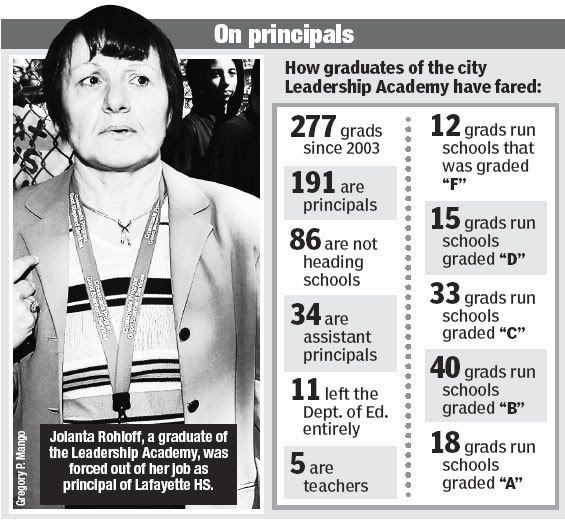
A picture that accompanied an article in the post from November on the failures of the new Leadership Academy Principals, trained at a cost of $146,000 a year. I'm reminded about an old Rodney Dangerfield routine:
Dangerfield would come out from behind the curtain and do five or six minutes of prepared material, then sit on the couch and do several more minutes of jokes thinly disguised as conversation, Carson barely getting a word in except to set up more jokes. He'd ask Dangerfield, "How's your health?" and Dangerfield would do a few minutes of health jokes, always involving his physician, the mythical "Dr. Vinnie Boom Botz," being referred to of late by David Letterman on his own show.

He didn't like it when he visited his doctor one time and was told he was crazy, Dangerfield recalled. "I said, 'Oh yeah? Well I want another opinion.' The doctor says, 'Okay -- you're ugly, too.'

Truth In Advertising


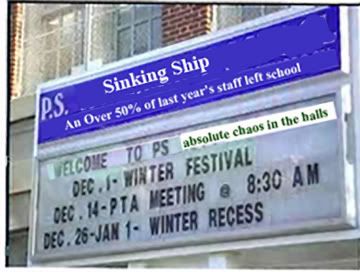
nyceducator had a riveting story about syntatic teacher in the Bronx who is working aboard a sinking ship.
I am tired. Really tired. I stayed home today for a "mental health" day. Despite all of my good intentions for this year, a clear desk, a reward system in place, parent phone calls, and organization systems, the thought of going to school right now overwhelms me. I am literally on the verge of tears everyday as I leave my house.

Last week, a well-respected longtime teacher was pushed to the ground by a student. As my readers know, the chaos and discipline issues have been mounting since the school was opened several years ago, and have reached a crisis point. Yet, even at recent staff meetings, the principal basically told us the issues that teachers brought up were due to our own poor classroom management.

How is it possible that all teachers at the school, despite some having years of satisfactory service and impeccable reputations, are poor classroom managers?

There is absolute chaos in the halls during passing periods. Troublemakers roam the halls during class. There have been fights almost daily for the past few weeks. The students do not respect even the AP's or the principal. Yes, some teachers manage to teach - despite the chaos - better than others, but no teacher is immune. It does not seem like there are any real consequences for student violations of the discipline code beyond what teachers can do -- phone calls home and detention, which at our school is a joke. Beyond that, sometimes students get suspended for 1 or 2 days (if the teacher is diligent about following up), but the consequences are haphazard, not followed through, and often unfair. I suspect that few incidents are being officially reported on ORS. Students cry out to the teachers to help them and "do something" about the rampant bullying, chaos, and disrespect, but our hands are tied. When the teachers are viewed as "doing nothing" to keep kids safe, our authority and their respect for us is greatly diminished, digging the hole even deeper. Some teachers have started to totally give up, some have or will quit, some are present in body, but not in spirit. I am truly afraid for what will happen if this continues.

Furthermore, the amount of coverages are outrageous, as more and more teachers (especially new ones) get sick from the stress. Last year, we had vacancies all year long, as 3 science teachers, a foreign language teacher, and a dean all came and went. Over 50% of last year's staff left -- transferred or left teaching altogether. This year, we have already lost 2 history teachers, and possibly a technology teacher (who has been out over a week now). The new teachers are already burned out. Yet, when the staff bring up the concerns, we are told that if we don't want coverages, we shouldn't get sick. It is insulting.

As it is, we have no secretary, no parent coordinator, and one dean, who also teaches classes and is totally overwhelmed. The other dean has been on military duty since the first week of school and was not replaced. One AP has now taken over teaching responsibilities for a teacher who quit. The other AP is often doing minor secretarial work in the office, since we have no secretary, so is also unavailable. Their hands are tied anyway, as much as they want to help us.

We have a mostly non-existent UFT chapter, thought it is marginally better than last year (read: we have had a couple of meetings this year, whereas last year we had none). Last year, I went to the UFT office with 3 other concerned teachers (those 3 have since left) and spoke with our district rep about situations at the school. She has been to the school and knows the extent of the problems, but so far, I have seen few results. Because the staff isn't unified, no one wants to reach out their neck on their own. The DR seems to throw up her hands and just tells us she can't do anything unless the teachers step forward. But, the teachers won't step forward unless there is a guarantee (or at least, a reasonable assurance) that something good will come of the risk (which in my experience, doesn't usually happen). It is maddening.

I have heard a rumor that the principal is "under investigation". But so far, nothing has been done, as far as I can tell. The principal seems to just clamp down harder on the staff; now she has started writing letters in the file.

Tuesday, December 18, 2007

Lift Every Voice


From New York Voices
Now how could any school with a principal that looks like Melissa Garafolo get a mark less than an A? :)
Grading the Schools
Last month, the Department of Education gave almost every public school in the city a letter grade. One hundred and fifty-one schools got either a 'D' or an 'F,' and the city has announced that thirteen of them will be shut down at the end of the year, with more to follow.

But why did some failing schools get 'A's, while others with great reputations got 'D's and 'F's?

Grading the Schools Fifty-five percent of the grades were derived from what the city calls "student progress." That's a measure of the extent to which test scores went up or down over the course of one year. Some parents say this formula puts too much emphasis on test scores — and last year's test scores in particular.

We visit four schools to hear reactions from principals and parents: P.S. 154 in Windsor Terrace; P.S.35 in Staten Island; JHS 50 in Williamsburg, and Central Park East I in Manhattan.
Grading the Schools

Then Rafael Pi Roman sits down with School's Chancellor Joel Klein to discuss the new grading sys

Monday, December 17, 2007

Elf Yourself Redux


I just love the make your own elf site of office max.
Here's a clearer version

My Little Buddy


If anyone has any last minute shopping to do for a little kid

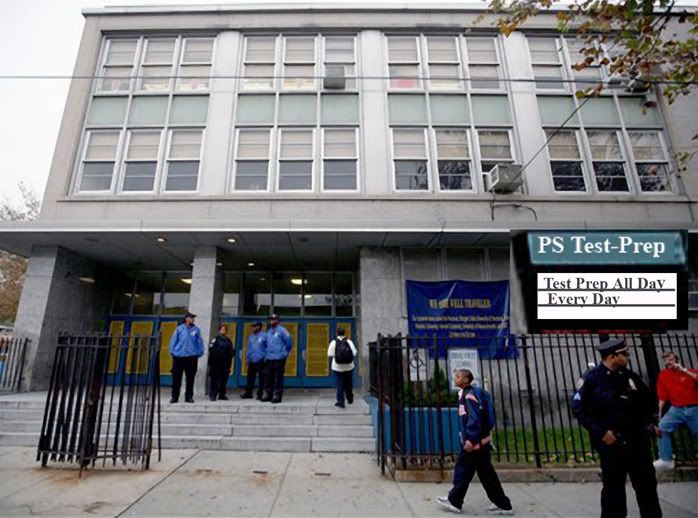
You Give Us Your Kids We Give Them Tests

I was listening to some elementary school teachers talk about how all they do now is test prep all day long. Sort of reminds me of the WINS radio jingles:

"All News, All the Time", "The Newswatch Never Stops", and "You give us 22 minutes, we'll give you the world". Maybe WINS has a lawsuit for plagiarism against the nycdoe.

Sunday, December 16, 2007

The NYC Subways And Walker Evans 2


After discovering the npr interview on the release of the Walker Evans book on his subway photos (2004) I used it for the background for a vlodcast. I ran out of subway photos so I filled the "space" with some of his other gems. There's also some photos from a flickr user (John Gnadsen) who was attempting to recreate Evan's feat.

Saturday, December 15, 2007

The NYC Subways And Walker Evans


Another slide show from my "archives" that I recently found and which I converted to the google video format. Diana Krall provides the soundtrack
About these images:
All Things Considered, November 7, 2004 · In the late 1930s, photographer Walker Evans and writer James Agee collaborated on Let Us Now Praise Famous Men, an extraordinary portrait of rural sharecroppers in the Deep South. While working on the book, the two men created another lesser-known work: Many Are Called, a three-year photographic study of people on the New York subway. Using a hidden camera, Evans snapped unsuspecting passengers traveling around the city.

First published in 1966 with an introduction written by Agee, Many Are Called has long been out of print. The book has just been reissued, and provides a glimpse into the unguarded moments of Depression-era Americans. NPR's Jennifer Ludden speaks with Jeff Rosenheim, curator at New York's Metropolitan Museum of Art and author of the book's afterward.

Council Member John Liu Questions James Liebman On Assessments And School Grading At City Council Hearing, 12/10/07

Red Buttons Final Performance


from the youtube source
"A year ago, that wonderful comedian, Red Buttons left us at the age of 87. (He was HOT stuff in the 1950s) This video was his last national TV performance, and he was the best thing on the whole program, as you will see."

Biography: The American stand-up comedian and actor was born Aaron Chwatt in New York City on Feb. 5, 1919. He entered show business as a child street singer, moving to comedy on the Borscht Belt and in a variety of Broadway roles bookending World War II. He enjoyed a big splash as the host of his own comedy-variety series in early television, but the success was fleeting. In 1955, after three seasons, two in severe ratings decline, The Red Buttons Show was canceled and he returned to acting roles.
Big Break: While the TV gig was a major accomplishment, cementing his place as one of the top funnymen of the day, it was a dramatic role in Marlon Brando's 1957 tale of prejudice, Sayonara, that changed the course of his career. Buttons was honored with the Academy Award for Best Actor in a Supporting Role. During the next five decades, he appeared occasionally on TV and in films in comic personas, but usually as a guest star or sidekick character. Red Buttons, the notable actor, became his fallback job.
But, Seriously: The movie star appeared in several high profile dramatic parts, including The Longest Day (1962), Your Cheatin' Heart (1964), Stagecoach (1966), and The Poseidon Adventure (1972). His best role, perhaps, was in They Shoot Horses, Don't They? (1969), depicting the grueling dance marathons of the Great Depression. Later, working more and more in episodic TV, he continued to spout stand-up comedy in Las Vegas and at insult roasts and benefits, stopping shows with his "Never Got a Dinner" routines.
Red Buttons Memories:

* John Wayne said of his co-star during the shooting of the lighthearted action-adventure, Hatari!: "Red is the only guy alive who could steal a movie from a monkey."

* The performer's stage alias was secured from two elements: his bright red hair and, while working as a singing bellboy, his uniform; it was adorned with four dozen buttons. Bandleader Charles "Dinty" Moore took notice and coined the 16-year-old's nickname, "Red Buttons."

* Wikipedia reports, "In 1941, José Ferrer chose Buttons to appear in a Broadway show, The Admiral Had a Wife. The show was a farce set in Pearl Harbor and was due to open on December 8, 1941. It never did as it was deemed inappropriate after the Japanese attack. In later years, Buttons would joke that the Japanese only attacked Pearl Harbor to keep him off of Broadway."

* "Strange things are happening" became a national catchphrase evolving from the run of The Red Buttons Show. Buttons wrote a popular tune with the lyrics, "Ho Ho! He He! Ha Ha! Strange things are happening!" It remained his signature theme. For half a century, he would hop on one foot, clap hands, and palm his ear whenever the music played, a childlike, trademark bit recalled by fans of his TV program.

* Mike Clark writes in USA Today: "It was 1952's The Red Buttons Show that made him an overnight success. It also made him a king-sized pain, an observation he didn't deny later. Billy Crystal's abrasive character in 1992's Mr. Saturday Night was widely thought to have been patterned on Buttons...."

Red Buttons Comic Timeline:

* 1935 - Comedy teamed with Robert Alda (father of Alan Alda) in the Catskills [Stage]
* 1939 - Minsky's Burlesque [Stage]
* 1942 - Wine, Women and Song - The last Burlesque show in New York, raided by police while Buttons was onstage.
* 1942 - Vickie [Broadway Stage]
* 1952-55 - The Red Buttons Show [TV, Best Comedian Emmy Award]
* 1958 - Imitation General [Film]
* 1962 - Hatari! [Film]
* 1963 - A Ticklish Affair [Film]
* 1966 - The Double Life of Henry Phyfe [TV sitcom]
* 1977 - Pete's Dragon [Film]
* 1978 - Movie, Movie [Film]
* 1988 - 18 Again [Film]
* 2004 - #71: Comedy Central's 100 Greatest Stand-Ups of All Time

Red Buttons Quotes and Jokes:

* "Never raise your hand to your kids. It leaves your groin unprotected."
* "The last time I heard booing like that was when I was doing my act."
* "If you want to recapture your youth, just cut off his allowance."
* "He's a real loser. He moved into a new neighborhood and got run over by the Welcome Wagon."
* "There is only one goal. That's to keep working and keep flossing."
* "Elizabeth Taylor has a big heart. She recently built a halfway house for girls who don't want to go all the way."
* "I'll tell you the truth, I wanted to leave me for Sid Caesar."
* "Ninety isn't old. You're old when your doctor doesn't X-ray you any more. He just holds you up to the light!"
* "Some of the most famous people in history never got a dinner!"

Died:
July 13, 2006, at home in Los Angeles, from vascular disease. Red Buttons was 87.

Sources: IMDb, NATREN, Wikipedia, Quote World, Brainy Quote, Think Exist, World of Quotes, IBDB, Answers.com, TCM, Mike Durrett.

Strange Things Are Happening: Red Buttons


For those of you who never heard of Red Buttons and the context of the title of the last post. Red was a lower east side boy, born Aaron Chwatt. He lived on E. 3rd Street and went to PS 63. I wrote about him back in April of 2007
The lyrics of his famous song
Ho Ho
Ho Ho
Hee Hee
Hee Hee
Hah Hah
Hah Hah
Strange Things Are Happening
I once had a teacher who flunked me in history
She asked, "Who shot Lincoln?"
I answered, "Don't blame me."
Ho Ho
Ho Ho
Hee Hee
Hee Hee
Hah Hah
Hah Hah
Strange Things Are Happening
I gave golden earrings to someone who turned sweet sixteen
Now, I'm so embarrassed her ears are turning green
Ho Ho
Ho Ho
Hee Hee
Hee Hee
Hah Hah
Hah Hah
Strange Things Are Happening
Strange Things
I went to the movies and witnessed the strangest scene.
One kid brought a tv and tried to dial the screen
Ho Ho
Ho Ho
Hey Hey
Hey Hey
Hee Hee
Hee Hee
Strange Things
Strange Things
"Since girls wear those blue jeans, my troubles just never cease
What looks like my nephew, turns out to be my niece."
Ho Ho
Ho Ho
Hee Hee
Hee Hee
Hah Hah
Hah Hah
Strange Things Are Happening
Strange Things

Strange Things Are Happening

A quote from an old Red Buttons routine. Gary Babad over at the nycpublicschoolparents blog speculates on a steroid connection to the inflated test scores.
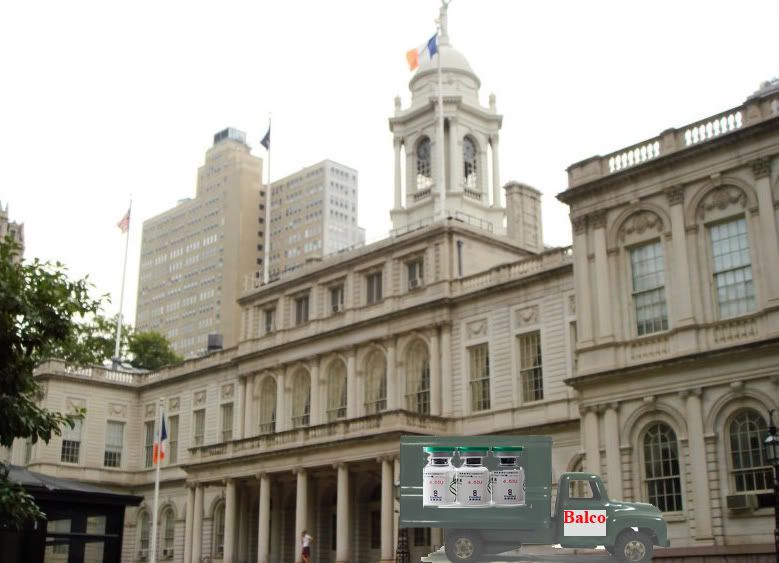
I have some "circumstantial evidence. Is that a truck from Balco? Who is it that Gary McNamee is helping to train?

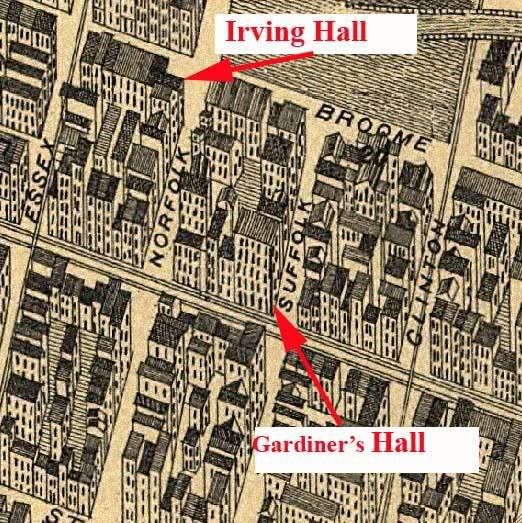
Irving Hall, Gardiner's Hall And Bernstein's

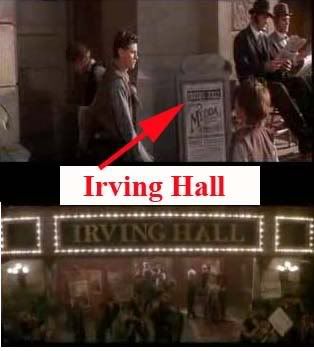
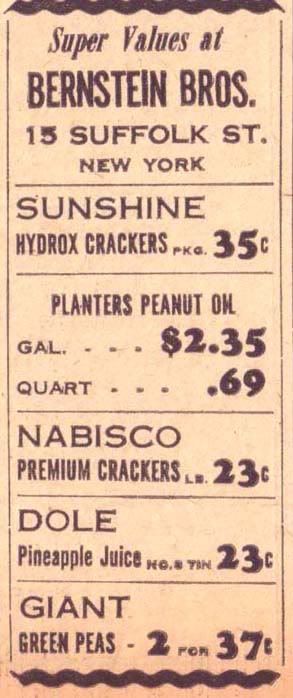
The map shows the 1903 location of the two halls mentioned in the news' reports about the Newsies (see below for the mention of Gardner's Hall) The movie even includes a Irving Hall as a site location. The question is would the Newsies go shopping at Bernstein's which was nearby :). The ad is from 1959
Had I known about the meeting I would have gone, since I lived at 76 Suffolk.
Here's the Tribune article about the meeting:
"Newsboys Form a New Union Elect a Man as Leader and Will Divide City Into Districts.August 3, 1899 There was a rally of newsboys at Gardner's Hall, at 21 Suffolk Street, last evening, to organize a new union and elect new officers. Abraham Lippman, who has a newsstand at Canal and Essex Streets, called the meeting to order. He is a grown-up man, and for some time he ran the meeting much to the disgust of Simon Levy, who was trying to wedge in a word without success. After some skirmishing the boys accepted a suggestion of Lippman's to have a full-grown man for a President, and elected James G. Neill, fifty years old. President Neill, in making his inauguration speech, said that the price maintained by some of the evening papers virtually imposed a tax on newsboys and newsmen, and the latter could not transfer the tax to the public as other dealers did the war tax. Mr. Neill suggested that all union boys should wear badges, and become affiliated with other labor organizations. He proposed that the city should be divided into districts and send delegates to a central union. The meeting adopted Mr. Neill's suggestions.Other officers were elected as follows: Vice President –"Racetrack" Higgins of Brooklyn; Secretary – Abe Cutler;Treasurer – Dave Ruben of Bleecker Street and the Bowery;Sergeant at Arms – "Yellow" Simon Levy. John Masin was elected head Captain, and will select his district Captains. A floral horseshoe was sent by William Reese, the colored lemonade seller in Printing House Square, for the best orator of the day. It was won by George J. Fabian."

Newsies: King Of New York


The boys are feeling pretty good because they stopped the "presses" on the first day of the strike. Thus they feel like Kings Of New York
MUSH:
A pair of new shoes with matchin' laces!

RACETRACK:
A permanent box at Sheepshead races!

SPOT CONLON:
A porcelain tub with boilin' water!

KID BLINK:
A Saturday night with the mayor's daughter!

RACETRACK:
Look at me
I'm the king of New York
Suddenly
I'm respectable
Starin' right at 'cha
Lousy with stature

JACK:
Nobbin' with all the muckety-mucks
I'm blowin' my dough and goin' deluxe

RACETRACK:
And there I be
Ain't I pretty?

RACETRACK and JACK:
It's my city
I'm the king of New York!

BOOTS:
A corduroy suit with fitted knickers

LES:
A mezzanine seat to see the flickers

SNIPESHOOTER:
Havana cigars that cost a quarter

DAVID:
An editor's desk for the star reporter

NEWSIES:
Tip your hat
He's the king of New York

DENTON:
How 'bout that!
I'm the king of New York

NEWSIES:
In nothing flat
He'll be covering
Brooklyn to Trenton
Our man Denton

KID BLINK:
Makin' a headline out of a hunch

DENTON:
Protecting the weak

RACETRACK:
And payin' for lunch

DENTON:
When I'm at bat
Strong men crumble

RACETRACK:
Proud yet humble

RACETRACK and DENTON:
I'm (He's) the king of New York

ALL:
I gotta be either dead or dreamin'
'Cause look at that pape with my face beamin'
Tomorrow they may wrap fishes in it
But I was a star for one whole minute

Startin' now
I'm the king of New York

DENTON:
Ain't ya heard?
I'm the king of New York

ALL:
Holy cow
It's miracle
Pulitzer's cryin'
Weasel, he's dyin'
Flashpots are shootin' bright as the sun
I'm one highfalutin' son-of-a-gun
Don't ask me how
Fortune found me
Fate just crowned me
Now I'm king of New York
Look and see
Once a piker
Now a striker
I'm the king of New York
Victory!
Front page story
Guts and glory
I'm the king of New York!

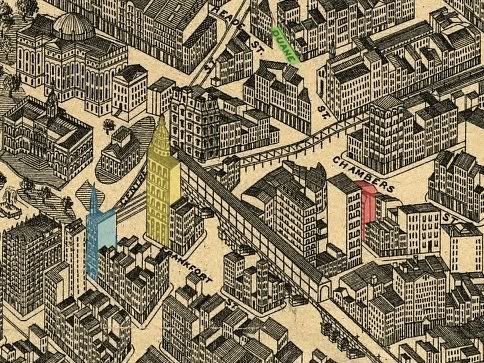
Newsboy Lodging House On 1903-5 Map

About the map from the nine duane site
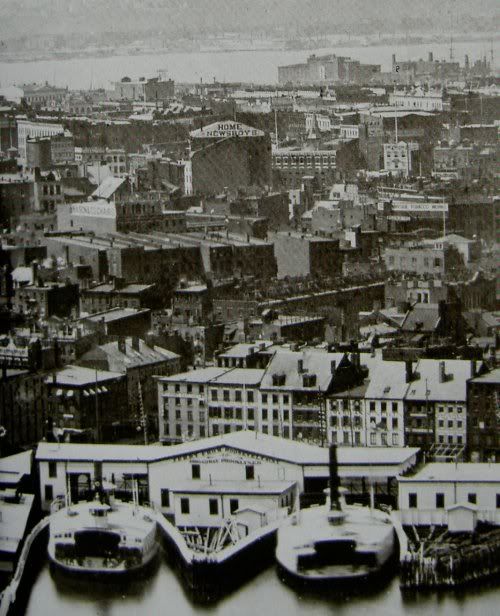
"This tiny (the full map is huge) piece of the map shows the City Hall Park/Newspaper Row area. I have colored some relevant portions of it. The red building is the DSLH (Duane Street Lodging House) (with the "Duane St." label highlighted in green). The tall building hiding it partially from view is the 10-story Rhinelander Building (erected 1893). The yellow structure is the World Building. The blue one is the Tribune; just next to it but hidden from our view is the Sun. You can see how close the DSLH was to Newspaper Row, although it is only relative (compare it to the zoom-out of the Beal photo to the right, which shows that the ground distance was still quite far).
The Library of Congress does not give a specific date for this map, labeling it only as "190-?" I've narrowed it down to this date range given that (if you look at the entire map), you can see the whole Williamsburg Bridge (completed 1903), but the Tribune Building is still shorter than the World (the Tribune's height was raised in 1905)."

Newsies: Seize The Day 2


A project I did with third graders using Newsies. They had visited an old Newsboy lodging house on 6th Street, between and Avenues B and C. Neighborhood history and architecture was the overriding theme of a school wide learning fair involving social studies and technology. They had watched Newsies and had done internet research and follow up writing and art projects, dress up and role playing. I did this with them as a little culminating event. Lots of luck finding any school that does that now in the era of test prep all day, every day

Jingle Bells, Jingle Bells


Make your own at office depot's cool site
The above is on the blurry size due to the small google video player. Here's the original

Friday, December 14, 2007

Newsboy Lodging House: Where One Police Plaza Now Stands

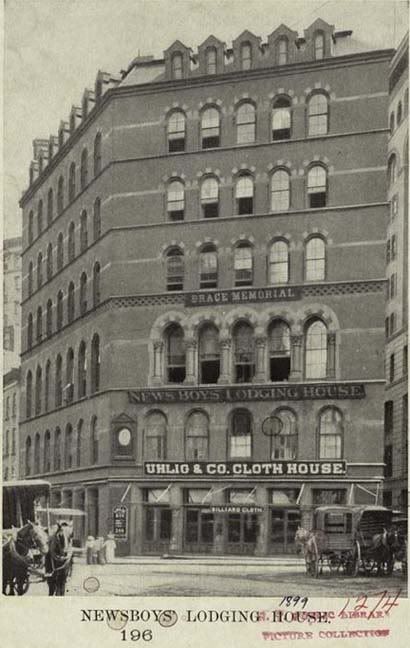
From nine duane, an excellent resource on lodging houses. The Duane Street Lodging House stood on the east side of William Street, between Duane and New Chambers Streets. It was the closest of the Lodging Houses to Newspaper Row. The official address was 9 Duane Street, Manhattan, New York.
Because it stood at the intersection of 3 streets, the address was also given (mostly in later years) as 14 New Chambers St. and (even later) 244 Williams St.
The intersection no longer exists today, as the streets themselves have been changed. It is roughly where the present-day New York City Police Department HQ stands. When did it open its doors? March 26, 1874. It replaced the earlier (smaller) LH at 49 and 51 Park Place. Who ran it? The lodging houses were run by the Children's Aid Society, a benevolent organization founded by Rev. Charles L. Brace in 1853. Sometime between Feb. 13, 1891 and Jan. 7, 1892, the DSLH was renamed "Brace Memorial Lodging House" in his honor, though it was still often referred to by its earlier names. When the Coast Guard took over the building, they called it "Brace Barracks." In addition to the lodging houses, the CAS also ran numerous other places for children in need, including the Health Home, Italian School, and the Farm School at Kensico.

Newsies: Carrying The Banner


There were real life Newsies who lived in the Knickerbocker Village neighborhood.
There was a Newsboy lodging house near the Oak Street police station near City Hall.
This was right near Printing House Square where many of the city newspaper's were printed at the turn of the 20th Century. Despite the poor reviews I think it's a great picture, especially for teaching kids about NYC history.
About the film:
Newsies is a 1992 Disney live action film musical starring Christian Bale, David Moscow, and Bill Pullman. Robert Duvall and Ann-Margret also appeared in supporting roles. The movie gained a cult following after its initial failure at the box office. The film marked the directorial debut of Dirty Dancing choreographer Kenny Ortega (High School Musical) and featured the music of composer Alan Menken (Beauty and the Beast, The Little Mermaid, Aladdin).

Although the film was not originally intended to be a musical, it contains twelve songs and multiple dance sequences (for which the young cast trained for approximately 10 weeks). Musical highlights include "Carrying the Banner," "Santa Fe," "Seize The Day," and "King of New York."

Newsies was not a commercial success when first released; in fact, it ranked among the highest-costing and lowest-grossing Disney live-action films in the studio's history. Movie critic/historian Leonard Maltin even christened it "Howard the Paperboy" (in reference to another infamous box-office flop, Howard the Duck).

However, the picture gained fans when it was released on VHS and was played on the Disney Channel. After much petitioning, Newsies was released on DVD in 2002. It has since gained a modest yet enthusiastic cult following.

Newsies is based on the true story of the Newsboys Strike of 1899 in New York City. Thousands of homeless children are living in Newsboys Lodging Houses, including Manhattan newsboy Jack Kelly (Christian Bale), who is a regular newsboy selling newspapers for Joseph Pulitzer (Robert Duvall) and his paper, the New York World. Jack "Cowboy" Kelly has a dream of escaping NYC to go to Santa Fe, NM. David Jacobs (David Moscow) leaves school temporarily and joins the newsies along with his little brother Les (Luke Edwards) to help his family while his father is out of work because of a broken arm. Soon, Jack and David become good friends, David introduces Jack to his family, and Jack falls in love with Sarah, David's sister. Shortly afterward, the price of newspapers for purchase by the newsboys is raised 10 cents per 100 papers, decided by joint decision of Pulitzer and William Randolph Hearst.

Feeling they will be unable to bear the added cost, Jack Kelly organizes a strike with the aid of David Jacobs. As the protagonist, Jack Kelly struggles with his past as he forms an important friendship with David and his family. Between his dream of one day going to Santa Fe, New Mexico, and currently wanting to help his friends, he faces lots of difficult decisions involving money and lodging. Along the way, the boys are aided by newspaper reporter Bryan Denton (Bill Pullman) and vaudeville performer Medda Larkin (Ann-Margret), as well as being hindered by Snyder, warden of "The Refuge" juvenile detention facility (Kevin Tighe). Jack and the newsies gain the cooperation of every newsie from New York and Brooklyn to team up and strike against the big-shot newspapermen.

Lyrics for Carrying The Banner
Ain't it a fine life
Carrying the banner through it all?
A mighty fine life
Carrying the banner tough and tall
Every morning
We goes where we wishes
We's as free as fishes
Sure beats washing dishes
What a fine life
Carrying the banner home-free all!

Newsies:
Summer stinks and winter's waiting
Welcome to New Yawk!
Boy, ain't nature fascinating
When youse gotta walk?
Still, it's a fine life
Carrying the banner with me chums!
A mighty fine life
Blowing every nickel as it comes

Crutchy:
I'm no snoozer
Sitting makes me antsy
I likes living chancy

Newsies:
Harlem tah Delancey
What a fine life
Carrying the banner through the slums

Three Nuns:
Blessed children
Though you wander lost and depraved
Jesus loves you
You shall be saved!

SUNG IN COUNTERPOINT:

Mother:
Patrick, darling,
Since you left me I am undone
Mother loves you!
God, save my son!

Racetrack:
Just gimme half a cup

Kid Blink:
Something ta wake me up

Mush:
I gotta find an angle

Crutchy:
I gotta sell more papes

Various Newsies:
Papers is all I got
Wish I could catch a breeze
Sure hope the headline's hot
All I can catch is fleas
God, help me if it's not!
Somebody help me, please ...

Newsies:
If I hate the headlines
I'll make up the headline
And I'll say anything I hafta
'Cause at two for a penny
If I take too many
Weasel just makes me eat 'em afta

SUNG IN COUNTERPOINT:

Group one:
Look! They're puttin' up the headline
You call that a headline?
I get better stories
From the copper on the beat!
I was gonna start at twenty
Now a dozen'll be plenty
Tell me, how'm I gonna make ends meet?

Group two:
What's it say?
That won't pay!
So where's your spot?
God, it's hot!
Will ya tell me
How'm I gonna make ends meet?

Newsies:
We need a good assassination!
We need an earthquake or a war!

Snipeshooter:
How 'bout a crooked politician?

Newsies:
Hey, stupid, that ain't news no more!
Uptown to Grand Central Station
Down to City Hall
We improves our circulation
Walking till we fall

SUNG IN COUNTERPOINT:

Group one:
Still we'll be out there
Carrying the banner man to man!
We'll be out there
Soakin' every sucker that we can!
See the headline:
Newsies on a mission!

Group one:
Kill the competition
Sell the next edition
While we're out there
Carrying the banner is the –

New York City History


This takes in the period of time from the early nineteen thirties to the late nineteen forties.

Street Games: A Student Project

Thursday, December 13, 2007

Street Games


Continues where previous video on 1940 New York leaves off

Jet Line On Patriots' Game Down To -45 Points

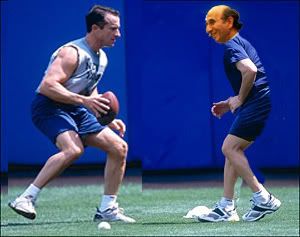
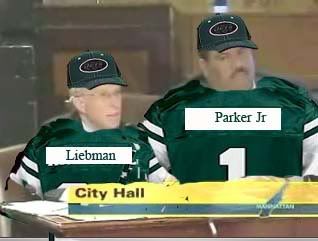
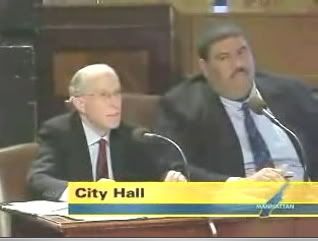
After Jim Liebman's tremendous display of broken field running, as he escaped from angry parents at City Hall on Tuesday, he was signed as a halfback for the New York Jets. Read more about it on the nyc public school parents blog.

Many people were wondering about the identity of the burly chap that accompanied Jim to City Hall. Speculation now is that he may be related to former Hall of Fame guard for the Baltimore Colts, Jim Parker. He appears to be joining Jim with the Jets and may help protect him as Jim Parker protected Johnny Unitas. Liebman will need all the help he can get from Bill Bellichick's Pats on Sunday.

1940 Era Neighborhood Life In NYC

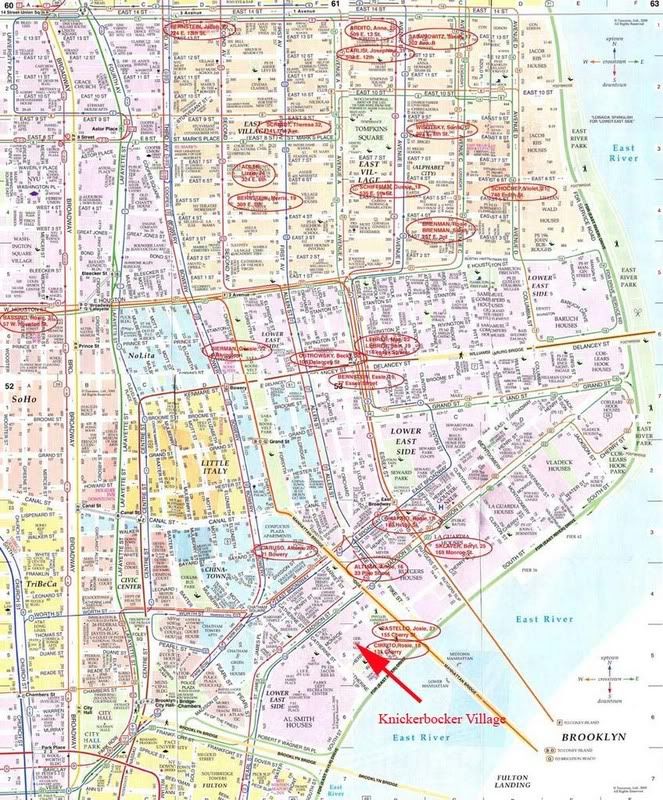
LES Triangle Victim Map


This only shows a sampling of the 146. There were some victims who lived in Brooklyn and one that lived in New Jersey. You can observe a few of the victims that lived close to Knickerbocker Village.

Fine And Dandy


This was originally posted on Pseudo-Intellectualism on 1/29/07: I went to hear author Katharine Weber speak about her new book "Triangle" at the East End Temple. It was excellent, but an unexpected surprise was finding out that Katharine Weber is Kay Swift's grandaughter! Swift was an accomplished musician and composer as well as a musical historian. Many folks know her as George Gershwin's main squeeze. Here's a musical review of the event.
Kay Swift composed Fine And Dandy. The lyrics were written by her first husband, James Warburg
Please forgive this platitude
But I like your attitude
You are just the kind i've had in mind
And never could find
Honey, I'm so keen on you
I could come to lean on you
On a random bay
Give you your way
Do what you say
Gee, it's all fine and dandy
Sugar candy,
When I've got you
Then I only see the sunny side
Even trouble has its funny side
When you're gone, my sugar candy
I get so lonesome, i get so blue
But when you're handy
It's fine and dandy
But when you're gone
What can I do?