from the nytimes 4/28/1896
Showing posts with label primary documents. Show all posts
Showing posts with label primary documents. Show all posts
Wednesday, June 25, 2008


Sunday, May 04, 2008
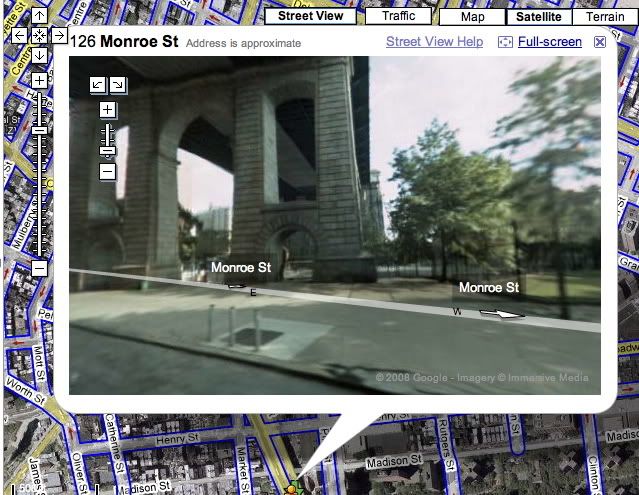
127 Monroe Street, 1908

I came across the old photo above, on Flickr, while gathering resources for my new labor history site Those kids
could have gone to PS 177, which was right next door to their building. Right now that address is either part of the Coleman Oval ball field or the skating park that adjoins it.
Thursday, May 01, 2008
Tuesday, March 04, 2008
Astor Piazzolla In The 1930 Census

He was 9 years old in 1930. His father was a barber and his mother a hairdresser. As a teenager he moved back to Argentina.
Monday, January 07, 2008
Sunday, January 06, 2008
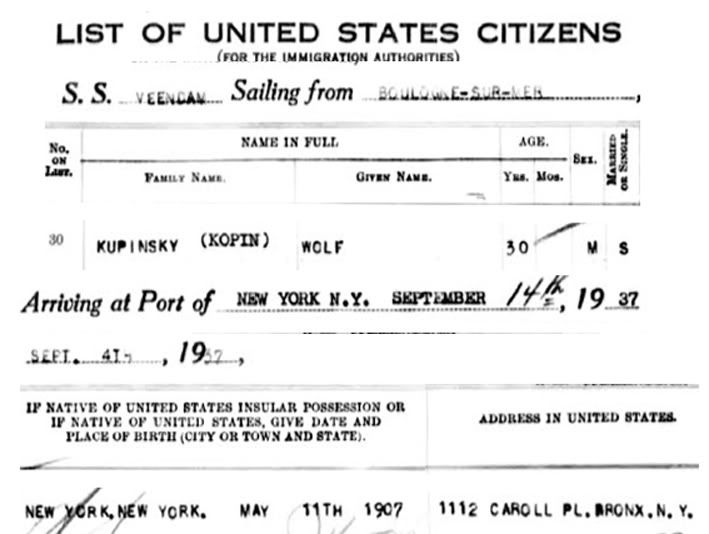
Who's Who In Knickerbocker Village History: Wolf Kupinsky, aka Harry Milton


 I think I was doing a search on the Rosenbergs and I stumbled on an incredible document, a list of the members of the Abraham Lincoln Brigade and their home addresses. Originally there were 2800, now they number in the tens. Those that are still alive are in their 90's. It set me off on the making another one of my google maps. What I do is plot their addresses and then go off to photograph the site, hoping that the original structure (in this case 70 years later) is still there. It's fascinating (at least to me) to look at two houses, maybe a block apart and then look at the names of two guys in their late teens and with no military experience, probably childhood friends, who came up with the idea in 1936 to go to Spain and fight Fascists. I think about a third of those 2800 never made it home. Survivors came home heroes, got no official recognition for their efforts, were lucky to escape recrimination (many went under alias' because of this) for breaking the law, but were later harassed and hounded because they fought on the side of the Communists. Anyway, when I checked the list there were two guys that came from Knickerbocker Village. One of them was Wolf Kupinsky, aka Harry Milton. He was lucky to survive the war and he is credited with saving George Orwell's life.
 an excerpt THE MAN WHO SAVED ORWELL, David Jacobs
The American sentry I had been talking to had started forward. ‘Gosh! Are you hit?’ People gathered round. There was the usual fuss — ‘Lift him up! Where’s he hit? Get his shirt open!’ etc., etc. The American called for a knife to cut my shirt open. I knew that there was one in my pocket and tried to get it out, but discovered that my right arm was paralyzed. In the hazy photo (Orwell and Milton), a group of men and one woman pose for the camera behind a wall of sandbags, with their weapons at hand. They do not have the look of regular soldiers, and there are no uniforms. One individual stands literally head and shoulders above the rest. It is none other than George Orwell, or as he was known then, Eric Blair, his real name. The scene is the Spanish Civil War, and the photograph includes ‘the American’ who came to Orwell’s aid when he was shot: Harry David Milton. A small but interesting collection in the Hoover Institution Archives records Milton’s time in Spain, including his encounter with the future author of Nineteen Eighty-Four. The Milton collection sheds light on Orwell’s political development in the crucible of Spain and underlines the role played by American volunteers in Spain who were not members of pro-Moscow Communist Parties and who chose to serve in formations other than the largely Comintern-recruited International Brigades, which received much more attention. Orwell’s vivid description of being wounded on the front lines near Huesca occurs near the end of his memoir of the Spanish Civil War, Homage to Catalonia. Many years later, Harry Milton, describing the incident to a reporter in California, attributed Orwell’s misfortune both to his height and to his somewhat reckless habit of looking over the top of their unit’s fortified position: ‘I heard the crisp sound of a high velocity shot and Orwell [toppled] over. He landed on his back.’ Milton recounts giving first aid, as Orwell waited to be taken to the hospital. In another article about the shooting, Milton claims only a modest role for himself: ‘I simply stopped the bleeding.’ Milton does, however, claim some credit for influencing Orwell’s political consciousness as it developed during his time in Spain.
Saturday, January 05, 2008
Aerial View Knickerbocker Construction
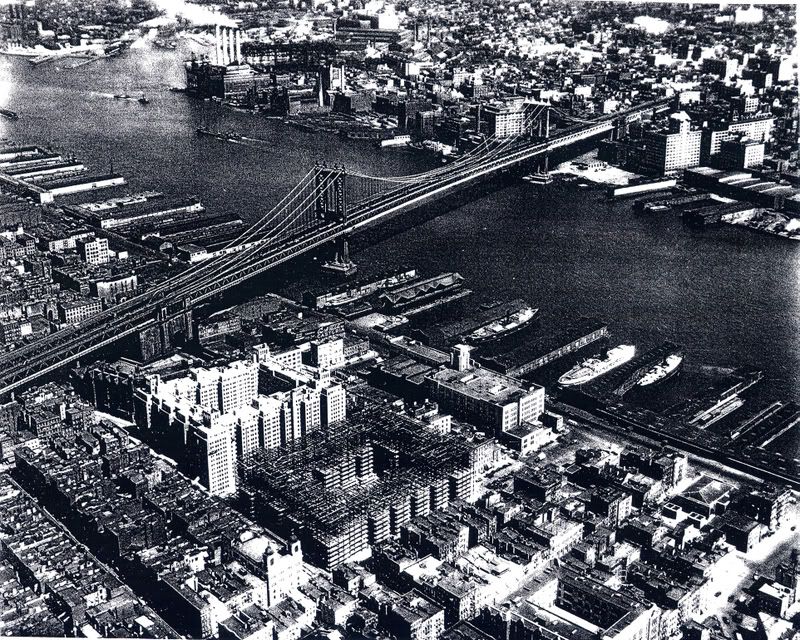
I got a copy of this photo from Steve Stanley from the Knickerbocker Village Business Office last Thursday. I was looking to see if there were any back issues of the KV newsletter available. Steve was nice enough to share what he had, but the extra copies he had only went back to 1996. More to come. This photo (circa 1933 I guess) shows how the eastern court was constructed first, thus the reason those buildings were named A,B,C, etc. What is also visible are the buildings that were replaced by the Smith Houses in the 1950's and the activity of the docks on the East River. There's also in view, (if you look closely after clicking for an enlargement) the ubiquitous Fletcher's Kastoria advertisements of that era.
Saturday, December 29, 2007
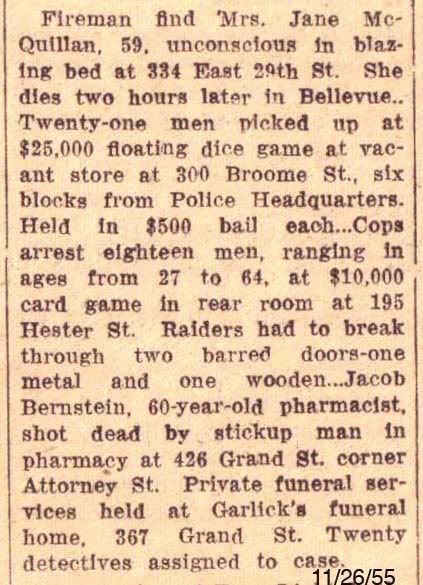
Friday, December 21, 2007
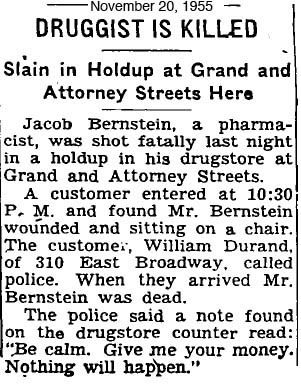
Who's Who In Knickerbocker Village History: Sol Press
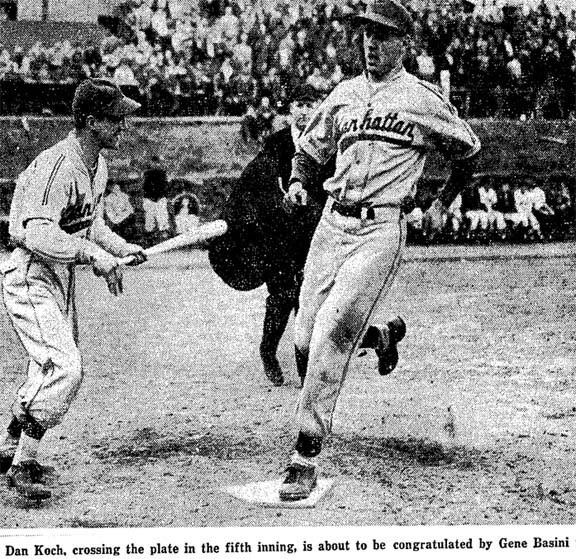 Sol Press became the principal of PS 177 in the late 50's. My stay under his leadership was not long, but I recall a change in energy from the staid Mr. Gregor.
A recent email from Susan and some subsequent research convinced me he deserved recognition as a Who's Who.
From Susan:
Does anybody know what happened to Sol Press and his daughter Lori Press? He was a remarkable man - he made our 6th grade class read the NY Times each day. No WONDER I was reading at 12th grade in 6th grade! He was also the camp director for Camp Madison-Felicia, one of my favorite leftist settlement house camps on earth (and Whoopi is an alum, too) which sadly, no longer exists. His daughter was a camper with us, and a nice human being.
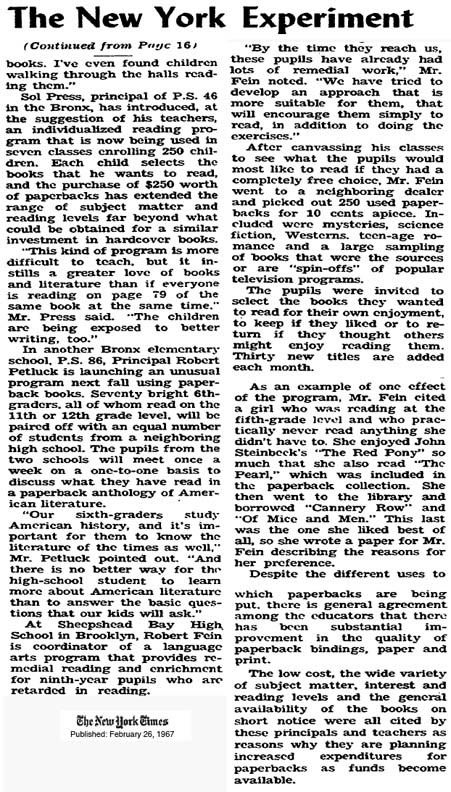
I'm pretty sure the picture above is of Sol umpiring a college baseball game in 1950 and I found Sol in the 1920 census living at 237 Madison Street, which makes him officially LES. A Times' article from 1965 has him doing innovative things at his later school, PS 46. The only thing principals are allowed to do innovative now is what time of day to do test preparation.
Thursday, December 20, 2007
Not Necessarily This Day In KV History: Mayor Gaynor Addresses Students At PS 177, March 4, 1910
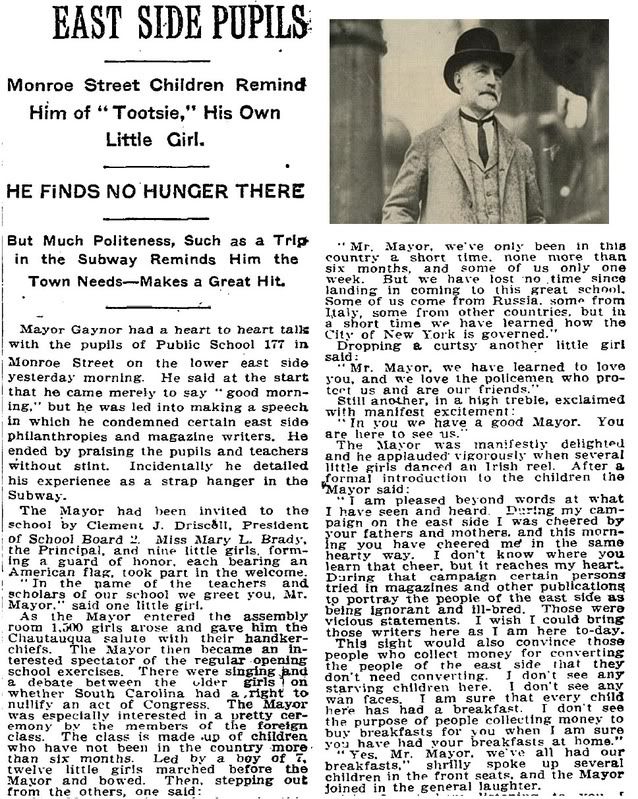 The Mayor, who later in his term would be shot by an assassin, mentions the Chautauqua salute. I never heard of it. Here's a reference from a book about Chautauqua
"The very same, they tell me. The Bishop opened the responsive reading with the words : ' The day goeth away; the shadows of the evening are stretched out.' But what I started to describe was the memorial scene. Do you know the ? Then you understand what a strange effect is produced by the simultaneous flutter of countless white handkerchiefs. Can you imagine what it would be to see at least five thousand of them held aloft motionless for a single solemn minute, the only sound in the great assembly coming from the great organ softly tolling out a requiem? That is the way they paid tribute to the Bishop's co-laborer, and to other great souls who put their shoulders to the wheel in the early days of the enterprise. I never saw a more impressive sight in my life. By the way, there is to be a unique salute today; where is my purple program? Ah, here it is; Stebbins is most anxious that we should help to swell the wave. You see they have imitated the colors of the pansy in their programs --yours is amber, isn't it?--and at a given moment they are to be gracefully waved; see that you do your part."
The article is from the nytimes archive. This is just a partial posting of it. I added the image of Mayor Gaynor
Saturday, December 15, 2007
Irving Hall, Gardiner's Hall And Bernstein's
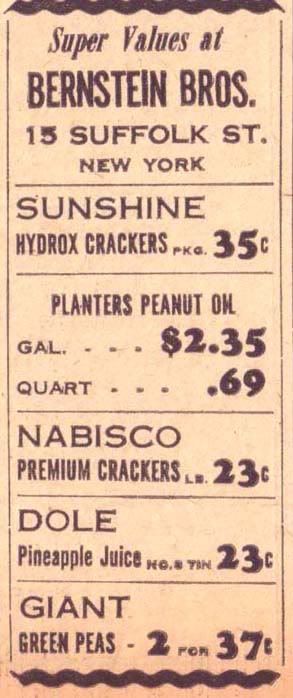
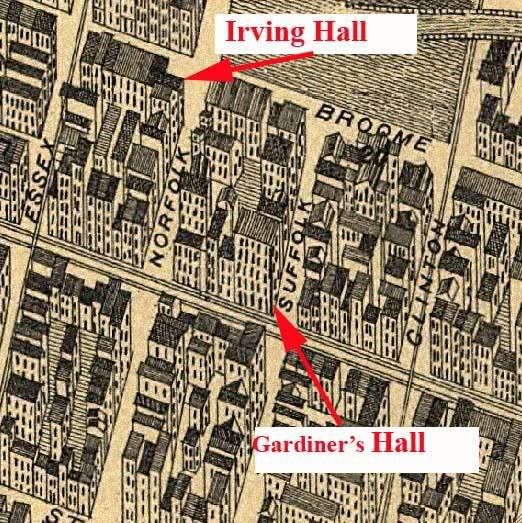 The map shows the 1903 location of the two halls mentioned in the news' reports about the Newsies (see below for the mention of Gardner's Hall) The movie even includes a Irving Hall as a site location. The question is would the Newsies go shopping at Bernstein's which was nearby :). The ad is from 1959
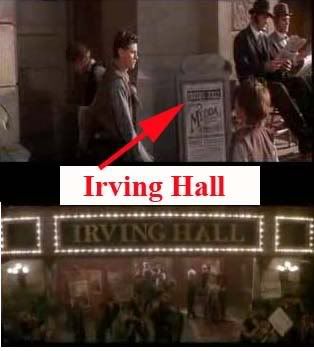 Had I known about the meeting I would have gone, since I lived at 76 Suffolk.
 Here's the Tribune article about the meeting:
"Newsboys Form a New Union Elect a Man as Leader and Will Divide City Into Districts.August 3, 1899 There was a rally of newsboys at Gardner's Hall, at 21 Suffolk Street, last evening, to organize a new union and elect new officers. Abraham Lippman, who has a newsstand at Canal and Essex Streets, called the meeting to order. He is a grown-up man, and for some time he ran the meeting much to the disgust of Simon Levy, who was trying to wedge in a word without success. After some skirmishing the boys accepted a suggestion of Lippman's to have a full-grown man for a President, and elected James G. Neill, fifty years old. President Neill, in making his inauguration speech, said that the price maintained by some of the evening papers virtually imposed a tax on newsboys and newsmen, and the latter could not transfer the tax to the public as other dealers did the war tax. Mr. Neill suggested that all union boys should wear badges, and become affiliated with other labor organizations. He proposed that the city should be divided into districts and send delegates to a central union. The meeting adopted Mr. Neill's suggestions.Other officers were elected as follows: Vice President –"Racetrack" Higgins of Brooklyn; Secretary – Abe Cutler;Treasurer – Dave Ruben of Bleecker Street and the Bowery;Sergeant at Arms – "Yellow" Simon Levy. John Masin was elected head Captain, and will select his district Captains. A floral horseshoe was sent by William Reese, the colored lemonade seller in Printing House Square, for the best orator of the day. It was won by George J. Fabian."
Newsboy Lodging House On 1903-5 Map
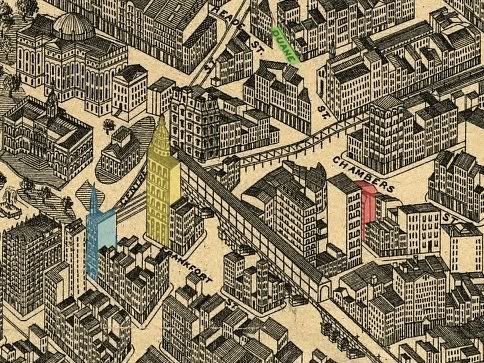 About the map from the nine duane site
"This tiny (the full map is huge) piece of the map shows the City Hall Park/Newspaper Row area. I have colored some relevant portions of it. The red building is the DSLH (Duane Street Lodging House) (with the "Duane St." label highlighted in green). The tall building hiding it partially from view is the 10-story Rhinelander Building (erected 1893). The yellow structure is the World Building. The blue one is the Tribune; just next to it but hidden from our view is the Sun.
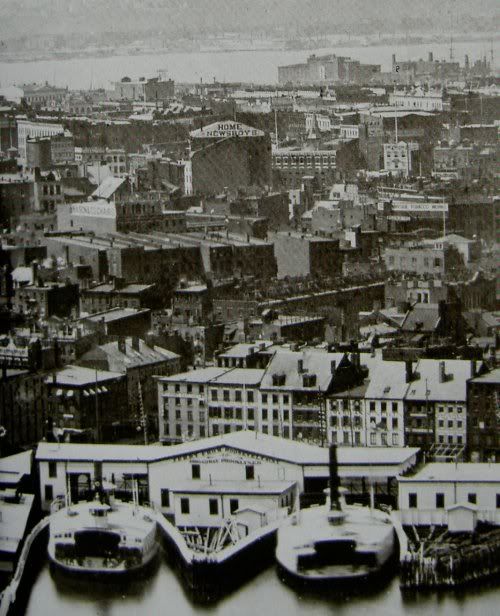 You can see how close the DSLH was to Newspaper Row, although it is only relative (compare it to the zoom-out of the Beal photo to the right, which shows that the ground distance was still quite far).
The Library of Congress does not give a specific date for this map, labeling it only as "190-?" I've narrowed it down to this date range given that (if you look at the entire map), you can see the whole Williamsburg Bridge (completed 1903), but the Tribune Building is still shorter than the World (the Tribune's height was raised in 1905)."
Wednesday, December 12, 2007
KV Holiday Shopping 1956
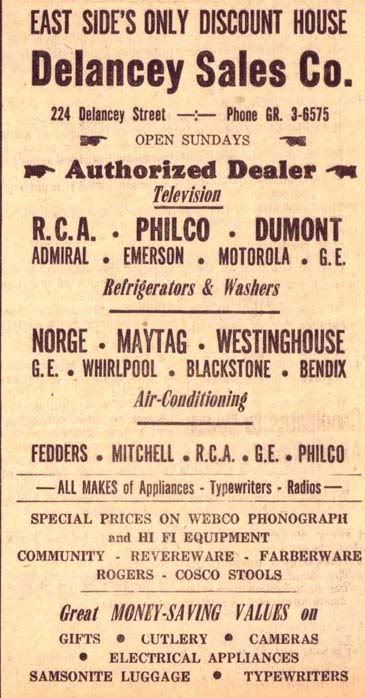 Don't forget to shop locally for your holiday gifts. Maybe a nice DuMont television or Webco phonograph at Delancey Sales at 224 Delancey Street. I seem to recall buying such appliances on Rivington Street, off of Clinton, at a store called National Radio. It was a real mess of a place, mostly devoted to repairs. The owner, Hy Frohmer ?, may have been an old Seward Park classmate of my father's. Image from East Side News, 10/13/56, courtesy of Seward Park Library.
Wednesday, December 05, 2007
Knickerbocker Village: 1920 Real Estate Profiteering
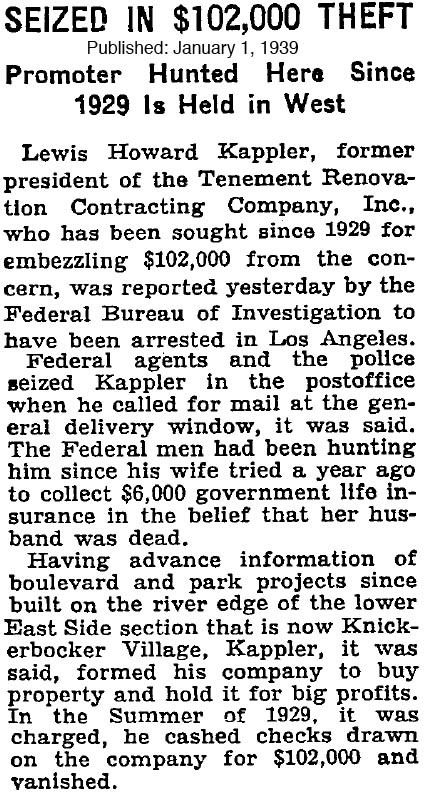 Some things never seem to change. Kappler knew in advance that the slums would be cleared to build Knickerbocker and he was part of a group that bought property in the area. Then he went ahead and embezzled the profits from his partners. Quite a guy.
 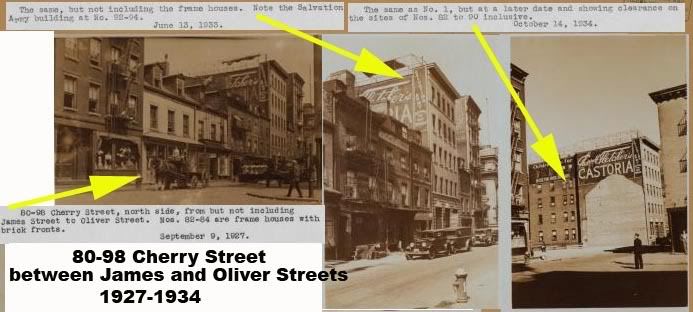 Shown below are pictures of the Cherry Street area that was just to the west of Knickerbocker Village on St. James' Slip and Oliver Street. These are now part of the Smith projects.
Sunday, December 02, 2007
1915 Real Estate Maps: PS 177, PS 12
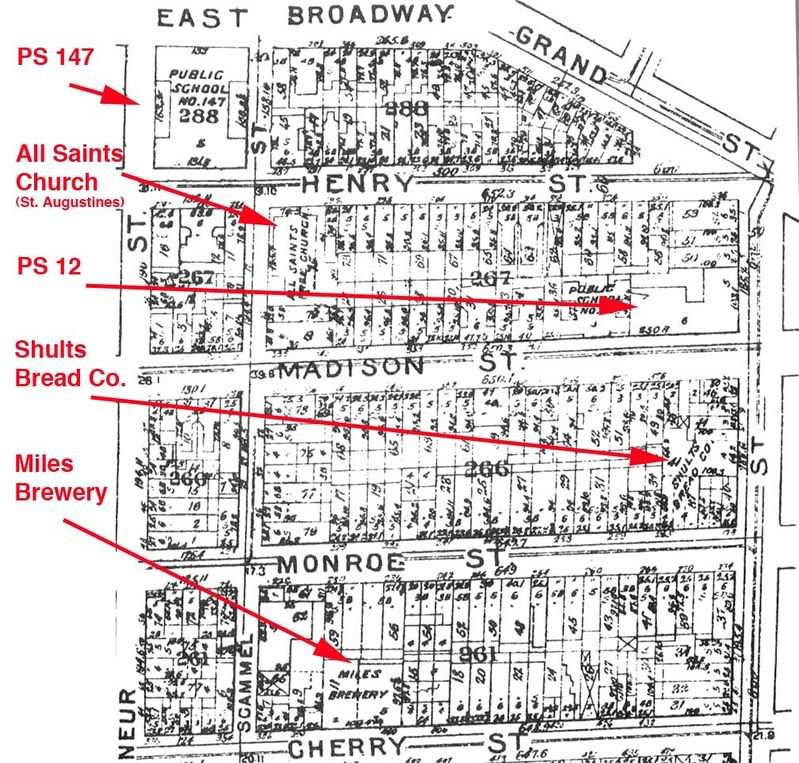 The map on the right encompasses the area around PS 12 shown here previously on a post about Laguardia visiting the school in 1941
It shows the density of the area at the time. There was only a tiny school yard for the school. There were many industrial plants around, including a bread factory and a brewery. Since there were so many people and so many kids there were schools all over and they were still overcrowded. Visible here is PS 147. Just another block SW and not visible would be PS 31. About 3 blocks NE would be PS 110 as well as PS 34. St. Augustines's Church (called all saint's here), famous in its role in Black History in New York, is visible
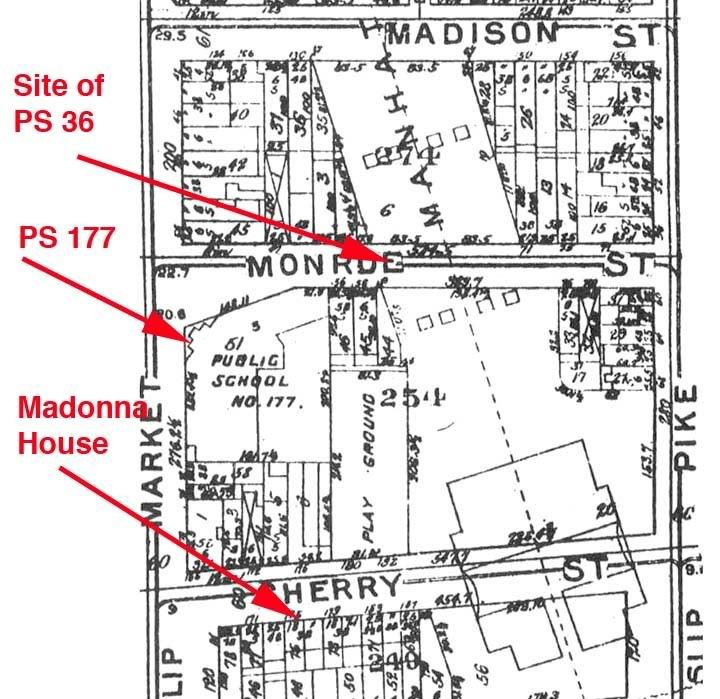 The map of PS 177 shows where PS 36 was located. It was probably demolished in the construction of the Manhattan Bridge in the early 1900's. A previous post about PS 36 mentions its poor condition and its lack of light since it was in the middle of the block. PS 177, constructed I believe in 1903, has more light since it's on the corner. The architect was C.B.J. SNYDER, who was known for the care and beauty he put into school construction.
Catharine Street Market: 1850
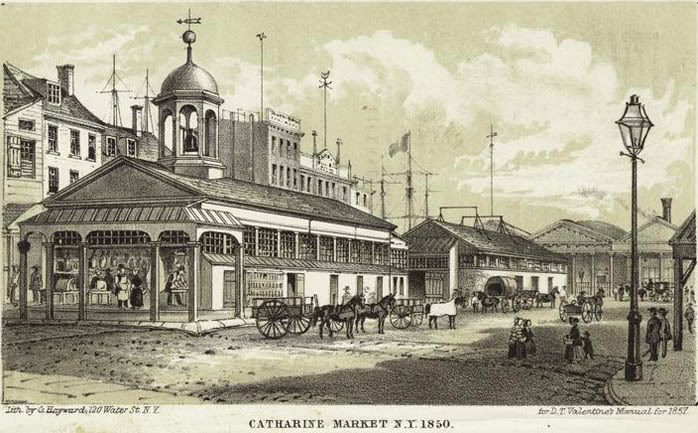 The spelling used to be with an a instead of an e.
From the Brooklyn Genealogy site. Remembrances recorded in 1874 in the Brooklyn Eagle of the early 1800's on the Lower East Side and the Catharine Market (BEWARE OF LANGUAGE):
Brooklyn In its Infancy - Memories of Localities Now Obliterated - the River Front on Both Sides - How the March of Improvement has Transformed the Old Scenes in the River Wards of Brooklyn and New York, etc., etc.
Fifty years ago travelers crossed the Catherine Ferry in a horseboat,
then, and for years after, owned by Rodman Bowne and Brothers, who
accumulated a vast amount of real estate and left millions of dollars to their heirs. Then there were but few buildings between this point and Red Hook in
comparison to the present. Beyond the Fulton Ferry, excepting an occasional
shanty or boathouse, there was nothing but a beach, affording a very
comfortable bathing ground. What is now called the Heights was then a delightful promenade, with only a few mansions and the Eagle tavern, very near to what is now Atlantic avenue. Many resorted to this promenade to enjoy the exhibarating breezes
from the bay and harbor. There was a gradual slope from the top of the bank down to the water, and A FEW WOODEN STAIRS to ascend and descend. It was not easy to walk down where there were no steps, and the boys, in attempting to run, would go head over heels into the water. It may be that here Jack and Gill Went up the hill To get a pail of water; And Jack fell down And broke his crown, And Gill came tumbling after. Below Atlantic avenue was what might be termed a great bog meadow until
Red Hook was reached. The most prominent bulding in this locality then was a
very extensive glass blowing establishment. At a later period the Long
Island Railroad Depot was at this point, and went through Atlantic avenue the
most of the way underground. It was finally driven away by the old fogies,
whose nerves were so sensitive that they could not endure the noise of the
iron horse. They had to shut up the tunnel, thereby burying an enormous
amount of treasure which had been expended in its construction. Looking at this portion of Brooklyn now, and comparing it with what it was fifty years ago, it would seem to have risen up as by enchantment. But
what might it have been had the iron horse been permitted to stay?
East of Catherine Ferry it was less populated than west of it. Scarcely
any buildings along the shore except one tavern, which stood on quite a high
hill about midway between the ferry and Navy Yard. There were not many
streets cut through to the water. At the foot of Washington street there was
an extensive lumber yard, kept by one John Moon, whose children are still
living in Brooklyn. Adams street came next, and but few others until Navy
street was reached, running alongside the Navy Yard.
From Fulton Ferry to what is now called the City Hall there was not one
building where there are now ten.
THE FINEST MANSION IN THE STREET
was the residence of Henry Waring, Esq. (the founder of Waring's
Storehouses), in close proximity to which there was a beautiful burying
ground. This was in the vicinity of what is now called Clinton Street.
Where the Court House now stands was a very pleasant resort known as
"Duflon's Garden." Between this point and the Jamaica turnpike (where Fulton
street then ended), was another familiar resort, known as the Black Horse
Tavern, or half way house to Jamaica. Not far beyond this, at the junction of
the Jamaica turnpike and Flatbush road, was a large nursery and magnificent
garden, kept by one Parmentier.
=To the right of the garden an ordinary country road passed over Prospect
Hill and on to Flatbush. From the left side of Parmentier's the Jamaica
turnpike went through Bedford now almost "lost and swallowed up" in the heart
of Brooklyn. Stages then left Fulton Ferry about three times a week for
Flatbush, Flatlands, Canarsie, etc.
From Catherine Ferry, up Main street to Sands, and up Sands to the
Wallabout Bridge, buildings were anything but numerous, and mostly frame. On
one side of this bridge was a large pond full of timber, seasoning for Uncle
Sam to build his ships.
Crossing the Wallabout Bridge, which was at the head of Sands street, an
ordinary country road wound its way to the Cross Roads and Bushwick.
A great portion of the land in the vicinity of the Navy Yard, now so
compactly built on, was then sal(t?) meadow, and there is now an old house in
Adelphi street, near Park avenue, that they stood on the edge of the
Wallabout, and from which its occupants frequently went in a "boat" out to
the Cob Dock. (The word "sal" was at the end of the column)
From the bridge, along the East River, to Grand street, there was only a
footpath and some half dozen farm houses. From the Ferry up Grand street,
until Bushwick avenue was reached, the houses were few and far between.
THE OLD DUTCH CHURCH
(Meeker's) was then in Bushwick avenue' and is now hid away among the
hundreds of surrounding habitations.
Adjacent to what is now called Broadway, E. D., there was a long row of
Lombardy poplars, doubtless remembered by many of our readers from which many
of the farmers started for New York in skiffs with milk, carrying it from
door to door with a yoke on their shoulders. Milkmen also went from Red Hook
to New York, crossing Buttermilk Channel, and sometimes they would get upset
from their skiffs in the ice during the Winter season.
NURSERY MAID'S SONG
Then it was that the nursery maid's sang to the little 'uns:
Milkman, Milkman, Where have you been?
Buttermilk Channel Up to my chin
Spilled my milk And spoiled my clothes
And got a great icicle Hanging to my nose.
Crossing to New York and passing along the river front and the Seventh
and Fourth Wards, the contrast is most remarkable. Then from Corlaer's Hook
to Pike street the river front was mostly used for shipbuilding. Bergh's yard
was at the foot of Scammel street.
The water front then was at Water street, and all the slips from
Gouverneur to Roosevelt street, viz: Rutgers, Pike, Market and James, run up
to this street.From the foot of Walnut street (now Jackson) there was a ferry,
principally used for getting to the Navy Yard.
Walnut street in those days and for years after was almost a
pandemonium----worse, if needs be, than the well known Five Points.
Banker street (now Madison) with its one story shanties, occupied
promiscuously by whites and blacks, was not far behind Walnut street.
Georges street (now Market), was another emanation from the lower regions.
Lombardy street (now Monroe), lined with Lombardy poplars, was a
comparatively quiet street. At Jefferson street it was intercepted by
country bars. Old Colonel Rutgers at that time occupied about two blocks,
his mansion being in the centre, and not far from where Monroe street was in
later years cut through and continued on to Corlaer's Hook. On the opposite
side of the Rutger's mansion a splendid row of brick buildings was put up,
but they and the mansion house have wonderfully retrograded. The millionares
have gone to the Fifth avenue, and the mansion and grounds are now used as a
large cooperage.
OPPOSITE COL. RUTGERS MANSION
was another old relic, being a large brick dwelling about fifty feet square,
surrounded by spacious grounds, belonging to and occupied by Mr.Remsen. This,
some thirty years since, had to succumb to progress, and in its stead stands
Remsen Row. On the corner of Clinton and Harman (now East Broaway), was a very high
hill, which remained some years until the street was widened; and this
street, as also Henry and Madison streets, became the most quiet and retired
in the city. In fact some of the oldest and most respectable merchants
resided in these streets. Such, for instance, as Josiah Macy, of the firm of
Josiah Macy & Sons, Samuel Judd, (now Samuel Judd's Sons;Preserved Fish,
(said to have been picked up in a boat when a boy), once President of the
Tradesmen's Bank; Jas. W. Barker, dry good merchant, once Know Nothing
candidate for Mayor.The venerable Dr. Maclay, the eminent Baptist divine, and Wm. B. Maclay, M. C. Madison Holmes, Sr., of the firm of Holmes, Hawley & Co., once President of the Tradesmen's Bank, also.
(In case any of the comments in the following transcript are
upsetting to some people, as they were to me. please remember
that this is from a newspaper that was published in 1874.)
OLD JOE HOXIE
Joseph Hoxie, who was considerably mixed up in politics, and subsequently
moved over to this city; also Wm E. Hoxie, his brother, once Captain of the
packet ship North America, lost on Sandy Hook beach, and afterward Captain of
the ship bearing his name.G. W. Brown, so long known as the keeper of a hotel in Water street, near Wall.John J. Cisco, who once kept a clothing store on the corner of Market and Cherry street, and not many years since was connected with the United States Treasury, now a Wall street banker.Cherry and Water streets, then below Catherine, were comfortable streets to live in, but now what are they?
Catherine street was a great thoroughfare from the Bowery to the ferry. A
large market at its foot and almost every commodity being sold in this
street, made it almost impassable on Saturday nights. Sunday morning was a
gala day at this market for the "darkies" who came over from the Wallabout in
skiffs to dispose of their perquisites. The market was open till nine
o'clock and they carried on quite a traffic in birds, berries, herbs, clams,
crabs, eels etc., beside having a jolly time "wid dem New York niggers."
BOTH MARKETS AT THIS TIME were frame buildings, the lower one being about half occupied by fishermen and hucksers. Some years after they were replaced by brick ones, and an exclusive fish market built over the water. Then, the butchers, with very few exceptions, butchered there own meat, and had their own slaughter house
in the Tenth and Thirteenth Wards. But they have all disappeared, the
wonderful increase in population and the more fastidious ideas of the people
demanded their removal. Some of the most prominent butchers were the
Varians, Winships, Andersons and Valentines. A meat shop could not be found
at almost every corner, and those in want had to go to market. There were
not more than a half dozen markets on the east side of the city and it was
quite a journey for some people to go to them. The East River Savings Bank (now in Chambers street) was first located in Cherry street, at the residence of John Leveridge, one of the old time and much respected lawyers.Goodrich (the well known Peter Parley), fifty years ago kept a bookstore on the corner of Water street and Peck Slip, and it is only a few years since the old Dutch building was taken down, and a large tenement house erected in its place. Old Johnny Pease, better known as the introducer of "PEASE'S HOARHOUND CANDY," once kept a fruit and candy store in Division street, opposite Chrystie, and was noted for his fine sprue, beer and mead. One of his sons is now living, and is of the firm of Pease & Murphy, boiler makers.
CONGRESS HALL where they could have the soft side of a plank for three cents per night, and it is said one of the most prominent citizens of the Seventh Ward once took these Congressmen to a clothing store and then to the poll, in order to help
his cause.East Broadway was somewhat noted for physicians, such as Cockroft, Miner,
Lindsey, Baldwin and James R. Wood (a student of the celebrateed Dr. Mott),
the latter now a surgeon in the Bellevue Hospital. Now, we will suppose that that honest old Dutch groceryman, who once kept store in Fulton street, and never put sand in his sugar, or mixed old beans with new, should return (having been away fifty years), and be lifted to the top of the BRIDGE TOWER and "view the landscape o'er"; the forest of masts; the magnificent domes; the floating palaces upon the water; those inimitable public buldings on Blackwell's, Ward's and Randall's Islands; the innumerable number of cars and the multitudes that crowd them, and hear those screaching devils (the tugs) coursing to and fro; would he not be very likely to go mad and exclaim, "Mein Got, vat a countree and vat a peebles-----vy, te berry tuyvel moost pe in em!"
Thursday, October 04, 2007
Red Hook VFW Post
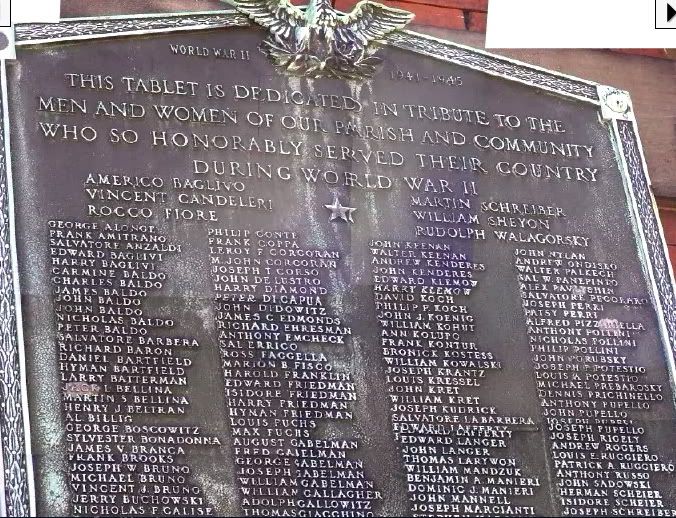
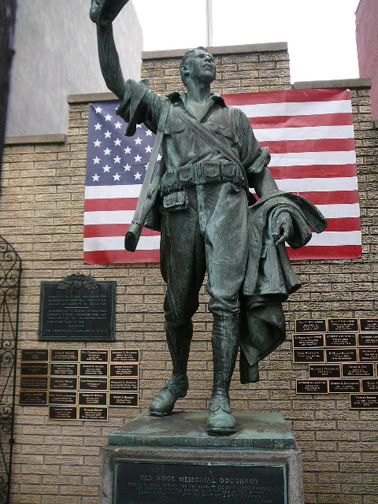 The World War I Doughboy statue had been formerly located in a Park, but it had been vandalized. It was moved to this location at 325 Van Brunt Street. This is where I was getting information from the plaques as clues to addresses of veterans. I found this on a south brooklyn bulletin board posted by Joan Diamond:
"I had wanted to add that Patrick and Anna had 9 children. William also nicknamed Red worked in his father's bar and grill. After the Brooklyn Dodgers had lost a game to the Giants my Uncle William was teasing one of the customers, Robert Joyce a Post Office worker and one thing led to another and Joyce ended up fatally shooting Robert Krug in the head and my uncle in the stomach (july 1938). This information was included in a book titled BUMS (the #1 Baseball memory book) by Peter Golenbock in 1984. My other uncle joseph was killed in WW11 and the Joseph Diamond Post 1427 of the American Legion was named in his memory. My grandfather dies in 1941 and his wife Anna in 1961. Patrick, George and Neil have all passed away as well as Ann and Katherine , my two aunts. Elizabeth survives and still resides in Brooklyn. If anyone remembers any of the Diamonds I would love to hear your memories."
Subscribe to:
Posts (Atom)

 Posts
Posts


