Thursday, December 06, 2007
Another LES Tour
This one's a latin musical one and nicely done. We're concentrating basically in the north of Delancey (and trendier) area where a lot of ugly new construction is taking place. At around the 2:00 mark we are on Orchard Street looking north towards Rivington. Sosinsky and Sons (KVers) was on the NW side (143 Orchard) of the block.


Wednesday, December 05, 2007
Lower East Side History From Sal
A history of the LES found on youtube. It encompasses the early 60's to the present and Sal from of Rosario's Pizza at 173 Orchard Street (and Stanton)is your tour guide. His LES is further north and east of Knickerbocker's. I know Sal, a really sweet, giving and fascinating guy. I'm not a big fan of his pizza, but I like his spinach rollinis. Give a listen
Garden Cafeteria: Then And Now
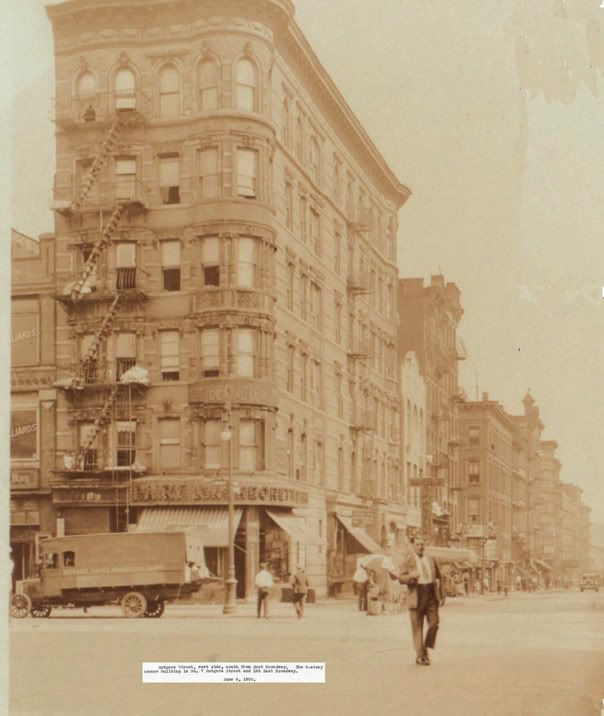 On the left, taken in 1930. One can see a billiard place to the east of the Garden (called a Dairy... Cafeteria?. Above the restaurant is a dentist's office.
 Around the corner going south on Rutger's Street there's either a small synagogue or church (is that a cross?). Those buildings are gone as there is now a vest pocket park on Rutgers and Henry (Captain Joseph's) and also demolition must have taken place due to the construction of the IND subway line. The now picture (look in the first frame of the movie below) has inserts of some of the famous people who have dined at the Garden: Emma Goldman, Fidel Castro, Leon Trotsky and Jerry Stiller. The restaurant got shifted to the building with the billiard parlor
Garden Cafeteria
There's an exhibit on Bruce Davidson's photos of the Garden Cafeteria circa 1970 at the Jewish Museum until February of 2008
Isaac Bashevis Singer and the Lower East Side, Photographs by Bruce Davidson Exhibition
The Garden Cafeteria at 165 East Broadway and the corner of Rutgers Street, was one of the most storied places on the Lower East Side in its day. Adjacent to the offices of The Forvertz/ Forward Jewish Daily the cafeteria was a favorite of the paper's writers and poets, including Isaac Bashevis Singer, and so beloved was it that many believe that Leon Trotsky once frequented it, despite the cafe only being founded in 1941. The Garden closed in 1983 and was replaced almost immediately by the Wing Shoon Seafood Restaurant, which, like its predecessor, inspires community devotion.
Author and Nobel laureate Isaac Bashevis Singer and acclaimed photographer Bruce Davidson were friends and neighbors in their Manhattan apartment building. In 1972, they collaborated on a humorous and surreal film, Isaac Singer's Nightmare and Mrs. Pupko's Beard, based on a story by Singer. During and after production, Davidson photographed Singer in his apartment and around the Upper West Side.
The following year, Davidson took a series of photographs on the Lower East Side. He created a black and white portfolio titled The Garden Cafeteria, depicting denizens of the East Broadway restaurant that Singer frequented on his trips to The Jewish Daily Forward. Later, he photographed local merchants, rabbis, and storefronts on Essex and Orchard Streets.
The exhibition Isaac Bashevis Singer and the Lower East Side presents Davidson's Garden Cafeteria portfolio with an introduction by Singer, a selection of his portraits of Singer and selections from his Lower East Side series. Intimate and unflinching, Davidson’s photographs tell a moving New York story of émigrés and Holocaust survivors from the Lower East and Upper West sides of Manhattan.
Isaac Bashevis Singer (1904–1991), the most revered Yiddish writer of the twentieth century, produced fiction serialized in The Jewish Daily Forward as well as political commentary, popular journalism, plays, children’s books, and advice columns under assumed names. He was born in Poland and emigrated to the United States in 1935. Beginning with The Family Moskat (1950), his stories and novels were translated and published in English, bringing him to a wider audience in America and worldwide. In 1978 Singer became the ninth American and the only Yiddish writer to be awarded the Nobel Prize in Literature.
Bruce Davidson (1933- ) began to photograph at the age of ten in Oak Park, Illinois, and continued to further his knowledge and develop his passion at Rochester Institute of Technology and Yale University. In 1957, Davidson worked as a freelance photographer for Life magazine and in 1958 became a full member of Magnum Photos. From 1958 to 1961 he created such seminal bodies of work as "The Dwarf," "Brooklyn Gang," and the "Freedom Rides." He received a Guggenheim Fellowship in 1962 to photograph what became a profound documentation of the Civil Rights Movement in America. In 1963, The Museum of Modern Art in New York presented his early work in a solo show. In 1967 he was awarded the first grant for photography form the National Endowment for the Arts, having spent two years bearing witness to the dire social conditions on one block in East Harlem, published in 1970 under the title East 100th Street. Classic bodies of work from his 50-year career have been extensively published in monographs and are included in many major public and private fine art collections around the world. His most recent book is Circus (2007).
A modest restaurant, opened in 1911, the Garden was part hangout, part salon, famous for its hospitality to radical political activists (Emma Goldman, Leon Trotsky, and Fidel Castro are all said to have eaten there) and also to the journalists who wrote about them.
Note: The Garden was a regular Sunday destination for the Silverstein family of Knickerbocker Village. In April of 2007 a dozen ex KV "boys" gathered for a 40 year reunion lunch at Wing Shoon restaurant, the inheritor of the Garden space at 165 East Broadway
Al Smith 2
I was with an experienced criminal lawyer down near Knickerbocker today and I showed him the house that Al Smith lived in on Oliver Street. I couldn't believe he didn't know who Smith was. He also never heard of Jimmy Durante! Speaking of Jimmy, a recent biography of Ethel Merman has an "interesting" story about how she got the part in a Durante vaudeville production in the early 30's.
Note that Smith enjoyed performing like Giuliani, but he didn't have to get dressed up in drag.
Al Smith
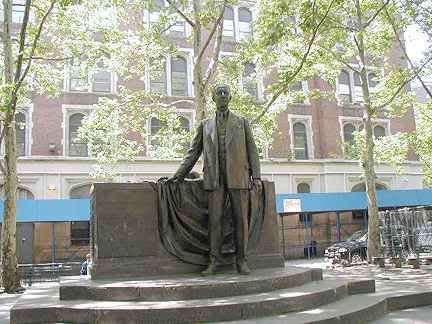 Location: Al Smith Playground, Monroe & Catherine Streets
Sculptor: Charles Keck Year installed: 1950 From forgotten-ny GOV. AL SMITH (1873-1944) He was defeated in 1928 for the Presidency against Herbert Hoover, suffering through a grueling campaign in which he suffered countless attacks, especially in the South, for his Roman Catholicism. Despite his staunch Democratic Party membership, he opposed Franklin Roosevelt's New Deal and supported Roosevelt's Republican opponents in the elections of 1936 and 1940.The plaza in which Al Smith's statue stands is relatively unvisited these days, and the pavement in front of the statue is cracked, pitted and neglected.Alfred Smith was born on the Lower East Side, worked in the Fulton Fish Market and later a pump factory. He was elected assemblyman at age 30 and later became Speaker. "The working man's friend", he championed the Workmen's Compensation Law, banning corporate campaign contributions, and women's suffrage. He was elected Governor of New York three times, the first in 1918.
I came across this on a search for Al Smith
From: "Michael A. Palmieri"
Subject: Re: [{ITA-SICILY-L}] How about lower Manhattan ... 1950's
Date: Wed, 1 May 2002 13:16:09 -0400
References: <4c.ac89291.2a005123@aol.com>
Fellow Listers,
To set things straight St. James RC Church is not torn down and is still an active parish the church is located at 28 James Street and the rectory is around the corner at 23 Oliver Street On another note yes Jimmy Durante was born and raised in this same "Little Italy" or "Lower East Side " neighborhood which is located between the Brooklyn and Manhattan Bridges. He grew up on Catherine Street and his mother owned a Cafe' with my Great Grandmother Angela "Manteo" Arra. The cafe' was located on the lower level of the # 80's block of Catherine Street. Yet another topic on Al Smith. He was also from this neighborhood and was a parishioner of St. James RC Church and in the mid 1920's was a sponsor to my grandfather Michele Palmeri for his Confirmation at St. James. In fact he was a sponsor for all the confirmation participants for that year and possibly others years during this time. Michele's parents Francesco Palmeri and Rosaria "Sadie" Arra were also married at St. James in 1908. I have the original documentation for both events. My families origins in the USA are all in this neighborhood including Catherine, Monroe and Cherry streets. Portions of these blocks no longer exist as mentioned in an earlier post. The portions of the blocks that were torn down did in fact become the new home of the Alfred E. Smith Houses. This is a huge housing complex of large apartments that is populated by some of our countries newest immigrants.
Knickerbocker Village: 1920 Real Estate Profiteering
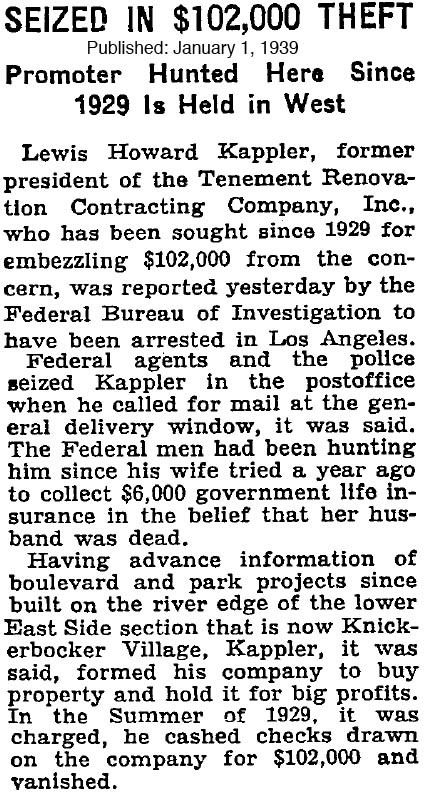 Some things never seem to change. Kappler knew in advance that the slums would be cleared to build Knickerbocker and he was part of a group that bought property in the area. Then he went ahead and embezzled the profits from his partners. Quite a guy.
 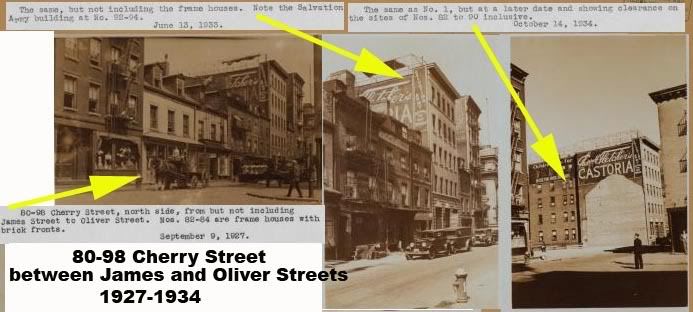 Shown below are pictures of the Cherry Street area that was just to the west of Knickerbocker Village on St. James' Slip and Oliver Street. These are now part of the Smith projects.
Sam And The History Of Movie Theaters On The LES
One of those lost and primitive iMovie videos from the past (2002). I converted it now to take advantage of the google video format. I notice the streaming here causes a loss of the short embedded video segment. Still, I think it's well worth it. Sam Zilberzweig, by the way, was a teacher and later an ap at JHS 22 on Columbia Street, a destination for some KVers.
Tuesday, December 04, 2007
Cherry Street 1934
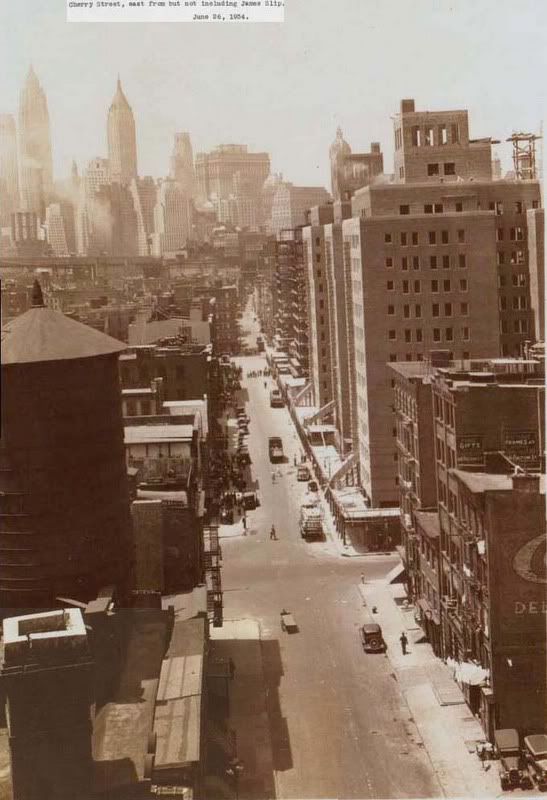 A picture of Knickerbocker Village on June 24, 1934 as construction was being finalized. You are looking west on Cherry Street from The Manhattan Bridge. Market Street is in the foreground. Madonna House would be on the left (South) side of Cherry a little before the intersection with Market. The famous Pete, the Hero King, would have his sandwich shop on Market, on the ground floor of the project, about a hundred feet north of Cherry. Photo by Percy Loomis Sperr
Casablanca: We'll Always Have Paris
Rick: Last night we said a great many things. You said I was to do the thinking for both of us. Well, I've done a lot of it since then, and it all adds up to one thing: you're getting on that plane with Victor where you belong.
Ilsa: But, Richard, no, I... I...
Rick: Now, you've got to listen to me! You have any idea what you'd have to look forward to if you stayed here? Nine chances out of ten, we'd both wind up in a concentration camp. Isn't that true, Louie?
Captain Renault: I'm afraid Major Strasser would insist.
Ilsa: You're saying this only to make me go.
Rick: I'm saying it because it's true. Inside of us, we both know you belong with Victor. You're part of his work, the thing that keeps him going. If that plane leaves the ground and you're not with him, you'll regret it. Maybe not today. Maybe not tomorrow, but soon and for the rest of your life.
Ilsa: But what about us?
Rick: We'll always have Paris. We didn't have, we, we lost it until you came to Casablanca. We got it back last night.
Ilsa: When I said I would never leave you.
Rick: And you never will. But I've got a job to do, too. Where I'm going, you can't follow. What I've got to do, you can't be any part of. Ilsa, I'm no good at being noble, but it doesn't take much to see that the problems of three little people don't amount to a hill of beans in this crazy world. Someday you'll understand that. Now, now... Here's looking at you kid.
Casablanca: Of All The Gin Joints
And to think two guys born right near me on Market Street wrote this!
SAM: Yeah, boss?
RICK: Sam, if it's December 1941 in Casablanca, what time is it in New York?
SAM: Uh, my watch stopped.
RICK: I bet they're asleep in New York. I'll bet they're asleep all over America.
Suddenly he pounds the table and buries his head in his arms. Then he raises his head, trying to regain control.
RICK: Of all the ginjoints in all the towns in all the wold, she walks into mine. He holds his head in his hands.
RICK: What's that you're playing?
SAM: Just a little of my own.
RICK: Well. stop it. You know what I want to hear.
SAM: No, I don't.
RICK: You played it for her and you can play it for me.
SAM: Well, I don't think I can remember it.
RICK: If she can stand it, I can. Play it!
Sam: Yes, boss.
Monday, December 03, 2007
Who's Who In Knickerbocker Village History: Julius and Philip Epstein
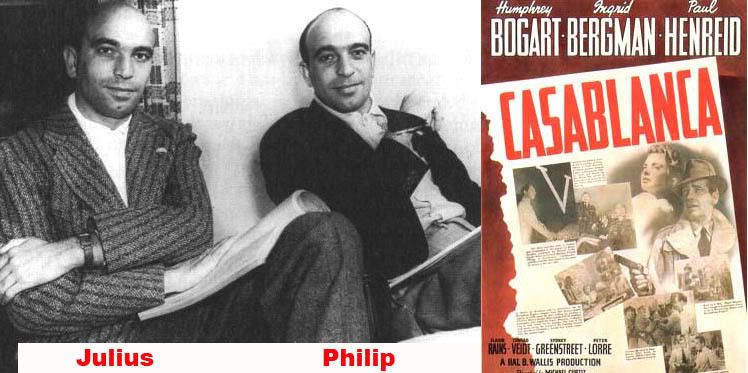 In my quest to know all things Knickerbocker Village (ok, I admit it's getting far too obsessive) I discovered this most amazing bit of history. A search of the nytimes archives (using Knickerbocker Village as a search query) lead me to an mid 1939 article (below) about the Epstein (Philip and Julius) Twins. They were Hollywood screenwriters who were born in the kv neighborhood. They went to PS 147, which was on Henry ans Scammel Streets. Further investigation led me to find out that they co-wrote the screenplay to Casablanca! Philip's grandson is Theo Epstein, the gm of the Sox! Their exact address in 1910 was 78 Cherry Street (smack in the middle of where KV was to be built). In 1920 they lived at 245 East Broadway, where the Seward Park Houses were to be built.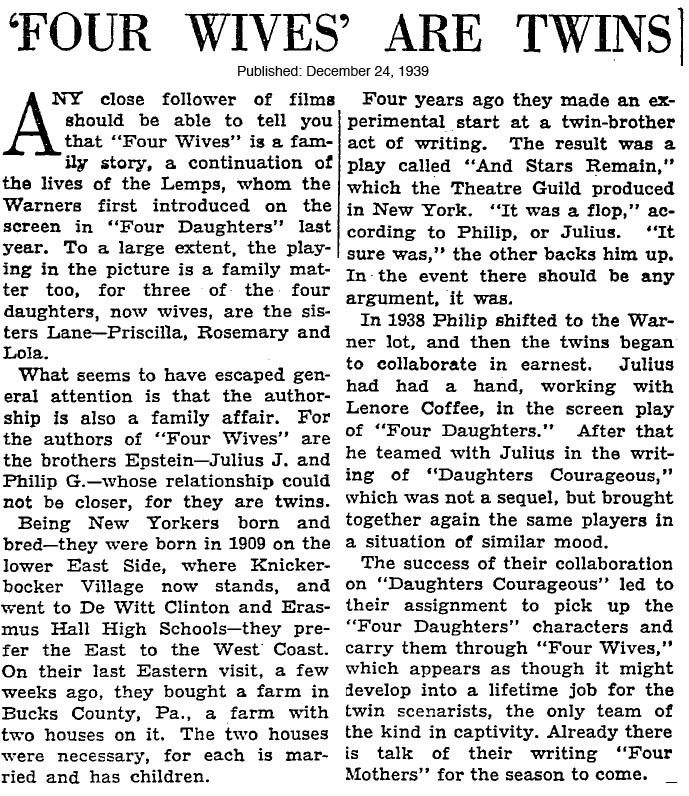
Knickerbocker Village: Christmas Party 1934
I never quite understood what the open space between the two KV courts was all about.
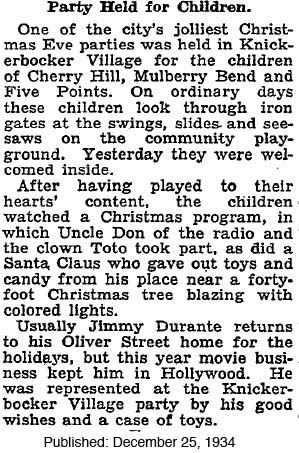
In my days, 50's-60's, it was unused, a waste of space. Evidently early on it was an active "gated" playground to keep out the riff raff. This article clued me into that.
A party given for neighborhood kids featuring an appearance by Uncle Don of radio fame and presents from Jimmy Durante.
 The slide show above contains an Uncle Don jingle and related images. Tanahey Park on Cherry Street wasn't built until 1949. At that point the courtyard park was probably mothballed. BTW, there's an urban myth about Uncle Don. Evidently it's untrue:
The affable host finished telling his last story of the day, wished a good night to all the children in his audience, and sang his familiar sign-off ditty. As the station went to a commercial break, he leaned back in his chair, sighed, and said to no one in particular, "There, that oughta Uncle Don hold the little b.......!" Unfortunately for the ill-fated host, the engineer was late in cutting to the station break, and the host's disparaging remark was picked up by the still-open microphone and broadcast into millions of homes. The station was immediately flooded with thousands of telegrams from outraged listeners, and the humiliated host was fired before the day was out, never to broadcast again. Disgraced beyond redemption, he lived out the rest of his life in obscurity and died, an impoverished drunk, several years later.
Everyone has heard this story. And almost everyone who has heard this story has a friend or relative (a parent or grandparent, perhaps) who remembers actually hearing the infamous broadcast. At the very least, most everyone knows someone who recalls the national uproar caused by the incident, or who remembers reading about the firing of the hapless host in the newspaper. Very few of the people who recollect this event could tell you the name of that unlucky host, however, or recall the year the notorious broadcast took place. And even if you managed to find a few individuals who could supply some of these particulars, you probably wouldn't get the same answers from any two of them. How is it that so few people can provide any specifics about such a widely-known incident? Why do so many people unquestioningly accept accounts of this event as true, in spite of all the disparities and missing details? The answer is that this tale is one of the most well-known pieces of modern folklore — it is a classic among urban legends, and legends don't stand on detail. For the benefit of those who do have an interest in detail, however, let's take a closer look at this legend's background.
More on the story can be found here
Greenwich Village 1960
As a kid the only thing the Village meant to me was a subway ride to West 4th Street with my mother. She would get shoes at a store on 6th Ave near the movie theater. I believe they were water buffalos. Who knew that the village would become just about the hippest place on the planet. Later my father was a frequent visitor to the art show. He always believed he had artistic talents whether it was singing, acting, or painting. He wasn't half bad with the first two, but painting..... He would very proud of my daughter Emma's acting. She has a big part in her high school's production of "David and Lisa" this week
Great scenes here of street play. From the film's description at the prelinger archives
In this film we follow a prim young woman in white gloves as she explores Greenwich Village on a Sunday afternoon. She walks off the Fifth Avenue bus at Washington Square and straight into a "hootenanny." This is a corny, but charming look at the Village in the early sixties in the transitional period between the "beat' generation and the rise of the later sixties counter-culture. The best scenes are when we actually hear the folksingers singing bluegrass tunes around the Washington Square fountain and the beat poet reading in a grubby coffeehouse. These scenes have real documentary value. The film's use of actors to try to create a story gives it an amateurish feeling, but that same amateurism is what also gives the film its charm. It was nice to see the old Italian Greenwich Village with the street market and the stickball and bocce players, who are now long gone. The Greenwich Village portrayed here looks like a shabby, tolerant place where ordinary people could afford to live. Alas, that is no more.
While I was on the prelinger archive site retrieving the third avenue el movie, I found a few other 1950 gems that touched upon life in KV. In this film there's just a very short glimpse of Knickerbocker Village (at 5:10). Here's a summary of the film:
This promotional film for New York's Circle Line cruise service was produced in 1955 [note the marquee for Anne Baxter's movie "Bedevilled" at :49 and the billboard for "Long John Silver" being erected on the movie theater at :55]. The production company behind this, "Paul Alley Productions", was headed by a former pioneer announcer for NBC-TV a decade before! "Douglas" Downs, the cameraman, also photographed Jackie Gleason's filmed "HONEYMOONERS" series in late '55.
The Waterfront of New York is highlighted in Philip Lopate's excellent book, "Waterfront: A Walk Around Manhattan" which has a chapter on Knickerbocker Village
Here's a summary of that book:
Unlike other great cities, as eminent essayist and New York devotee Lopate observes, "Manhattan is almost pathologically averse to letting you wander to the river's edge and get close enough to touch the water." In this loose circumnavigation, first up the West Side from the Battery to Washington Heights and then up the East Side from South Street Seaport to Highbridge Park, he takes the reader up close on an information-packed journey—dipping, as the particular location suggests, into memoir, history, current events, marine biology, city planning, literature, architecture, interviews, biography, films, ecology and more. Anyone who relishes the company of Whitman, Melville, both Cranes, even Sara Teasdale, among many other celebrants of the New York waterfront, will particularly enjoy the vicarious sojourn. The trek includes Chelsea Piers and the U.N., Gracie Mansion and the Brooklyn Bridge, Captain Kidd and the Gulf filling station on East 23rd Street. "Sewage and salsa," Lopate invokes in describing Riverbank State Park, and that mix of the problematic and the delightful pervades his account, "saturated with history," of the waterfront's metamorphosis from "a working port, to an abandoned, seedy no-man's-land, to a highly desirable zone of parks plus upscale retail/residential." This is a demanding book—formidable in some of its detail, complex in its broad approach. Tourists will find it enriching but only borderline useful. Its ideal reader, a New Yorker who cares as deeply as Lopate does about the waterfront as "the key to New York's destiny," will find it compelling as well as entertaining.
The Lopate piece on Knickerbocker can be found on Mr. Beller's Neighborhood (no relation)
The Third Avenue El
I have memories of riding the el and the stop it made at Chatham Square. Just around the 2:00 mark of this film you can see the train passing near the old KV neighborhood.
Impressionistic picture of the Third Avenue Elevated Railway in Manhattan, New York City, before it was demolished.
This item is part of the collection: Prelinger Archives
Producer: Davidson (Carson)
Viewer comments from prelinger site
With only a single dime to link "the day in the life" stories of the EL train together, this lovely vignette takes us briefly into the lives of its riders, the photographer, drifter, little girl and her guardian, and the young couple. The music really does work well, giving a frenetic pace on par with the demanding duties of the EL. The editing is quite well done (and matches the music very well), and the "special effects" (negatives, sepia tones) are quite striking considering just what had to be done to achieve them in this era. Many of the camera angles as well are of particular interest, leading the transit photographer like myself wondering just how they were achieved, particularly two scenes, one taken from inches above the rail as the train rumbles over some switchwork, and another from an elevated vantage on a swinging bridge over the East River.
This film is an exquisite gem! Simple, elemental and complete, it is a moving salute to a now vanished era. It's also very personal since I rode the "El" many times as a kid. In fact, I used to commute to Stuyvesant HS from Yorkville every weekday. How I loved standing next to the motorman's compartment, looking out the window of the door at the onrushing tracks, passing trains, and the always spectacular skyline of the city I recall the announcement to tear it down as well as the "promise" to replace it with a Second Ave subway. That never happened of course and I have often wondered if real estate owners and developers didn't turn a trick to get city hall to approve the El's destruction. I remember, in 1956, when it was bing torn down how sad it was to see the pillars, denuded of the track structure. I had the sense that I was looking at the stumps of amputees and they too would soon be gone. Later, when ever I turned the corner from 86th Street onto Third Ave. I always had the idea that I was looking into the mouth of someone who had lost its teeth.
Sure, it was obtrusive and noisy to those who lived near it but it was a great, even romantic, element in what was the best, most reliable and least expensive public transportation system in the world. Here's to the "El" and the forward-thinking historian-filmmaker that made this priceless documentary.
Sunday, December 02, 2007
Victory At Sea 3
The third part of the cartoon series on the Day Of Infamy from the solutions comic archive
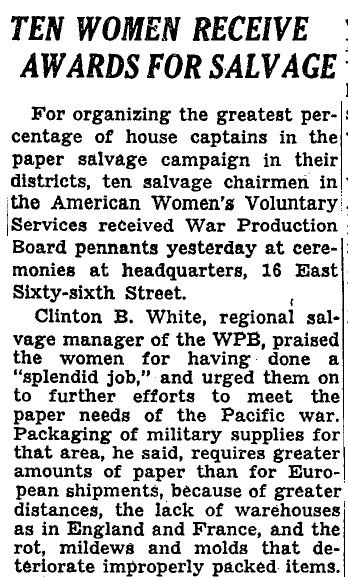
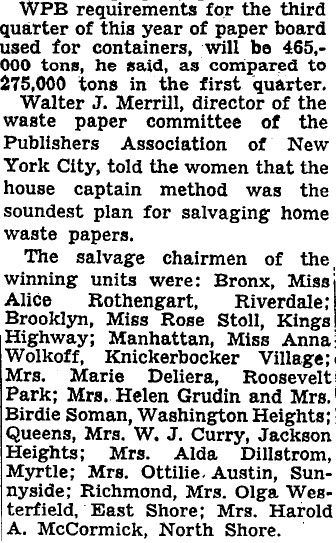
Victory At Sea 2 and Victory on the Home Front for KV Hero Anna Wolkoff
The attack on Pearl Harbor begins. While later on during the war years Miss Anna Wolkoff of Knickerbocker Village leads her team of salvagists to another kind of victory, Fron the nytimes June 27, 1945
 From tin can colonels and uncle sam scrappers:
During World War II, the folks back home in the United States undertook a series of conservation measures which included rationing, production of food in home "Victory" gardens for one's own use, and collections of scrap materials to be remanufactured into war materiel. The first scrap drive was for aluminum in the summer of 1941. Many different kinds of items were eventually collected, including iron, steel, rubber, copper, brass, aluminum, zinc, lead, paper, tin cans, nylon, silk, cooking fats, and rags .
There were a number of drives in 1941 and 1942, many of which involved children, but one of the more significant events occurred in June, 1942 when the popular Little Orphan Annie newspaper comic strip introduced a story line in which his plucky orphan girl decided to help the war effort by organizing children to collect scrap. For a name for her organization she adopted the name "Junior Commandos." Having had some previous military experience in single-handedly blowing up Nazi submarines(!), Annie assumed the top rank of colonel - Colonel Annie - and organized the children along military lines. Though Annie's efforts were , of course, only in the funny pages real groups, organized in the same way, were launched within a month .
Graphic Novels: Pearl Harbor
I came across a few of these titles at the Strand and bought them at a good discount.
The publisher provided free downloads of selected passages. I used the selection from Day of Infamy: Attack on Pearl Harbor to make the video above. Music: Victory At Sea If the experts would spend less money on wasteful and boring staff development and put these kinds of materials in teachers' hands kids might be interested.
From The Osprey Graphic Novels Web Site:
Osprey Graphic History present compelling true stories of war in a gripping comic strip narrative, written and developed by renowned comic book writers and illustrators, which will appeal to children and adults alike.
The stories are supported by a wealth of historical detail, including further reading on the causes and consequences of the events, the key players, a glossary of important terms and where to find out more.
Fast-paced action, historical accuracy, exciting art and comprehensive supporting materials complete these stories of momentous events in history.
The Osprey Graphic History series is a responsible, graphic treatment of great battles and campaigns in history that provides an accurate reflection of the dramatic events our ancestors lived through, in an exciting comic-strip format.
There is widespread concern about the decline in childhood reading, particularly amongst boys. By presenting historical events in a comic-book we hope that this will stimulate interest both in history and reading more about the great events that have shaped our world.
Additional material includes an Overview and Aftermath, a Who's Who, Glossary and Further Reading, all to provide further opportunities to study the battles represented in more detail.
The series is suitable for all ages, from eight upwards. Wars are terrible and devastating events that cause suffering for soldiers and civilians alike. These books present this responsibly, without glorification, but seek to explain the consequences and causes of violence in an educational way whilst honouring the courage and bravery of those who were often reluctant warriors.
The Bloodiest: Day Battle of Antietam
The Empire Falls: Battle of Midway
Surprise Attack! : Battle of Shiloh
Gamble for Victory: Battle of Gettysburg
Island of Terror: Battle of Iwo Jima
Day of Infamy: Attack on Pearl Harbor
Ironclads at War: The Monitor vs the Merrimac
Fight to the Death: Battle of Guadalcanal
The War is On!: Battle of First Bull Run
Deadly Inferno: Battle of the Wilderness
The Tide Turns: D-Day Invasion
Hitler's Last Gamble: Battle of the Bulge
Victory At Sea
KVer Howie will be celebrating his 56th birthday on December 8th and being a fellow history buff he reminded me about the "Day of Infamy" speech that occurred on December 8, 1941. In this slide show (it's hard for me to forget that I'm not teaching anymore)
I took a cartoon from the excellent site that had been created for a Virginia newspaper school supplement . It's one in a series on WW2. In order to make it visible in the 320x240 video viewer I increased the resolution using a neat photoshop add on program called Genuine Fractals PrintPro. I also made the cartoon into smaller frames. To make the KV connection more valid I added a Victory at Sea soundtrack (a great resource for Victory At Sea music) I remember watching Victory at Sea with my father on our DuMont. I'm sure it was a similar experience for my fellow KV baby-boomers.
1915 Real Estate Maps: PS 177, PS 12
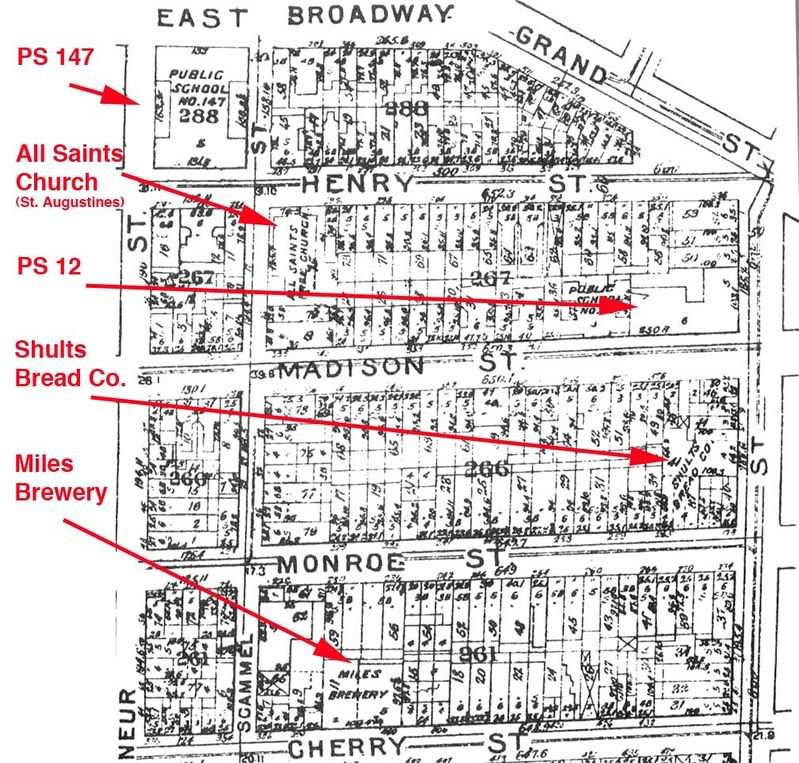 The map on the right encompasses the area around PS 12 shown here previously on a post about Laguardia visiting the school in 1941
It shows the density of the area at the time. There was only a tiny school yard for the school. There were many industrial plants around, including a bread factory and a brewery. Since there were so many people and so many kids there were schools all over and they were still overcrowded. Visible here is PS 147. Just another block SW and not visible would be PS 31. About 3 blocks NE would be PS 110 as well as PS 34. St. Augustines's Church (called all saint's here), famous in its role in Black History in New York, is visible
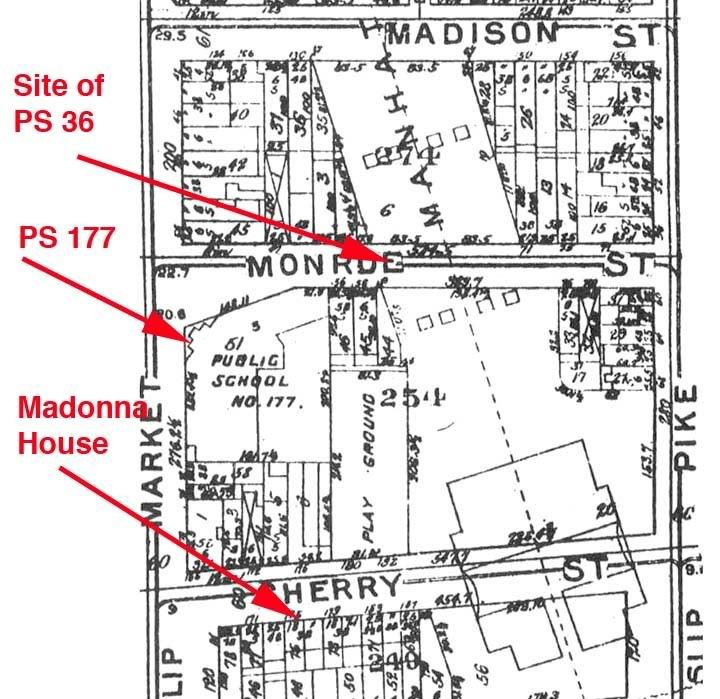 The map of PS 177 shows where PS 36 was located. It was probably demolished in the construction of the Manhattan Bridge in the early 1900's. A previous post about PS 36 mentions its poor condition and its lack of light since it was in the middle of the block. PS 177, constructed I believe in 1903, has more light since it's on the corner. The architect was C.B.J. SNYDER, who was known for the care and beauty he put into school construction.
East Side West Side: A Block By Block Tour Of The Two Bridges Area
I did this in July as a possible enhancement to Peter Dans' book talk at the Seaport Museum. The images come from Dylan Stone's online exhibit at the nypl site. It's called
Drugstore Photographs or A Trip Along the Yangtze River. I alternated those images with coordinated google earth screen captures with highlights. More on the Stone exhibit:
Conceptual artist and photographer Dylan Stone created 1999 to explore the intersection of art and documentation in an archive. The physical collection consists of wooden cabinets, snapshot photographs, archival boxes, Manhattan map segments, and acrylic paint.
As an array of visual documents, this collection has something in common with the photographs by Percy Loomis Sperr (1890-1964), commissioned by the Library in the 1920s and 1930s to document buildings that were soon to be demolished (now held in the Milstein Division of U. S. History, Local History and Genealogy). Stone's work differs from Sperr's by its focus on the comprehensive recording of only one part of the city-the buildings existing below Canal Street. Also, it is all-inclusive, rather than selective, in its coverage.
Background
Artist Dylan Stone was born in New York City in 1967, but raised and educated in London. Drugstore Photographs, or A Trip Along the Yangtze River, 1999 was featured in Greater New York: New Art in New York Now, an exhibition held at P.S. 1 Contemporary Art Center in New York City in 2000, for which Stone provided the following description of his projected, larger plan:
On an official county map of Manhattan, I have numbered every block starting from the financial district, ending at Inwood. With this numbered map as my guide, I am photographing the entire island of Manhattan. I need between one and three rolls of film to photograph the four sides of an entire block. I take the shot film to be developed at a drugstore, which returns the processed film in an envelope advertising "A Trip Along the Yangtze River." I have developed a numbering and description system to catalogue and archive these photographs. My archive will be stored in boxes designed by a company that specializes in museum-quality storage systems. My project, at heart, is about conservation. It is a living, precious photographic archive of an entire city. Yet it contains cheaply processed photographs from a typical, nondescript Manhattan drugstore. It documents the dubious decisions of what corporate and political officials choose to conserve, or - more likely - rebuild. To some, it seems, conservation itself may be a lost idea."
Stone has since stopped working on the project, which was intended originally, in part, to show the transience of New York's urban landscape. The Library's holding-which includes his 35mm color negatives-therefore comprises the most complete expression of his goal. Now, in light of September 11th's murderous destruction of the World Trade Center and nearby buildings, the utter ordinariness of his pictures and their vernacular medium have overtaken his stated narrow, polemical goal to succeed in conveying the almost elegiac contradictions of loss, memory, and impermanence that so enticed Stone to undertake the project in the first place.
Catharine Street Market: 1850
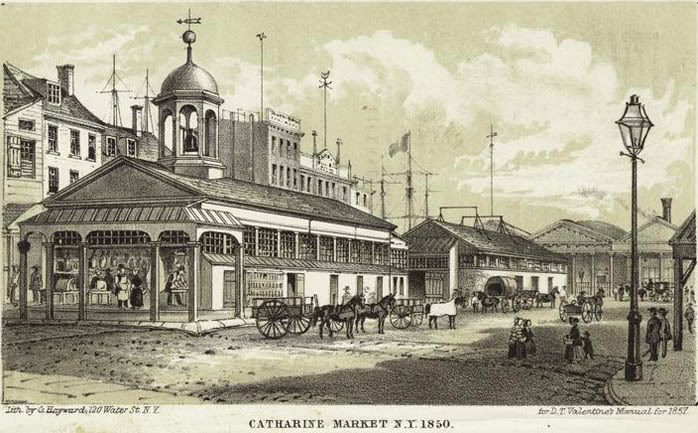 The spelling used to be with an a instead of an e.
From the Brooklyn Genealogy site. Remembrances recorded in 1874 in the Brooklyn Eagle of the early 1800's on the Lower East Side and the Catharine Market (BEWARE OF LANGUAGE):
Brooklyn In its Infancy - Memories of Localities Now Obliterated - the River Front on Both Sides - How the March of Improvement has Transformed the Old Scenes in the River Wards of Brooklyn and New York, etc., etc.
Fifty years ago travelers crossed the Catherine Ferry in a horseboat,
then, and for years after, owned by Rodman Bowne and Brothers, who
accumulated a vast amount of real estate and left millions of dollars to their heirs. Then there were but few buildings between this point and Red Hook in
comparison to the present. Beyond the Fulton Ferry, excepting an occasional
shanty or boathouse, there was nothing but a beach, affording a very
comfortable bathing ground. What is now called the Heights was then a delightful promenade, with only a few mansions and the Eagle tavern, very near to what is now Atlantic avenue. Many resorted to this promenade to enjoy the exhibarating breezes
from the bay and harbor. There was a gradual slope from the top of the bank down to the water, and A FEW WOODEN STAIRS to ascend and descend. It was not easy to walk down where there were no steps, and the boys, in attempting to run, would go head over heels into the water. It may be that here Jack and Gill Went up the hill To get a pail of water; And Jack fell down And broke his crown, And Gill came tumbling after. Below Atlantic avenue was what might be termed a great bog meadow until
Red Hook was reached. The most prominent bulding in this locality then was a
very extensive glass blowing establishment. At a later period the Long
Island Railroad Depot was at this point, and went through Atlantic avenue the
most of the way underground. It was finally driven away by the old fogies,
whose nerves were so sensitive that they could not endure the noise of the
iron horse. They had to shut up the tunnel, thereby burying an enormous
amount of treasure which had been expended in its construction. Looking at this portion of Brooklyn now, and comparing it with what it was fifty years ago, it would seem to have risen up as by enchantment. But
what might it have been had the iron horse been permitted to stay?
East of Catherine Ferry it was less populated than west of it. Scarcely
any buildings along the shore except one tavern, which stood on quite a high
hill about midway between the ferry and Navy Yard. There were not many
streets cut through to the water. At the foot of Washington street there was
an extensive lumber yard, kept by one John Moon, whose children are still
living in Brooklyn. Adams street came next, and but few others until Navy
street was reached, running alongside the Navy Yard.
From Fulton Ferry to what is now called the City Hall there was not one
building where there are now ten.
THE FINEST MANSION IN THE STREET
was the residence of Henry Waring, Esq. (the founder of Waring's
Storehouses), in close proximity to which there was a beautiful burying
ground. This was in the vicinity of what is now called Clinton Street.
Where the Court House now stands was a very pleasant resort known as
"Duflon's Garden." Between this point and the Jamaica turnpike (where Fulton
street then ended), was another familiar resort, known as the Black Horse
Tavern, or half way house to Jamaica. Not far beyond this, at the junction of
the Jamaica turnpike and Flatbush road, was a large nursery and magnificent
garden, kept by one Parmentier.
=To the right of the garden an ordinary country road passed over Prospect
Hill and on to Flatbush. From the left side of Parmentier's the Jamaica
turnpike went through Bedford now almost "lost and swallowed up" in the heart
of Brooklyn. Stages then left Fulton Ferry about three times a week for
Flatbush, Flatlands, Canarsie, etc.
From Catherine Ferry, up Main street to Sands, and up Sands to the
Wallabout Bridge, buildings were anything but numerous, and mostly frame. On
one side of this bridge was a large pond full of timber, seasoning for Uncle
Sam to build his ships.
Crossing the Wallabout Bridge, which was at the head of Sands street, an
ordinary country road wound its way to the Cross Roads and Bushwick.
A great portion of the land in the vicinity of the Navy Yard, now so
compactly built on, was then sal(t?) meadow, and there is now an old house in
Adelphi street, near Park avenue, that they stood on the edge of the
Wallabout, and from which its occupants frequently went in a "boat" out to
the Cob Dock. (The word "sal" was at the end of the column)
From the bridge, along the East River, to Grand street, there was only a
footpath and some half dozen farm houses. From the Ferry up Grand street,
until Bushwick avenue was reached, the houses were few and far between.
THE OLD DUTCH CHURCH
(Meeker's) was then in Bushwick avenue' and is now hid away among the
hundreds of surrounding habitations.
Adjacent to what is now called Broadway, E. D., there was a long row of
Lombardy poplars, doubtless remembered by many of our readers from which many
of the farmers started for New York in skiffs with milk, carrying it from
door to door with a yoke on their shoulders. Milkmen also went from Red Hook
to New York, crossing Buttermilk Channel, and sometimes they would get upset
from their skiffs in the ice during the Winter season.
NURSERY MAID'S SONG
Then it was that the nursery maid's sang to the little 'uns:
Milkman, Milkman, Where have you been?
Buttermilk Channel Up to my chin
Spilled my milk And spoiled my clothes
And got a great icicle Hanging to my nose.
Crossing to New York and passing along the river front and the Seventh
and Fourth Wards, the contrast is most remarkable. Then from Corlaer's Hook
to Pike street the river front was mostly used for shipbuilding. Bergh's yard
was at the foot of Scammel street.
The water front then was at Water street, and all the slips from
Gouverneur to Roosevelt street, viz: Rutgers, Pike, Market and James, run up
to this street.From the foot of Walnut street (now Jackson) there was a ferry,
principally used for getting to the Navy Yard.
Walnut street in those days and for years after was almost a
pandemonium----worse, if needs be, than the well known Five Points.
Banker street (now Madison) with its one story shanties, occupied
promiscuously by whites and blacks, was not far behind Walnut street.
Georges street (now Market), was another emanation from the lower regions.
Lombardy street (now Monroe), lined with Lombardy poplars, was a
comparatively quiet street. At Jefferson street it was intercepted by
country bars. Old Colonel Rutgers at that time occupied about two blocks,
his mansion being in the centre, and not far from where Monroe street was in
later years cut through and continued on to Corlaer's Hook. On the opposite
side of the Rutger's mansion a splendid row of brick buildings was put up,
but they and the mansion house have wonderfully retrograded. The millionares
have gone to the Fifth avenue, and the mansion and grounds are now used as a
large cooperage.
OPPOSITE COL. RUTGERS MANSION
was another old relic, being a large brick dwelling about fifty feet square,
surrounded by spacious grounds, belonging to and occupied by Mr.Remsen. This,
some thirty years since, had to succumb to progress, and in its stead stands
Remsen Row. On the corner of Clinton and Harman (now East Broaway), was a very high
hill, which remained some years until the street was widened; and this
street, as also Henry and Madison streets, became the most quiet and retired
in the city. In fact some of the oldest and most respectable merchants
resided in these streets. Such, for instance, as Josiah Macy, of the firm of
Josiah Macy & Sons, Samuel Judd, (now Samuel Judd's Sons;Preserved Fish,
(said to have been picked up in a boat when a boy), once President of the
Tradesmen's Bank; Jas. W. Barker, dry good merchant, once Know Nothing
candidate for Mayor.The venerable Dr. Maclay, the eminent Baptist divine, and Wm. B. Maclay, M. C. Madison Holmes, Sr., of the firm of Holmes, Hawley & Co., once President of the Tradesmen's Bank, also.
(In case any of the comments in the following transcript are
upsetting to some people, as they were to me. please remember
that this is from a newspaper that was published in 1874.)
OLD JOE HOXIE
Joseph Hoxie, who was considerably mixed up in politics, and subsequently
moved over to this city; also Wm E. Hoxie, his brother, once Captain of the
packet ship North America, lost on Sandy Hook beach, and afterward Captain of
the ship bearing his name.G. W. Brown, so long known as the keeper of a hotel in Water street, near Wall.John J. Cisco, who once kept a clothing store on the corner of Market and Cherry street, and not many years since was connected with the United States Treasury, now a Wall street banker.Cherry and Water streets, then below Catherine, were comfortable streets to live in, but now what are they?
Catherine street was a great thoroughfare from the Bowery to the ferry. A
large market at its foot and almost every commodity being sold in this
street, made it almost impassable on Saturday nights. Sunday morning was a
gala day at this market for the "darkies" who came over from the Wallabout in
skiffs to dispose of their perquisites. The market was open till nine
o'clock and they carried on quite a traffic in birds, berries, herbs, clams,
crabs, eels etc., beside having a jolly time "wid dem New York niggers."
BOTH MARKETS AT THIS TIME were frame buildings, the lower one being about half occupied by fishermen and hucksers. Some years after they were replaced by brick ones, and an exclusive fish market built over the water. Then, the butchers, with very few exceptions, butchered there own meat, and had their own slaughter house
in the Tenth and Thirteenth Wards. But they have all disappeared, the
wonderful increase in population and the more fastidious ideas of the people
demanded their removal. Some of the most prominent butchers were the
Varians, Winships, Andersons and Valentines. A meat shop could not be found
at almost every corner, and those in want had to go to market. There were
not more than a half dozen markets on the east side of the city and it was
quite a journey for some people to go to them. The East River Savings Bank (now in Chambers street) was first located in Cherry street, at the residence of John Leveridge, one of the old time and much respected lawyers.Goodrich (the well known Peter Parley), fifty years ago kept a bookstore on the corner of Water street and Peck Slip, and it is only a few years since the old Dutch building was taken down, and a large tenement house erected in its place. Old Johnny Pease, better known as the introducer of "PEASE'S HOARHOUND CANDY," once kept a fruit and candy store in Division street, opposite Chrystie, and was noted for his fine sprue, beer and mead. One of his sons is now living, and is of the firm of Pease & Murphy, boiler makers.
CONGRESS HALL where they could have the soft side of a plank for three cents per night, and it is said one of the most prominent citizens of the Seventh Ward once took these Congressmen to a clothing store and then to the poll, in order to help
his cause.East Broadway was somewhat noted for physicians, such as Cockroft, Miner,
Lindsey, Baldwin and James R. Wood (a student of the celebrateed Dr. Mott),
the latter now a surgeon in the Bellevue Hospital. Now, we will suppose that that honest old Dutch groceryman, who once kept store in Fulton street, and never put sand in his sugar, or mixed old beans with new, should return (having been away fifty years), and be lifted to the top of the BRIDGE TOWER and "view the landscape o'er"; the forest of masts; the magnificent domes; the floating palaces upon the water; those inimitable public buldings on Blackwell's, Ward's and Randall's Islands; the innumerable number of cars and the multitudes that crowd them, and hear those screaching devils (the tugs) coursing to and fro; would he not be very likely to go mad and exclaim, "Mein Got, vat a countree and vat a peebles-----vy, te berry tuyvel moost pe in em!"
Catherine Street Eel Market
From the Big Apple Comic Collection by Patrick Reynolds. There was once an active eel market on Catherine Slip in the 1800's. Black citizens engaged in a form of minstrelsy to earn a living and perhaps a free meal. The slide show is padded with an excerpt from an 1889 nytimes article about the area:
A Rodgers and Hart work:
Hawks and crows do lots of things,
but the canary only sings.
She is a courtesan on wings-
So I've heard.
Eagles and storks are twice as strong.
All the canary knows is song.
But the canary gets along-
Guilded bird!
REFRAIN
Sing for your supper,
And you'll get breakfast.
Songbirds always eat
If their song is sweet to hear.
Sing for your luncheon,
And you'll get dinner.
Dine with wine of choice,
If romance is in your voice.
I heard from a wise canary
Trilling makes a fellow willing,
So, little swallow, swallow now.
Now is the time to
Sing for your supper,
And you'll get breakfast.
Songbirds are not dumb,
They don't buy a crumb
Of bread,
It's said.
So sing and you'll be fed.
PS 177: 1956-7-part 2
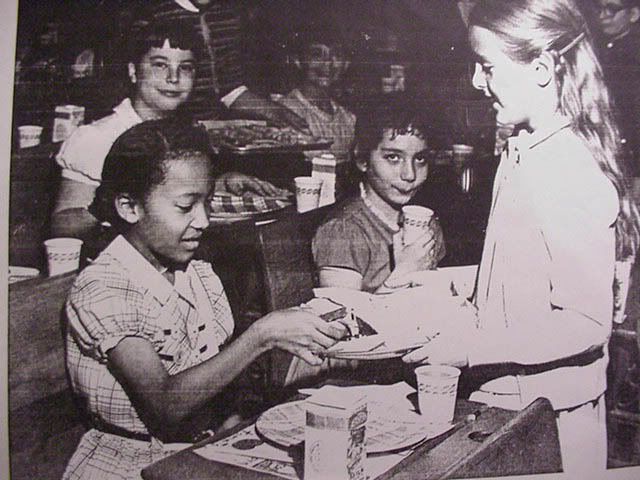
This is the other picture from the Special Collections of the nycboe archives at Columbia that I found about 7 years ago. It's from my 4th grade class at PS 177.
Visible are Susan Miller, with the bangs, and Rosemary, who seems to be sizing up the little blond visitor who is serving the food. I think this might have been from an international food tasting event. Knowing tough little Rosemary she is probably saying to herself, "She thinks she's cute, but wait till I get her on Monroe Street." Rosemary affectionately called me the "baby hippo."
Note I went back last year to visit the archives. It's gone. I reached David Ment, who now works part time at the Municipal Archives and he told me it exists somewhere, but it's very hard to get access to.
PS 177: Circa 1956-7
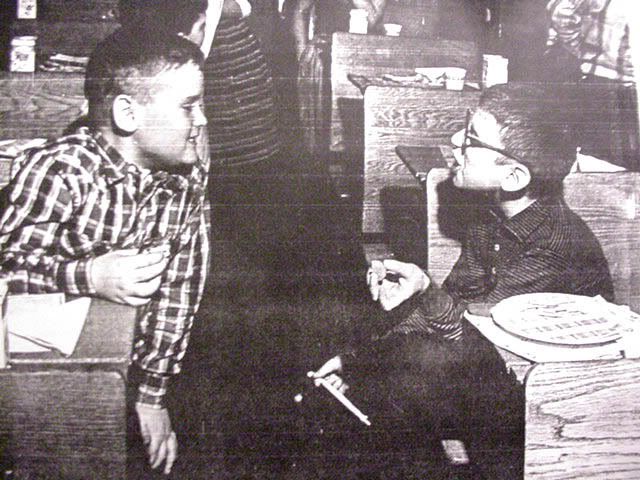
Sometime in 2000 (that's the time stamp on this image which I just found today on an archived CD), I had the occasion to visit the nyc public school archives located at Columbia Teacher's College. A really nice guy named David Ment was the curator of the "Special Collections." I was getting resources for teachers doing research projects to fulfill the requirements of a grant. I told David that I went to 177 and lo and behold he comes back with a couple of prize pictures. Evidently the board of ed had photographers come around to document special events. Wouldn't you know it it was of my class? I think it's from the 4th grade. The very much beloved Beverly Feuer was the teacher.
Note: The KV boys were given the task of coming of with the imagined conversation that was occurring between Bob Simmons on the left and Steve Needle on the right. This is a good one (others were good, but not suitable for publication) that came from Bob
Simmons: "Nancy has real breasts, just look!" Needle: "Maybe, but we have a math test coming up--long division is more important!"
Saturday, December 01, 2007
Reality TV 3
Patrick Sullivan, the lone parent rep with cahones on the nycdoe pep committee,
points to the fallacies in the human resources statistics presented doublespeak style by Rose and Cerf.
see the nytimes on teacher resignations
More teachers resigned during the last school year than at any time in recent history, according to figures released yesterday by the United Federation of Teachers, the city’s teachers union. According to the figures, 4,606 certified teachers resigned last year, not including teachers who retired or had problems with certification. The numbers have been steadily increasing since 2001, when 2,544 resigned; last year 4,273 teachers did so. Of the 7,069 teachers who were hired in 2006, nearly 14 percent resigned by the end of the year, the union said, up from about 11 percent the year before. The numbers showed that “losing good teachers is the predominant staffing issue that the City Department of Education needs to address,” said Randi Weingarten, the president of the union. Chris Cerf, a deputy chancellor at the Education Department, said in a statement that the numbers were inaccurate, and called the release of the figures a “media stunt.”
Reality TV 2
Norm talks about the breakdown in discipline that occurs due to the stress on test prep
From the nytimes, November 19, 2007 By MOTOKO RICH
Has teaching towards the test contributed to a loss of the love to read?
Study Links Drop in Test Scores to a Decline in Time Spent Reading
Harry Potter, James Patterson and Oprah Winfrey’s book club aside, Americans — particularly young Americans — appear to be reading less for fun, and as that happens, their reading test scores are declining. At the same time, performance in other academic disciplines like math and science is dipping for students whose access to books is limited, and employers are rating workers deficient in basic writing skills.
That is the message of a new report being released today by the National Endowment for the Arts, based on an analysis of data from about two dozen studies from the federal Education and Labor Departments and the Census Bureau as well as other academic, foundation and business surveys. After its 2004 report, “Reading at Risk,” which found that fewer than half of Americans over 18 read novels, short stories, plays or poetry, the endowment sought to collect more comprehensive data to build a picture of the role of all reading, including nonfiction.
In his preface to the new 99-page report Dana Gioia, chairman of the endowment, described the data as “simple, consistent and alarming.”
Among the findings is that although reading scores among elementary school students have been improving, scores are flat among middle school students and slightly declining among high school seniors. These trends are concurrent with a falloff in daily pleasure reading among young people as they progress from elementary to high school, a drop that appears to continue once they enter college. The data also showed that students who read for fun nearly every day performed better on reading tests than those who reported reading never or hardly at all.
The study also examined results from reading tests administered to adults and found a similar trend: The percentage of adults who are proficient in reading prose has fallen at the same time that the proportion of people who read regularly for pleasure has declined.
Three years ago “Reading at Risk,” which was based on a study by the Census Bureau in 2002, provoked a debate among academics, publishers and others, some of whom argued that the report defined reading too narrowly by focusing on fiction, poetry and drama. Others argued that there had not been as much of a decline in reading as the report suggested.
This time the endowment did not limit its analysis to so-called literary reading. It selected studies that asked questions about “reading for fun” or “time spent reading for pleasure,” saying that this could refer to a range of reading materials.
“It’s no longer reasonable to debate whether the problem exists,” said Sunil Iyengar, director of research and analysis for the endowment. “Let’s not nitpick or wrangle over to what extent is reading in decline.”
In an interview Mr. Gioia said that the statistics could not explain why reading had declined, but he pointed to several commonly accepted culprits, including the proliferation of digital diversions on the Internet and other gadgets, and the failure of schools and colleges to develop a culture of daily reading habits. In addition, Mr. Gioia said, “we live in a society where the media does not recognize, celebrate or discuss reading, literature and authors.”
In seeking to detail the consequences of a decline in reading, the study showed that reading appeared to correlate with other academic achievement. In examining the average 2005 math scores of 12th graders who lived in homes with fewer than 10 books, an analysis of federal Education Department statistics found that those students scored much lower than those who lived in homes with more than 100 books. Although some of those results could be attributed to income gaps, Mr. Iyengar noted that students who lived in homes with more than 100 books but whose parents only completed high school scored higher on math tests than those students whose parents held college degrees (and were therefore likely to earn higher incomes) but who lived in homes with fewer than 10 books.
The new report also looked at data from the workplace, including a survey that showed nearly three-quarters of employers who were polled rated “reading comprehension” as “very important” for workers with two-year college degrees, and nearly 90 percent of employers said so for graduates of four-year colleges. Better reading skills were also correlated with higher income.
In an analysis of Education Department statistics looking at eight weekly income brackets, the data showed that 7 percent of full-time workers who scored at levels deemed “below basic” on reading tests earned $850 to $1,149 a week, the fourth-highest income bracket, while 20 percent of workers who had scored at reading levels deemed “proficient” earned such wages.
The new report is likely to provoke as much debate as the previous one. Stephen Krashen, a professor emeritus of education at the University of Southern California, said that based on his analysis of other data, reading was not on the decline. He added that the endowment appeared to be exaggerating the decline in reading scores and said that according to federal education statistics, the bulk of decreases in 12th-grade reading scores had occurred in the early 1990s, and that compared with 1994 average reading scores in 2005 were only one point lower.
Timothy Shanahan, past president of the International Reading Association and a professor of urban education and reading at the University of Illinois at Chicago, suggested that the endowment’s report was not nuanced enough. “I don’t disagree with the N.E.A.’s notion that reading is important, but I’m not as quick to discount the reading that I think young people are really doing,” he said, referring to reading on the Internet. He added, “I don’t think the solutions are as simple as a report like this might be encouraging folks to think they might be.”
Rating Schools does not take discipline into effect
The decision to reward schools for advancing the neediest students produced some counterintuitive results. South Bronx Academy for Applied Media, listed by the state as one of its most violent schools, is rated by the city as an A. It fared well on the report card because while just 17 percent of its students met grade level standards on the state reading test, more than 63 percent had improved from last year.
Initially, officials planned to include school safety as a major component on the report cards and to downgrade schools for an unsafe environment. But Mr. Liebman said it became clear that “better schools” and smaller schools reported more safety problems, because their administrators were more aware of each infraction.
In the end, the city dropped the idea and incorporated questions on school safety in a parent, teacher and student satisfaction survey that accounts for 12 percent of a school’s grade.
Reality TV 1
Norm Scott over at ednotesonline has been taping nycdoe meetings at Tweed (God Bless Him). Seeing him and others confront "the men behind the curtain" along with viewing directly the doublespeak being served gives one a healthier dose of reality tv. Here Norm suggests the leaders practice what they preach, i.e teaching with the workshop model. There's no way they could ever pull it off.
Friday, November 30, 2007
G&S Sports: From An Interview in 2002
For KV kids and adults the place to go for sporting goods was either Haber's or G&S Sports. Haber's had the added bonus of selling school stationery supplies. Haber's has been gone for a long time, but G & S is still going strong after 70 years. Now it specializes in boxing supplies sold mail order and also via the internet. Len Zerling, now in charge, also manages boxers. This is part of a longer interview done as a school research project in 2002.
Information from the G&S website
G & S Sporting Goods was established in 1937 by a former boxer, Izzy Zerling, and has continued to be operated by the same family. G & S specializes in boxing equipment but also carries a full line of sporting goods for baseball, basketball, football, soccer, sneakers and team uniforms.
Today, G & S still takes pride in our equipment and guarantees customer satisfaction. We use quality leathers, the best nylon stitching and rubber in making our boxing gear. We try to bring our customers the best in boxing equipment possible by investing in product quality and not in advertising or self-promotion.
Note: Haber's was almost bought by the Kuperstein conglomerate.
Thursday, November 29, 2007
LaGuardia: "I Can Run On a Laundry Ticket And Beat These Bums"
The audio is from a documentary narrated by Edward R. Murrow
Subscribe to:
Posts (Atom)

 Posts
Posts


