Wednesday, December 26, 2007


Carnival of Joba 2007: #1
I think I'll finish out the year with my highlight videos of the best thing that happened in 2007, Joba Chamberlain. This features Maynard Ferguson's versions of Superman and The Theme From Rocky.
Tuesday, December 25, 2007
New York Songs
one of the episodes from this series on New York Voices
Produced in association with the Daily News, Big Town Groove is a one-hour documentary look at how musical genres from jazz to hip-hop were transformed by New York City. From Duke Ellington in Harlem to Lou Reed and the Velvet Underground at Andy Warhol's Factory, the city seeped into the music. Woody Guthrie wrote "This Land is Your Land" on 44th street, while Dylan reinvented himself in the nightclubs of Greenwich Village. Doo wop found its echo in the subway stations of the Bronx, and the grit of the Bowery and CBGB's gave punk its New York accent.
LES Meets Harlem 1956
I found this amazing clip on youtube. A rehearsal recording of Billie Holiday from 1956 singing My Yiddishe Momme. The images are those of Barbra Streisand and her mother. Billie has a rough beginning but ends up strong
lyric source
My Yiddishe momme
I need her more than ever now
My Yiddishe momme
Id like to kiss her wrinkled brow
I long to hold her hand once more
As in days gone by
And ask her to forgive me
For things I did that made her cry
How few were her pleasures
She never cared for fashion styles
Her jewels and her treasures
She found them in her baby's smiles
Oh I know that I owe what I am today
To that dear little lady who's gone away
To that wonderful Yiddishe momme
momme, momme of mine
What Was I Thinking? A Great Day In Harlem 1958
This comes by way of Knickerbocker Village. A previous post here about this movie is missing the youtube removed clip
Now what was I doing in the summer of 1958? Probably playing a lot of punch ball in Tanahey Park, when I could have been a kid sitting on a curb in front of this collection of all time great musicians. Harlem was probably thought of as a foreign country to those on the LES
A Great Day in Harlem or Harlem 1958 is a 1958 black and white group portrait of 57 jazz musicians photographed on a Harlem street.
Art Kane, a freelance photographer working for Esquire magazine, took the picture at around 10 a.m. in the summer of 1958. The musicians had gathered on 126th Street, between Fifth and Madison Avenues in Harlem, New York City.
Esquire published the photo in its January 1959 issue. Jean Bach, a radio producer of New York, recounted the story behind it in her 1994 documentary film, A Great Day in Harlem. The film was nominated in 1995 for an Academy Award for Documentary Feature.
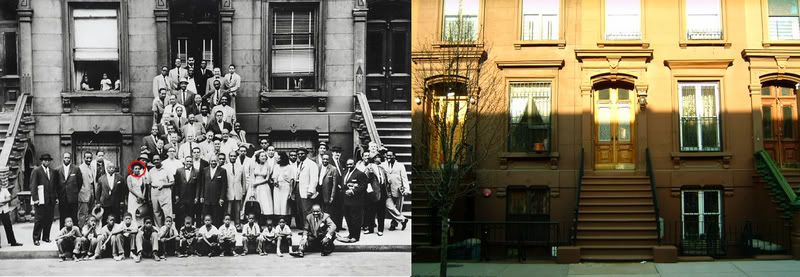
The photo was also a key object in Steven Spielberg's film, The Terminal. The film starred Tom Hanks as Viktor Navorski, who came to the United States in search of Benny Golson's autograph to complete his father's collection of autographs by the jazz musicians pictured in the classic 1958 photo.
When I was working in Harlem the last few years I went back to locate the spot to see what it looks like now. It's at 17 East 126th Street.
Postcards From Buster 2
 I made a slide show using scanned images from a cheap, commercially available comic book for the slide show above. Such pages can be used as writing prompts for kids as well as digital coloring pages when scanned
Monday, December 24, 2007
Postcards From Buster
This is another example of great resource "transfiguration." I'm using that word because my family had dinner at a Chinese restaurant near Transfiguration Church in Chinatown. I don't know what the favorite buzzword of the talking heads is, but what I'm referring to is when accessible and motivating multimedia curriculum appear on the scene and teachers can take advantage of it and modify it for their students. That's the case with Time Warp Trio and here with Postcards with Buster. The pbs show has a great site with games and songs. This link takes you to the episode that the show above refers to Perfect for geography and perfect for third grade social studies' themes. They even have the lyrics of the songs so kids can read along
Buster's Lucky Year Chinatown, San Francisco
Where's this place? See my map! It was Chinese New Year when we visited Chinatown in San Francisco. It's a time to wish for good luck in the new year. I hope it works for me - I've been having terrible luck. How bad has my luck been? Well, my potato chips got stuck in the vending machine. The cheese slid off my pizza. I left my doughnuts in a taxi. Aaargh! Bad food-luck is the worst kind of bad luck there is!
Listen
Los Viajeros wrote a song about bad luck. It's called Turn My Luck Around. That has to help me at least a little bit! We met Hayley and Kary in Chinatown. They showed me some yummy Chinese desserts called dim sum. Dim sum (which can be food, too) means "touch the heart." That sounds pretty... but I want them to touch my stomach first. Many things are lucky for the Chinese New Year. Tangerines are lucky. The color red is lucky. Bamboo is lucky, too, because it is so strong. Plus, you wear new clothes so the bad spirits can't find you. Muffy
Muffy e-mailed to say she always has new clothes, so she's always lucky. Hey! Maybe she's hogging some of MY good luck. We saw the Chinese New Year's parade. There were lots of dragon floats, dancers, and firecrackers. Each year is represented by a different animal. This was the Year of the Monkey. That sounds like a fun year!
Turn my luck around,
From bad luck to good luck.
Friends are there to help you through
On good-luck days and bad ones, too!
Friends can bring good luck your way.
Somehow they know just what to say, too.
Oh, yeah!
I've turned my luck around,
You betcha!
From bad luck to good luck, now.
Sure you might be feeling down,
But don't plan on getting stuck!
Take it away, guys!
Whoo-hoo!
Turn my luck around
(Whoo-hoo!)
From bad luck to good luck.
(Good luck at last!)
Turn my luck around
From bad luck to good luck.
Turn my luck around
From bad luck to good luck.
Shoogie-doogie
Doogie-doogie!
That Holiday Feeling
what a combination! Steve and Eydie with archival NYC/Christmas images from the nypl digital collection. The lyrics
That Holiday Feeling
Words and Music by Bill Jacob and Patty Jacob
Look how the snow is snowing
Your eyes are soft and glowing
Jack Frost is nipping at our feet
I'll bet your lips are warm and sweet
We've got that holiday feeling
That happy holiday feeling
Let's roast chestnuts by the fire
Any little thing you desire
Those reindeer soon will be here
Won't mean a thing to me dear
When Santa Claus begins his flight
I hope he gets a flat tonight
We've got that holiday feeling
That happy holiday feeling
Our favorite holiday of the year
I better leave
It's been so lovely like this
A chance I'd never miss
But it's so late
On New Years Eve
At twelve o'clock we'll stop to kiss
And while the whole world will be whistle blowing
We will still be mistletoe-ing
You think you're such a smarty
Come on let's have a party
I know what's running through your mind
This is the season to be kind
We've got that holiday feeling
That happy holiday feeling
So come and snuggle close to me
Right here where you're supposed to be
Let's kiss, 'cause it's the season, dear
Let's kiss, who needs a reason, dear
We've got that holiday feeling now
Route 66: A Great Project Source
From three years ago: Another slide show I created as a "teaser" for a never to be done transportation themed technology/social studies units (death due to the reading/writing process gestapo and collaborators). The original sound file was corrupted, Bing Crosby substituted.I thought Route 66 would be a great "resource mine" to make use of. I see others have similar views and last years great "Cars" movie would have been a terrific stimuli for the kids. The folks at Alvarez and Marsal don't have ideas like that. There's a great blog devoted to Route 66, some excerpts:
Emily recently renovated a couple of Route 66 sites she owns — Route66Food.com and SpringBreak66.com. Route 66 Food is a guide to restaurants, and Spring Break 66 is an online resource for college students considering a trip on the Main Street of America.Both were moved to Wordpress.com. Here’s her explanation on the Route 66 yahoogroup on why: Spring Break 66 likely will not receive tons of updates, as it’s pretty stable, but the blog format is A.) free, and B.) easier to update than a standard Web site. I’ll probably post travel tips and what not on there from time to time. Route 66 Food should improve dramatically with the new format, as it is now manned by a team of reviewers whose names will be familiar to y’all: Mike Ward, Ron Warnick, and Kip Welborn will all be contributing restaurant reviews to the blog. I’m still ironing out some techie-type stuff there to get the non-Wordpress junkies set up with Wordpress IDs. I am still in need of some assistance in the form of additional reviewers, so if you are on 66 often and are interested in helping, please e-mail me … and let me know. I am particularly in need of volunteers in Illinois, Texas, New Mexico, and California, but I will also be accepting guest reviews from folks in other locales, so don’t let geography deter you from volunteering.The book is available here
Review: “Dinosaurs Across Route 66″ comic December 23, 2007 Posted by Ron in History, Movies, Publications, Road trips. add a comment
Many Route 66 aficionados are, to put it gently, a little long in the tooth. So many of them fret about whether there will be enough young people interested in the Mother Road to keep it viable in the future. That’s why many roadies rejoiced at the 2006 release of Disney-Pixar’s animated movie, “Cars,” which introduced Route 66 to millions of kids. Roadies have reason to celebrate again with the publication of a comic book, “Dinosaurs Across Route 66″ (32 pages, $3.95). It was created by California artist and literacy advocate Phil Yeh, whose previous comic, “Dinosaurs Across America,” has sold almost 200,000 copies. So Yeh already has a sizable audience that can be informed about the Mother Road. In “Dinosaurs Across Route 66,” the ever-patient Mrs. Mills drives a flying convertible west on or above the Mother Road. Accompanying her is Patrick Rabbit, an oaf on a “fact-free diet” who has no motivation to read or learn or aspire to anything except host a television show and become famous. Every so often, the duo comes across a “magical time hole” where they can go back to another era and visit figures such as Abraham Lincoln or see defunct Route 66 landmarks such as the Trails Restaurant in Duarte, Calif. They also meet the “Dinosaurs Across America” crew, who escaped extinction by learning to read and building a flying time machine.
Route 66
One of my favorite shows. When I was 12 or so I viewed it thinking "this is deep" but not knowing why. I wished then that I could break away from my mother's apron strings and travel with Todd and Buzz. Now I see it's finally arrived on DVD
from Amazon reviewers
Finally someone is listening! First the Fugitive and now Route 66! Television with meaning. I guess it was well worth the wait for the studios to get all the crap out of their system so they could start releasing the real quintessential jewels of American television. This show was so innovative for its time - It was shot on location around the country. The entire cast and crew literally traveled from one spot to the next and filmed each episode. ...
The story-telling event that made me want to become a writer was the premier of the classic TV show, Route 66. I was 17, doing so-so in high school, lacking plans and ambition, going nowhere. But all that changed at 8:30 p.m. on the first Friday of October in 1960 when a drama about motion gave me a destination. The series was about two young men (brilliantly portrayed by Martin Milner and George Maharis, the latter eventually replaced by Glenn Corbett) who drove a Corvette convertible across the United States in search of America and themselves. Providing a time capsule of 1960-64, every episode was filmed entirely on location–from Poland Springs, Maine, to Huntington Beach, California; from Seattle to St Louis to Tampa and a hundred communities between. Two-thirds of the episodes were written by Stirling Silliphant, who eventually received an Oscar for In the Heat of the Night and whose scripts for ROUTE 66 were an intriguing blend of intense action and philosophic/poetic speeches that sometimes lasted five minutes, with a flavor of Tennessee Williams combined with William Inge and Arthur Miller. As a bonus, the great arranger-composer Nelson Riddle contributed a new musical score every week, often with a jazz flavor. The series so knocked me over that I wrote to Silliphant, explaining my sudden ambition to follow his path. The long letter he sent in return gave me all the advice any writer needs. "Write, write, keep writing, and then write more." That letter is framed next to my desk. Eventually, Silliphant and I became friends and colleagues. In 1989, I was thrilled to see him listed as the executive producer of my NBC miniseries, Brotherhood of the Rose. Twenty-nine years after Route 66 debuted, a circle was completed, even as the road continued. -- David Morrell, New York Times bestselling author of FIRST BLOOD and CREEPERS
The Sleeper Version Of The Death Of Civilization
I couldn't find Woody's reference to Shanker, but watch for another accurate prognostication (sic?). How could have Woody known?
Al Shanker : Tough Liberal Or Woody Allen's Version?
A clip from a symposium in November 2007 on the a recent biography of Al Shanker. Notice how quickly Norm Scott gets cut off compared to the next speaker
The Committee for Economic Development (CED) in partnership with The Century Foundation cordially invites you to attend a breakfast discussion on Richard Kahlenberg's new book, "Tough Liberal: Albert Shanker and the Battles Over Schools, Unions, Race, and Democracy". The discussion will take place on November 27 from 8:30 a.m. to 10:30 a.m. at the East Side Marriott in New York City (525 Lexington Avenue, at 49th Street). Breakfast will be available at 8:30 a.m. The program begins at 9 a.m. In addition to the author, panelists will include: Eugenia Kemble, the Executive Director of the Albert Shanker Institute; Sol Hurwitz, CED President Emeritus; Dr. Diane Ravitch, former U.S. Assistant Secretary of Education; Bella Rosenberg, former Shanker advisor; and Randi Weingarten, President of the United Federation of Teachers. The discussion will be moderated by Richard Leone, President of the Century Foundation.
In his 1973 comedy Sleeper, Woody Allen depicted teacher union leader Albert Shanker as the man who destroyed the world. In Tough Liberal, however, Albert Shanker is described as a complex and visionary figure whose life story offers timely lessons for contemporary debates over education, labor, civil rights, foreign policy, and the future of liberalism.
Sunday, December 23, 2007
Checking Up On Belichick's Chick

 I had always intended to follow up on a post I had done last month on Bill's girl friend, Sharon Shenocca (ex-girl friend?) and the Park Slope house he bought for her. I wanted to see if I could find it as the Post stated on 6th Street. I think I found a match
Hoover Planned Mass Jailing in 1950
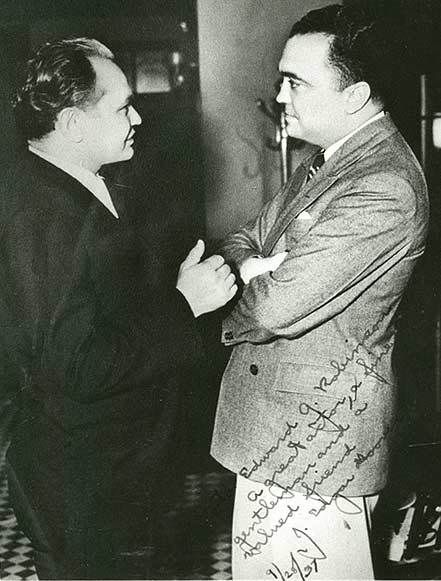 I was discussing the McCarthy era with an old KV friend recently. While revisiting the past here its intrigued me that many of my KV friends' parents had strong progressive political connections. At the time, I always thought we were all Democrats, but in the very traditional sense, What is America to me, A name, a map, or a flag I see, A certain word, democracy, brotherhood, etc . My friend told me that his mother was so paranoid that she hid her views and organization affiliations because of the witch hunt going on in the 50's. Another "alumni" recently revealed that his parents moved from Knickerbocker for fear of being tainted "Red." The possible repercussions, blacklisting and the loss of a livelihood. I now recall reading a few years ago about the Rosenberg Case (which has always intrigued me) that the FBI had just about tapped everyone's phone in KV during the time they were dong their investigation that case. Anyway just last week I just posted an interview that Robert Meeropol gave about the similarity in political climate between now and the 50's and coincidentally yesterday this story appeared in the news.
 A newly declassified document shows that J. Edgar Hoover, the longtime director of the Federal Bureau of Investigation, had a plan to suspend habeas corpus and imprison some 12,000 Americans he suspected of disloyalty.
Hoover sent his plan to the White House on July 7, 1950, 12 days after the Korean War began. It envisioned putting suspect Americans in military prisons. Hoover wanted President Harry S. Truman to proclaim the mass arrests necessary to “protect the country against treason, espionage and sabotage.” The F.B.I would “apprehend all individuals potentially dangerous” to national security, Hoover’s proposal said. The arrests would be carried out under “a master warrant attached to a list of names” provided by the bureau. The names were part of an index that Hoover had been compiling for years. “The index now contains approximately twelve thousand individuals, of which approximately ninety-seven per cent are citizens of the United States,” he wrote. “In order to make effective these apprehensions, the proclamation suspends the Writ of Habeas Corpus,” it said. Habeas corpus, the right to seek relief from illegal detention, has been a fundamental principle of law for seven centuries. The Bush administration’s decision to hold suspects for years at Guantánamo Bay, Cuba, has made habeas corpus a contentious issue for Congress and the Supreme Court today. The Constitution says habeas corpus shall not be suspended “unless when in cases of rebellion or invasion, the public safety may require it.” The plan proposed by Hoover, the head of the F.B.I. from 1924 to 1972, stretched that clause to include “threatened invasion” or “attack upon United States troops in legally occupied territory.” After the terrorist attacks of Sept. 11, 2001, President Bush issued an order that effectively allowed the United States to hold suspects indefinitely without a hearing, a lawyer, or formal charges. In September 2006, Congress passed a law suspending habeas corpus for anyone deemed an “unlawful enemy combatant.” But the Supreme Court has reaffirmed the right of American citizens to seek a writ of habeas corpus. This month the court heard arguments on whether about 300 foreigners held at Guantánamo Bay had the same rights. It is expected to rule by next summer. Hoover’s plan was declassified Friday as part of a collection of cold-war documents concerning intelligence issues from 1950 to 1955. The collection makes up a new volume of “The Foreign Relations of the United States,” a series that by law has been published continuously by the State Department since the Civil War. Hoover’s plan called for “the permanent detention” of the roughly 12,000 suspects at military bases as well as in federal prisons. The F.B.I., he said, had found that the arrests it proposed in New York and California would cause the prisons there to overflow. So the bureau had arranged for “detention in military facilities of the individuals apprehended” in those states, he wrote. The prisoners eventually would have had a right to a hearing under the Hoover plan. The hearing board would have been a panel made up of one judge and two citizens. But the hearings “will not be bound by the rules of evidence,” his letter noted. The only modern precedent for Hoover’s plan was the Palmer Raids of 1920, named after the attorney general at the time. The raids, executed in large part by Hoover’s intelligence division, swept up thousands of people suspected of being communists and radicals. Previously declassified documents show that the F.B.I.’s “security index” of suspect Americans predated the cold war. In March 1946, Hoover sought the authority to detain Americans “who might be dangerous” if the United States went to war. In August 1948, Attorney General Tom Clark gave the F.B.I. the power to make a master list of such people. Hoover’s July 1950 letter was addressed to Sidney W. Souers, who had served as the first director of central intelligence and was then a special national-security assistant to Truman. The plan also was sent to the executive secretary of the National Security Council, whose members were the president, the secretary of defense, the secretary of state and the military chiefs. In September 1950, Congress passed and the president signed a law authorizing the detention of “dangerous radicals” if the president declared a national emergency. Truman did declare such an emergency in December 1950, after China entered the Korean War. But no known evidence suggests he or any other president approved any part of Hoover’s proposal.
Robert Meeropol
I heard Robert Meeropol on BBC World News today. He was speaking about the comparisons between the McCarthy era and today in regard to civil liberty restrictions. I took the audio and combined it with images of Robert and his brother as well as images of his parents. Robert founded the Rosenberg Fund for Children, a non-profit foundation which provides support for children whose parents are left-wing activists involved in court cases as well as for targeted activist youth. Michael is the Economics Department chair at Western New England College
Time Warp Trio: Brooklyn Bridge, Chap 1 Read Along Plus
What I did was to scan the book and chop it into pieces that would be visible in the google viewer. I then added images to better illustrate the story (sometimes stills from the video) and I narrated. I did it all in QuickTime pro. There could be an easier or more elegant way, but it worked. Tedious, time consuming yes. But you could put this on an ipod Jon Scieszka is a Park Slope parent who does great volunteer work in schools. Maybe I'll have to try and reach out to make this a kosher endeavor.
Saturday, December 22, 2007
Time Warp Trio: Brooklyn Bridge, Chapter 1
I talked about the time warp television series about a year and a half ago and what great possibilities it had for merging literacy and social studies with technology, an excerpt
Imagine the enthusiasm that could have been built by using these books in conjunction with the television show and the extensive Discovery Channel site that supports it. This should have been a no brainer for those 25 year old Management Consultants that run Tweed.Now I see even more possibilities using the embedded google video player. More to come on this
about time warp from wikipedia
Time Warp Trio is a series of children's books written by Jon Scieszka and illustrated by Lane Smith. A animated television series based on the books was then later made. The show airs on Discovery Kids but also aired in a two-hour Discovery Kids block on NBC until September 2, 2006. The show still airs daily on the Discovery Kids Channel.
When Joe receives a book from his uncle on his 10th birthday, he has no idea what is in store for him and his two friends Fred and Sam. Every time they open this book, known as The Book, it teleports them through time into different time periods, causing them to get into dangerous situations. Whether they like it or not, they have to find the book in the time period they're in while trying to stay alive.
The boys learn how to use The Book throughout the series, but end up warping by triggering the book accidentally. Their great-granddaughters from the 22nd century know how to use The Book at will, although they sometimes trigger it accidentally as well. Samantha has a pocket-watch that belonged to Sam that can only go back in time.
Later in the series, Joe's uncle, Mad Jack (who's mad) tries several attempts to steal The Book from Joe. Whether it's stranding the boys in Antarctica, or trying to throw them off of a high tower, Mad Jack can be ruthless when it comes to The Book.
about this episode
Hey Kid, Want to Buy a Bridge?
There's no place like home — a hundred years ago?! Joe, Fred and Sam warp back to the brawling, sprawling city of New York at the end of the 19th century to witness the building of the Brooklyn Bridge, and help to inspire Thomas Edison in his Menlo Park lab.
Celebrate The Wire
from an excellent article in the New Yorker Stealing Life, The crusader behind “The Wire.” by Margaret Talbot October 22, 2007 some excerpts and does this sound familiar?:
Of course, in producing “The Wire,” Simon and his colleagues did make a lot of shit up. And yet nearly every scene is grounded in documentary truth. This became clear at the writers’ meetings, which were equal parts urban-studies seminar, reporters’ bull session, and Hollywood story conference. The writers’ office is in a former bank in an old out-of-the-way waterfront district of Baltimore called Canton. Simon, Ed Burns, Bill Zorzi, and a young writer named Chris Collins sat around a table. Simon had a laptop open in front of him. In the middle of the table was a basket full of dried cranberries, Fig Newtons, and jelly beans. On the wall was a long sheet of butcher paper, divided into a grid: the name of each member of the show’s ensemble was written in marker on the side; the episodes, identified by number, were notated along the top. Above the butcher paper were head shots of all the major actors on “The Wire.” As the writers decided what would happen to each character in a given episode, Collins would write a brief description of that plot point, or “beat,” on a colored index card and pushpin it to the appropriate box on the grid. But a lot of the discussion on the days I was at the writers’ office had to do with the larger political themes of the show.
One morning in February, Simon—his hands laced behind his head, elbows jutting out—talked about the character of Tommy Carcetti, a venal pol with an idealistic streak, who by Season Five has been elected mayor of Baltimore. Carcetti faces any number of challenges, from bad crime statistics and floundering schools to the fundamental fact that—as he put it during his run for mayor—“tomorrow morning, I still wake up white in a city that ain’t.” (Carcetti is deftly played by the Irish actor Aidan Gillen.) That morning, Simon and his colleagues were analyzing how Carcetti’s ambitions to become the governor of Maryland are molding his agenda in the mayor’s office. Simon noted that Carcetti had promoted education reform in Season Four. “He’s gotta show that test scores have gone up,” he said.
“For the first and second grade,” Burns said sarcastically.
“Right,” Simon said. “It’s always just the first and second grade.” Simon was wearing jeans and a T-shirt, his standard outfit. (His lone sartorial affectation is a black porkpie hat of the type favored by jazz musicians in the nineteen-fifties.) He looked as if he could easily play one of the cops or a longshoreman. Every once in a while, he got up, thrust his hands deep in his pockets, and paced in front of the window, with its distant view of downtown Baltimore. Burns is silver-haired and pink-cheeked, and, in his homey cardigan, might suggest Mr. Rogers, if Mr. Rogers were a brainy, cynical, and profane former homicide detective.
Burns said, “Carcetti is, like, ‘I don’t want to be the education mayor—the numbers aren’t good.’ His advisers go down the list: environmental mayor, this, that, and the other thing. He tries on a few roles, and they just don’t have the juice.
If Simon’s characters were to deliver the kind of doomy social criticism that Simon does, “The Wire” would, as he likes to say, “lay there like a bagel.” Fortunately, his characters bristle with humor, quirks, private sorrows; his drug dealers express intricate opinions about Baltimore radio stations, chicken nuggets, and chess. One reason for this is that the writers knew people like them. Burns knew plenty of drug dealers as a homicide detective and plenty of inner-city teen-agers when, like Detective Pryzbylewski, he left the force and became a teacher in the Baltimore city schools. Zorzi knew plenty of city and state politicians when he was a tough, cranky Sun reporter who would never eat so much as a carrot stick from a buffet paid for by a candidate. As a crime reporter for the Sun, Simon knew plenty of junkies, snitches, cops, and people just trying to keep their heads down and get by in violent neighborhoods. Simon can be scathing, even righteous, about other television shows that presume to depict urban America without the benefit of direct knowledge. As he told the audience at Loyola, “So much of what comes out of Hollywood is horseshit. Because these people live in West L.A., they don’t even go to East L.A. The only time they go downtown is to get their license renewed. And what they increasingly know about the world is what they see on other TV shows about cops or crime or poverty. The American entertainment industry gets poverty so relentlessly wrong. . . . Poor people are either the salt of the earth, and they’re there to exalt us with their homespun wisdom and their sheer grit and determination to rise up, or they are people to be beaten up in an interrogation room by Sipowicz. . . . How is it that there’s nobody actually on a human scale from the other America? The reason is they’ve never met anybody from the other America. I mean, they could ask their gardener what it’s like.”
Colonel "Ashley" Yogi Berra
Episode Number: 73 Season Number: 3 First Aired: October 1, 1957 "Bilko's Bombers" are dragging themselves back to the barracks after being shellacked, 24-0, in a baseball game. "It's more like Bilko's misguided missiles," says Ernie in disgust. They fact the motor pool team lost to the WAC typists is all the more insulting. Bilko takes turns picking on some of the players. What really upsets him is that he has $50 bet with Ridzik and Grover on the game next week against Company A and now thinks "I can kiss that money goodbye."
The next day, while on the shooting range, they get a new recruit, "Hank Lumpkin," a Hillybilly from Tennessee (talk about a stereotype). He demonstrates you don't need bullets to hit that target 150 yards away. He throws rocks that hit the bullseye every time with an assortment of pitches. Bilko, of course, is excited: he has a pitcher, and someone who nobody would be able to hit! He rushes back and suckers the opponents into upping the ante for the baseball bet.
He wins the bet, even though Lumpkin hurts his left hand and has to pitch his right. He can also hit the ball out of sight. Now Bilko sets his sets higher: the Yankees. He can make a fortune as this kid's agent.
What happens next with the Yankees is very funny with several unexpected twists and turns. We also get cameos from four New York Yankee players of the era: Yogi Berra, Gil McDougald, Whitey Ford and Phil Rizzuto.
This episode was extremely entertaining and the type of show that helped make this program so highly-rated."

Friday, December 21, 2007
Spin Cycle
A segment from today's ny1.com's news on the release of a new list of failing schools in nyc. Afterwards the reporters dispense with the tweed spin, "We had more kids tested, there were more ELL's included on tests this year." True, but so did the rest of the state and I wonder how true is the claim that the city has the greatest percentage of ELL's and if so, to what degree? The suburbs have an ever increasing ELL population. Here's nyceducator's take on it
Nonetheless, here is how the Daily News characterized the story:
The report is a sting to Bloomberg and Schools Chancellor Joel Klein, who have trumpeted improvements in test scores and graduation rates as proof that their sweeping school reforms are working. Many of the schools the state judged to be failing did well on the city's new and controversial school grading system.Of the 65 schools added to the list, nine earned an A from the city, 21 earned B's and only four earned an F. Anybody notice a trend when it comes to these statistics?When Bloomberg and Klein control the lists, the stats, the report cards and/or the testing methodologies, the city does wonderfully and Bloomberg's education reforms are helping kids make progress. Yet when the state judges the same schools that Bloomberg and Klein handed "A's" and "B's" to, many of them are listed as failing. And when the feds released the NAEP tests, the results show the city has made little-to-no progress on test scores since Bloomberg took office (as opposed to the state tests which show "great progress" for city students according to Bloomberg and Klein.) And then there are the graduation rate accounting methods Bloomberg and Klein use - simply don't count the kids who don't graduate and the city graduation rates skyrocket! Hmmm- looks like Bloomberg and Klein brought their own Houston Miracle to New York City.
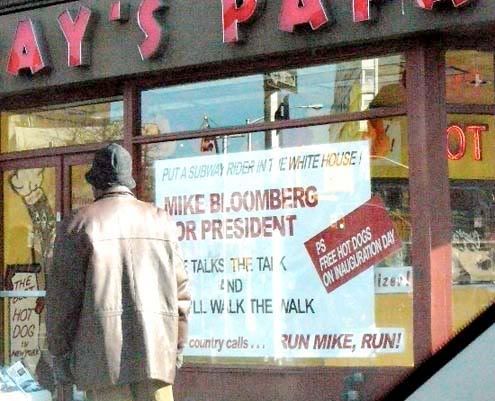
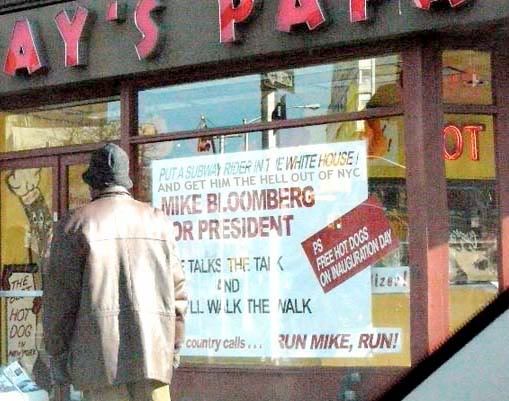
To Be Or Not To Be: To Boycott Papaya Or Frequent It
 To be, or not to be: that is the question:
Whether 'tis nobler in the mind to suffer
The slings and arrows of outrageous fortune,
Or to take arms against a sea of troubles,
And by opposing end them? To die: to sleep;
No more; and by a sleep to say we end
The heart-ache and the thousand natural shocks
That flesh is heir to, 'tis a consummation
Devoutly to be wish'd. To die, to sleep;
To sleep: perchance to dream: ay, there's the rub;
For in that sleep of death what dreams may come
Who's Who In Knickerbocker Village History: Sol Press
 Sol Press became the principal of PS 177 in the late 50's. My stay under his leadership was not long, but I recall a change in energy from the staid Mr. Gregor.
A recent email from Susan and some subsequent research convinced me he deserved recognition as a Who's Who.
From Susan:
Does anybody know what happened to Sol Press and his daughter Lori Press? He was a remarkable man - he made our 6th grade class read the NY Times each day. No WONDER I was reading at 12th grade in 6th grade! He was also the camp director for Camp Madison-Felicia, one of my favorite leftist settlement house camps on earth (and Whoopi is an alum, too) which sadly, no longer exists. His daughter was a camper with us, and a nice human being.
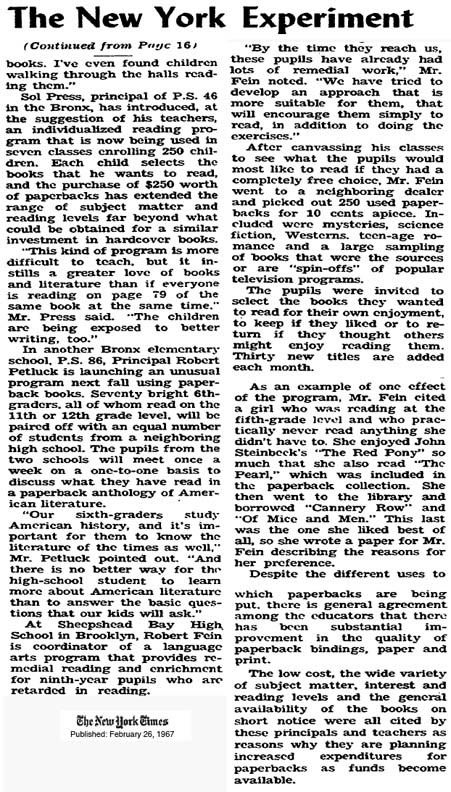
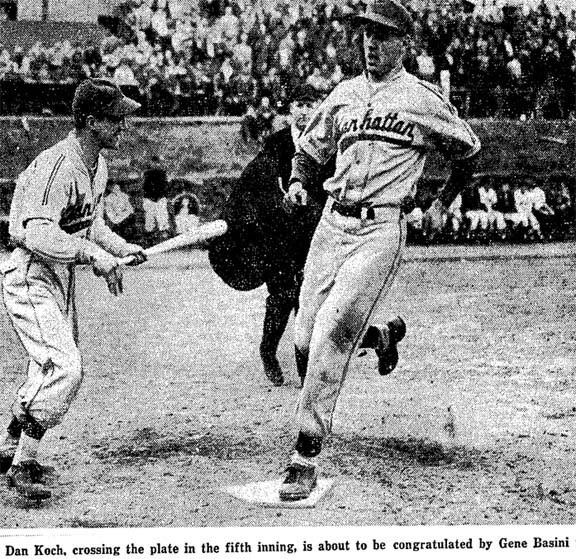
I'm pretty sure the picture above is of Sol umpiring a college baseball game in 1950 and I found Sol in the 1920 census living at 237 Madison Street, which makes him officially LES. A Times' article from 1965 has him doing innovative things at his later school, PS 46. The only thing principals are allowed to do innovative now is what time of day to do test preparation.
Thursday, December 20, 2007
A Real Labor Leader
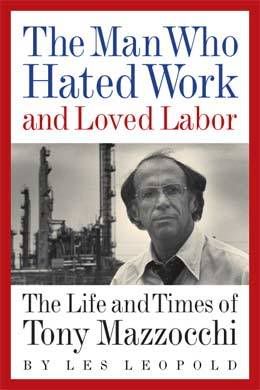 A holiday reading list from Ralph Nader via counterpunch
A Reading List for the Holidays
By RALPH NADER
'Tis the Holiday Season and a time congenial for reading books. Here are my recommendations of recent books that relate to the quest for understanding today's events:
1. Jeno: The Power of the Peddler, (Paulucci International) is the biography of
89 year old multiple entrepreneur, Jeno Paulucci, of Duluth, Minnesota and Sanford, Florida. One of a kind, this human dynamo, starting from the raw poverty of the Iron Range, built company after company and sold them when they became successful. Along the way, he championed labor unions for his large companies, workers rights, sued even bigger companies, heralded the need to use the courts, defended prisoners unlawfully imprisoned and launched many other counter-intuitive initiatives. He just started another company before his 90th birthday. You want to absorb human energy, read this book!
2. The Man Who Hated Work and Loved Labor: The Life and Times of Tony Mazzocchi by Les Leopold, (Chelsea Green) is the story of whom I consider to be the greatest labor leader of our generation. It was Mazzocchi who connected the labor movement with environmental group and scientists specializing in occupational diseases, with a broad humane agenda for working people so that they had a decent living standard and plenty of time for other pursuits. This World War II combat veteran probably traveled more miles, spoke with more blue collar workers and championed "just health care" more than any other American before his passing from cancer in 2002.
3. Corpocracy by Robert A.G. Monks (Wiley Publishers) summarizes its main theme on the book's cover-"How CEOs and the Business Roundtable Hijacked the World's Greatest Wealth Machine-and How to Get it Back." Corporate lawyer, venture capitalist and bold shareholder activist, Monks gives us his inside knowledge about how corporations seized control from any adequate government regulations and especially from their owners, their shareholders, and institutional shareholders like mutual funds and pension trusts. This is a very readable journey through the pits and peaks of corporate greed and power that shows the light at the end of the tunnel.
4. Building the Green Economy: Success Stories from the Grass Roots, by Kevin Danaher, Shannon Biggs and Jason Mark (PoliPoint Press.) This is a practical book about on-the-ground, successful green businesses and neighborhood initiatives that live sustainability, not just talk it. There are also pages of crisp interviews with practitioners and thinkers including Rocky Anderson, Mayor of Salt Lake City and Lois Gibbs, the extraordinary organizer against toxics regarding this emerging sub-economy that challenges greed, concentrated power and destruction.
5. You Have No Rights: Stories of America in an Age of Repression (paperback, The New Press) by Matthew Rothschild. This book by the editor of The Progressive magazine aggregates accurate stories of the post-9/11 violations of the civil liberties and and civil right of the American people, including veterans, by the dictacrats in Washington, DC. Ordinary people exercising their rights of free speech and assembly found harassment, arrest, expulsion from public meetings, surveillance and malicious prosecution to be their rewards. Rothschild end on a hopeful note, describing the resistance by freedom advocates and the various individual and community ways that people are fighting back to defend their Bill of Rights.
6. The Bank Teller and Other Essays on the Politics of Meaning, by Peter Gabel (Acada Books.) Law Professor, Law Dean and college President, Peter Gabel gets down to fundamentals about the "politics of meaning." This is not a muckraking expose but rather a relentless push on readers to examine their isolation and alienation from one another, their neighborhood, workplace, and community without which a functioning democracy cannot evolve.
7. The Four Freedoms Under Siege, by Marcus Raskin and Robert Spero (Praeger/Publishers.) Raskin and Spero take off from Franklin Delano Roosevelt's proclamation of the Four Freedoms in his annual message to Congress, January 6, 1941 and apply them to present day America. These four freedoms are the freedom of speech, freedom to worship, freedom from want, and freedom from fear. It is not a pretty picture. It can be changed, and this book contains wise words for such liberations.
8. Medicare; Facts, Myths, Problems & Promise (in Canada!), edited by Bruce Campbell and Greg Marchildon (James Lorimer & Company Ltd.) At last an authoritative answer by authorities on health care in Canada and the U.S. to the distortions, prevarications, smears and putdowns of the Canadian health care system by the Wall Street Journal, Rush Limbaugh and other servers of their corporate paymasters. In 39 concise chapters, 39 specialists cover the achievements of Canada's way of guaranteeing everyone health care, how it happened, the pressure by the corporatist lobbies and their thoughtless think tanks to undermine Medicare piece by piece, and the future development of Medicare toward prevention and sustainability. A tour de force for anybody fed up with the "pay or die," wasteful, profiteering corporate morass that blocks comparable progress in the United States.
9. Nobodies: Modern American Slave Labor and the Dark Side of The New Global Economy by John Bowe (Random House.) This book is an eye witness gripper of the conditions of the workers who harvest our fruits and vegetables and make our garments from Florida to Oklahoma to Saipan. Laws are weak, unenforced, and raw power takes over these defenseless workers' lives. You'll soon ask: where are the police, the prosecutors, the politicians? The real question is: "Where are the people to make the required changes on behalf of humanity?"
Wolf Tickets For Sale
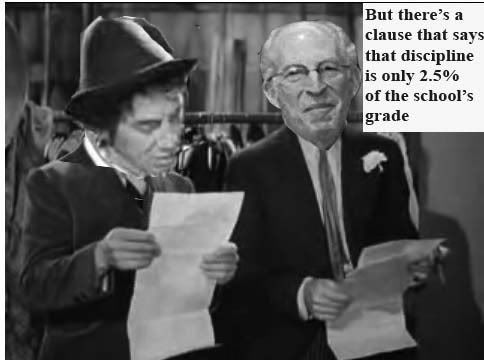 From a 12/19/07 post (except for the image) from nyceducator
Spurred on by several astute commentators, I checked out the "On Education" column in today's Times. Inquiring minds want to know how a school NY State labeled as "persistently dangerous" could get an A from the great minds at Tweed. Jim Liebman, last seen running away from a group of concerned parents, had a ready explanation:
The A grade, though, may also have something to do with the fact that the progress reports weigh all safety factors as only 2.5 percent of a school’s total grade, said James S. Liebman, the Education Department’s chief accountability officer. He has said the department decided not to give safety more consideration because statistics on school violence rely on self-reporting and tend to be deceptive.
Interesting that the safety of NYC's 1.1 million public school children is only worth 2.5% to this administration. In fact, according to Mr. Liebman, being on the list of 52 persistently dangerous schools is actually a good thing:
Only a school that keeps track of its disciplinary incidents will compile enough examples to make the state list, he said. Ms. Ault, the principal, offered the same explanation. Some teachers, however, say they were dissuaded from reporting incidents.
Well, it's an imaginative theory, in any case, and it certainly sheds light on precisely what Mr. Bloomberg looks for in an "accountability officer."
This is one of the "academies" that's recently popped up as Mr. Bloomberg's panacea. Now the one in the commercial I keep seeing says it's passing almost all of the kids that go there, while the school it replaced passed almost none. And it has nothing to do, I have to suppose, with the fact that all the failing kids were replaced. At least that's the impression it gave me. But the school Freedman describes sounds like something from a Fellini film:
During the 2006-7 term, 13 of the 16 teachers were in their first year. The principal, Ms. Ault, had never led a school before founding Applied Media in 2005. She previously coordinated special education at a charter school in Harlem that was shut by the state for academic deficiency.
Still, Applied Media showed student progress on its standardized tests.
One reason for the improving scores, Ms. Ault said, was that during the period of test preparation in the late winter and early spring, she removed the “most disruptive” students from their regular classes. Dmitry Terekhov, a teacher, said: “The A we received is a testament to the teachers. We got the job done.”
That they did. But it appears when test prep is not in session, the approach to disruptive students is one of utter indifference.
“The administration would be telling you that it would all fall into place if you had a better lesson plan or more student engagement or arranged the desks in a U shape,” he said. “But it doesn’t matter how good your lesson plan is if the kids can’t even stay still long enough to write the ‘Aim’ and ‘Do Now’ off the board. There are no repercussions. There is no punishment fitting the infraction.”
While I've learned not to expect much, or indeed anything, from administration, the fact is it's their job to support teachers, particularly new teachers. As new teachers constituted almost the entire staff, that's a big job. I guess big jobs are easier when you don't do them, just like the rent is not so high when you don't pay it.
And that's today's lesson, apparently, in Mr. Bloomberg's New York.
from the urban dictionary:
In The Atlanta Journal and Constitution, Betty Parham and Gerrie Ferris
wrote in 1992, "Although its origin is uncertain, 'woof ticket' is a somewhat dated phrase that refers to an outrageous or exaggerated boast meant to intimidate or impress the listener." Woof is a Black English pronunciation of "wolf." According to Geneva Smitherman's 1994 "Black Talk," a woof ticket is "a verbal threat, which one sells to somebody; may or may not be real. Often used as a strategy to make another person back down and surrender to what that person perceives as a superior power." Tom McIntyre, professor of special education at Hunter College in New York, noted nearly a decade ago: "Woofing is especially effective against those who are unfamiliar with it and don't realize that it is most often 'all show and no go.' . . . The menacing behavior can usually be defused and eliminated by informed, tactful action." He advised teachers to "look secure and self-assured while you withdraw." In the context of the basketball star Howard's remarks, woof tickets are not to be bought; on the contrary, he uses the phrase to show that performance, and not intimidating attitude, is needed to "get it together."
Cocky Doody 2
While we are on a roll on pee pee etc, etc: You can't scam an old pro like Bob Moses. I think by looking at his expression towards the end of this clip you can see that he caught a whiff of Andres' poop.
some background from the Baltimore Sun:
The Algebra Project, Alonso talk about insurgency
The Baltimore Algebra Project, the student tutoring group better known for its advocacy, has posted on YouTube segments of a Nov. 17 forum held in honor of the group's 25th anniversary. In this clip, Bob Moses, founder of the national Algebra Project organization, speaks about insurgency, then has an interesting interchange with Andres Alonso about how much the schools CEO will be willing to support the Algebra Project's troublemaking in Baltimore. Click here for a video of the entire panel discussion (an hour and 15 minutes long). For more on the Algebra Project's relationship with Alonso, see my earlier entry.
Bracing for budget cuts, and other Baltimore school board matters
The city school system is getting ready to make budget cuts to the tune of $50 million as a result of the freeze in Thornton funding combined with increasing costs. So at last night's board meeting, Andres Alonso gave a presentation outlining the current distribution of funds. Board member Maxine Wood lamented that, by the time the presentation came up on the agenda, it was after 9 p.m. and the board room -- standing room only three hours earlier -- was almost empty. Such an important topic, she said, and so few people left to hear about it.
And so I, your dutiful reporter, will summarize some of the highlights. (Continue reading afterwards for more on the board meeting, including another showdown between board members and the Algebra Project, mediated by Alonso.)
-- Everyone is complaining about the state budget cuts, but what about the locals? A chart in Alonso's PowerPoint shows that the state's contribution to Baltimore schools rose from $443.9 million in the 2003 fiscal year to $792.4 million this year, fiscal 2008. By contrast, city government contributed $207.4 million in the 2003 fiscal year and $207.9 million this year, an increase of, well, almost nothing.
-- There are significant disparities in funding by grade level, with the highest funding for pre-kindergarten and kindergarten. Compared with other school systems, the city's spending on pre-k and k is high, but its spending on the other elementary grades is low. Funding is 68 percent higher for a kindergartener than for a fourth-grader.
-- There are also big disparities in funding among schools. Causes for the disparities include school size (small schools get significantly more per capita than big schools) and teacher experience (since teacher salaries are higher for more experienced teachers). Low-poverty schools receive more money per pupil than schools serving high-poverty populations because they have more experienced teachers who get paid more.
-- Sixty-nine percent of the system's $854 million instructional budget is spent on general education, with about 20 percent of that money controlled or spent the central office. Thirty-one percent of the funds are spent on special education, a disproportionately high amount. Around 35 percent of the special education money is spent centrally.
-- Of the system's $246 million non-instructional budget, $173 million (about 70 percent) is spent on facilities, transportation, food and police. About 30 percent ($73 million) is spent on administrative functions, ranging from IT to procurement to the central administration.
-- Charter school funding makes up about 3.6 percent of the school system's budget.
Earlier in the board meeting:
A group of students from the ever-active Algebra Project took up the bulk of the 10 slots for public comment (much to the chagrin of board member Buzzy Hettleman, who has repeatedly said he doesn't want one group to be able to prevent others from speaking ... board chair Brian Morris said last night they'd take up a policy review). The Algebra Project students were demanding that the board members sign a petition protesting the state freeze on Thornton money. They also passed out a flier titled "O'Malley LIES to the Children of Baltimore," citing earlier quotes when the former mayor/current governor argued in favor of full funding of a court ruling that ordered the state to pay hundreds of millions more to the city schools. In comments before the board, the students called O'Malley a "backstabber."
The school board, naturally, needs Gov. O'Malley as an ally, so members would not sign the petition. They got visibly uncomfortable when the students asked for a show of hands on how many people believe children deserve a quality education. Morris, Bob Heck and George VanHook started taking them to task, challenging the assertion that the board isn't already fighting as hard as it can for the kids of Baltimore, when Alonso -- putting on his old teacher hat -- stepped in.
The CEO urged the students to take Morris up on his offer for the board and the Algebra Project to go together to lobby members of the General Assembly for more funding. But, he explained, "You tend to work through one channel and boards of education tend to work through others." He said his job is "not necessarily" to take political stances, and he can't afford to participate in a demonstration if doing so could anger politicians so much that they would take money away from the city schools. He told the students they can have a great impact with actions beyond "calling the governor a liar and doing a symbolic arrest."
Also during last night's public comment, parents from City Springs and Collington Square elementary schools turned out to urge the board to renew their charter contracts next month. Both schools are run as charters by the Baltimore Curriculum Project and use the Direct Instruction method. And neither school met AYP this year, so the school communities seem worried. The board will be voting Jan. 22 on whether to renew the contracts of all 12 schools from the city's first cohort except Patterson Park Public Charter School, which asked for an expedited review and got renewed last night.
Michael Carter, well known for his spirited public comments at the beginning of each board meeting, gave his final presentation as the chair of the system's Parent and Community Advisory Board last night. PCAB will be electing new leadership in January. In his comments last night, Carter urged support for a drive to fund a library at Northeast Middle School, repeated his calls for the board to adopt a policy giving city students a preference for admission to elite high schools like Poly and City (over suburban kids paying admission), and expressed concern about student discipline at the Harlem Park complex, where he said kids have "spent as much time outside as inside in the last few days because of the behavior of students," referring to fire evacuations.
Wee Wee, Cocky Doody And Woo Woo
from High Anxiety. Love those Freudians. Except for Mel, just keep them as far away as possible.
The Other New York, New York
The NYC scenes look pretty fake at times, but is that the real "Gusses" on Hester Street that they pass at about the 00:58 mark?
Dockhand:
I feel like I'm not out of bed yet, oh, oh, oh
Oh the sun is warm, and my blanket's warmer,
Sleep, sleep in your lady's arms,
Sleep in your lady's arms.
(Ship's whistle, the sailors rush down from ship to dock)
Sailors Gene Kelly, Frank Sinatra and Jules Munshin sing:
New York, New York, New York, New York,
New York, New York, it's a wonderful town!
Dockhand: Hahaha, hey fellas, what's the big rush?
Sailors:
We only got 24 hours! We've never been here before!
Dockhand:
What can you see in one day?
What do you think you're gonna do?
Sailors:
New York, New York, it's a wonderful town!
The Bronx is up and the Battery's down
The people ride in a hole in the ground,
New York, New York, it's a wonderful town!
(musical interlude)
The famous places to visit are so many,
So the guys would say,
I know my grandpa wouldn't miss any in just one day
Gotta see the whole town,
From Yonkers on down to the bay, in just one day.
New York, New York, it's a wonderful town,
The Bronx up and the Battery's down,
The people ride in a hole in the ground,
New York, New York, it's a wonderful town
(musical interlude)
We sailed the seas and played a bit of poker way in Mandalay,
We've walked the streets till the night was over,
And we can safely say, the most fabulous sight is New York
In the light of day, our only day.
New York, New York, it's a wonderful town,
The Bronx is up and the Battery's down,
The people ride in a hole in the ground,
New York, New York, it's a wonderful town
Manhattan women are all dressed in satin, so the fellows say,
There's just one thing necessary in Manhattan,
When you just one day
Subscribe to:
Posts (Atom)

 Posts
Posts


