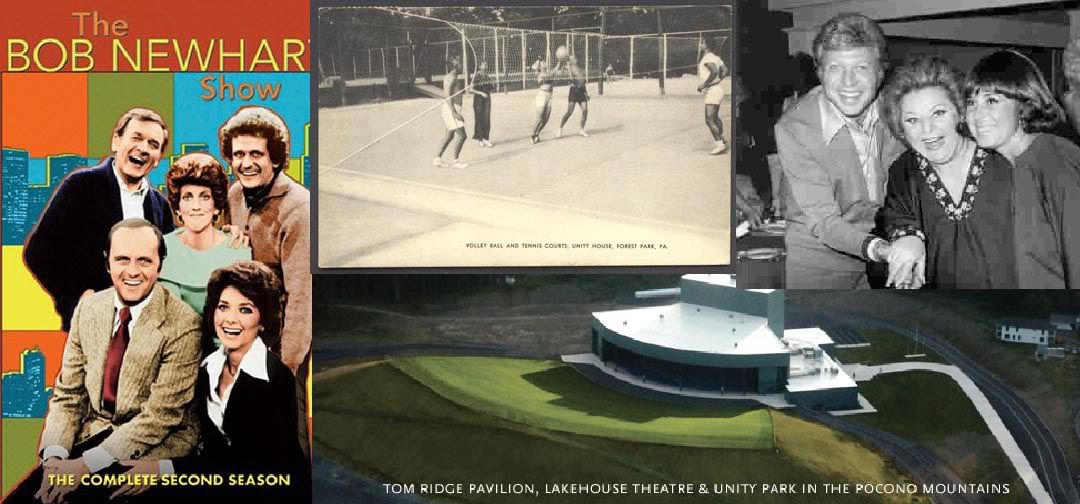
Quite a collage here, yet there's a logic. I caught a recent PBS repeat of an American Master's treatment of Bob Newhart. I like Newhart and I loved the first series, especially the gorgeous Suzanne Pleshette. My father also loved Newhart. I remember a spoof he did on an old Chesterfield or Pall Mall commercial. I think the original had some beautiful rustic scene of the Chesterfield man smoking and everyone in the scene happy. Newhart appears on tv all beat up with a Chesterfield sandwich sign and simply says, "Boy, it was murder in the cornfields today." My father couldn't stop laughing. Newhart's humor was a real subversive poke on the myth of the capitalist dream and its amazing that he was so popular with so many people. We are a lot dumber now. Anyway, Newhart reminded me of my father and so did my wife's cousin Jerry when I posted his piece that mentions his parents meeting at the ILGWU resort, Unity House. My parents and I would go to Unity House for our weekly summer vacation. I enjoyed it. I remember seeing big name stars like Ella Fitzgerald and Totie Fields and Eddie Fisher at the beautiful concert hall which was on the premises. I remember my father shouting out loud in the theater for Ella to sing A Tisket A Tasket and she did. Of course, I found his outburst embarrassing, he was always a big egomaniac. I compare it to Jerry's description of his embarrassments with his father: "I, too, have a strong association with "All the Things You Are." It was my father's favorite song. During my childhood he oftentimes crooned it to me when we walked together. Since I worshipped him, that was most welcome. The trouble is that after "All the Things..." he placed an arm around one of my shoulders and went into "Yes, My Darling Daughter." When he finished that one he invariably asked me if I was his darling daughter. Most times I agreed that I was; on some occasions I remained silent. Always, I resented representing daughterhood to him." And to think I though my father screwed me up. Here's what happened to Unity House:"Unity House was a resort in the Pocono Mountains of Pennsylvania, operated by the International Ladies Garment Workers Union and used as a vacation destination and educational center for its members. It was purchased by Locals 22 and 25 in 1919, and consisted of a lake and 750 acres of land. In the 1920s the locals sold the resort to the international organization. Unity House prospered after World War II, but attendance dropped throughout the 1960s and continued to dwindle in the 1970s and 1980s. The ILGWU closed the resort in 1990. In 2000 it was purchased by a subgrantee of the Mountain Laurel Center for the Performing Arts.
Sunday, April 30, 2006
Bob Newhart, My Father, Cousin Jerry, Unity House And A Tisket a Tasket
Quite a collage here, yet there's a logic. I caught a recent PBS repeat of an American Master's treatment of Bob Newhart. I like Newhart and I loved the first series, especially the gorgeous Suzanne Pleshette. My father also loved Newhart. I remember a spoof he did on an old Chesterfield or Pall Mall commercial. I think the original had some beautiful rustic scene of the Chesterfield man smoking and everyone in the scene happy. Newhart appears on tv all beat up with a Chesterfield sandwich sign and simply says, "Boy, it was murder in the cornfields today." My father couldn't stop laughing. Newhart's humor was a real subversive poke on the myth of the capitalist dream and its amazing that he was so popular with so many people. We are a lot dumber now. Anyway, Newhart reminded me of my father and so did my wife's cousin Jerry when I posted his piece that mentions his parents meeting at the ILGWU resort, Unity House. My parents and I would go to Unity House for our weekly summer vacation. I enjoyed it. I remember seeing big name stars like Ella Fitzgerald and Totie Fields and Eddie Fisher at the beautiful concert hall which was on the premises. I remember my father shouting out loud in the theater for Ella to sing A Tisket A Tasket and she did. Of course, I found his outburst embarrassing, he was always a big egomaniac. I compare it to Jerry's description of his embarrassments with his father: "I, too, have a strong association with "All the Things You Are." It was my father's favorite song. During my childhood he oftentimes crooned it to me when we walked together. Since I worshipped him, that was most welcome. The trouble is that after "All the Things..." he placed an arm around one of my shoulders and went into "Yes, My Darling Daughter." When he finished that one he invariably asked me if I was his darling daughter. Most times I agreed that I was; on some occasions I remained silent. Always, I resented representing daughterhood to him." And to think I though my father screwed me up. Here's what happened to Unity House:"Unity House was a resort in the Pocono Mountains of Pennsylvania, operated by the International Ladies Garment Workers Union and used as a vacation destination and educational center for its members. It was purchased by Locals 22 and 25 in 1919, and consisted of a lake and 750 acres of land. In the 1920s the locals sold the resort to the international organization. Unity House prospered after World War II, but attendance dropped throughout the 1960s and continued to dwindle in the 1970s and 1980s. The ILGWU closed the resort in 1990. In 2000 it was purchased by a subgrantee of the Mountain Laurel Center for the Performing Arts.
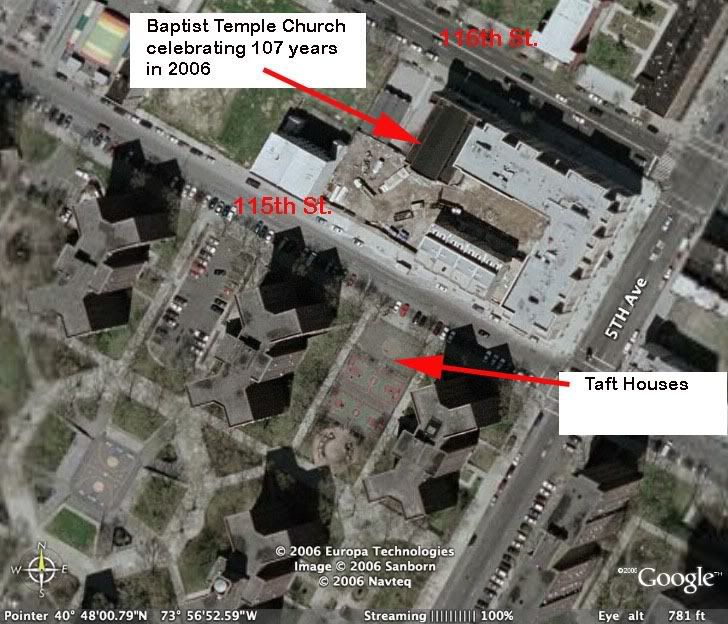
A 107 Year Old Church And The Taft Houses
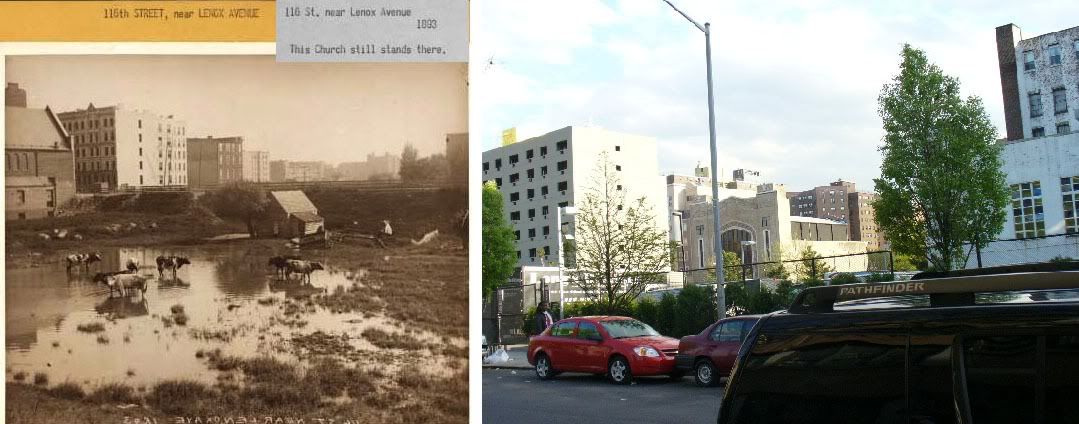
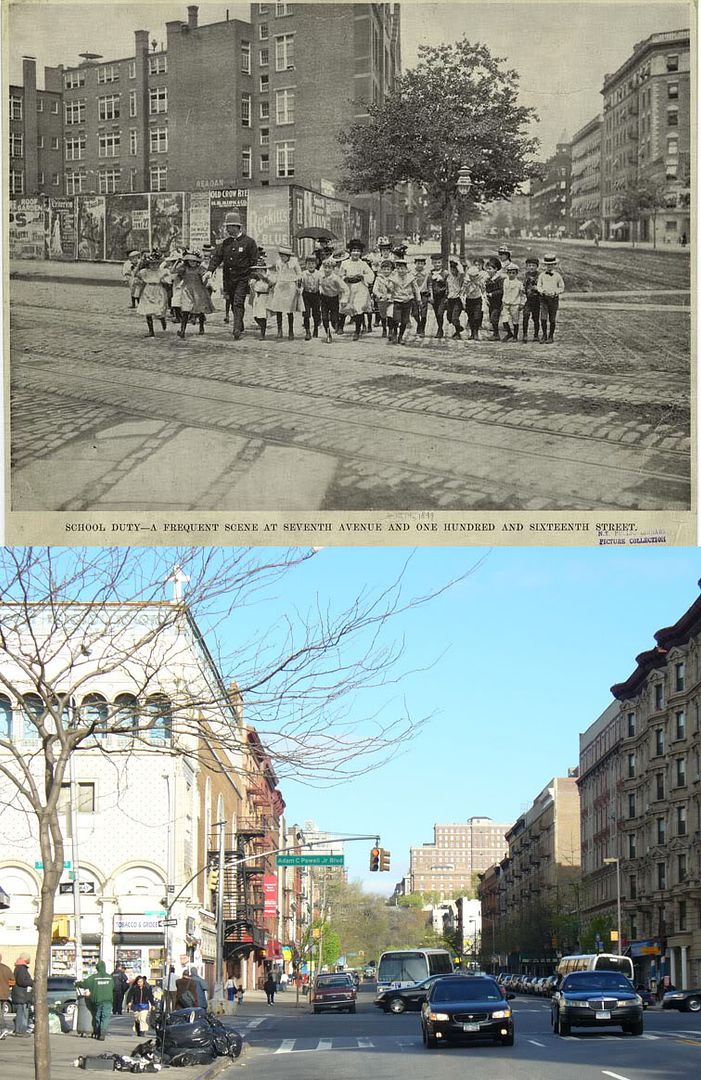
116 Street Then And Now, Part 2
Podcasting Verite
The N Word, Small Victories and Therapeutic Communities
Next: Last week there was much ado about an episode on "All About Us" that dealt with the controversial use of the N word. It was directed by Will Smith. Will has lost his West Philly hood "chops" (actually his family was middle class), because the episode was lame. Try Boondocks for a much more authentic version. The kids love it. I was invited to bring my podcasting to a therapeutic community. I can't adequately explain the benefits, but my pals Shifra and Marty can. Prior to the boys' weekly meeting we agreed on a common discussion thread and Boondocks was enthusiastically selected. The kids were much more animated and focused in their talk. Next I'll show them the piece I created and we can discuss new possibilities. Eventually I can teach them the process of matching the conversation with the images. I just happen to have most of the series already digitized and I extracted stills from the movies and tried to align them with their talk where possible. This became too much of a stretch for Live Slide Show, probably iMovie or Final Cut would be more suited. Anyway, here's a portion of our talk
Thursday, April 27, 2006
It Just Doesn't Matter
Wednesday, April 26, 2006
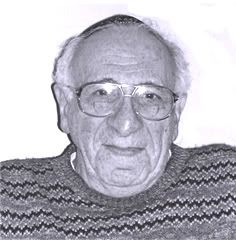
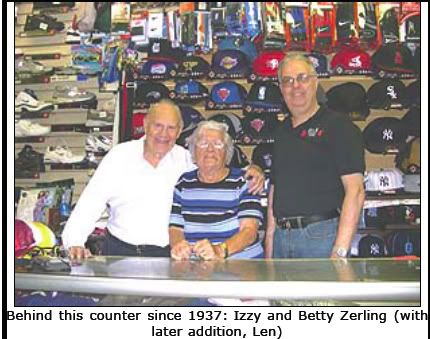
Unce Hy and PS 42
An Anatomy Of A Podcast Story
Tuesday, April 25, 2006
All The Things You Are
Counterpunch
A Hot Time In The Old Town
Monday, April 24, 2006
Closer To The Truth With Some Rough (Accountable?) Talk
Strange Truth: Rough Crossings
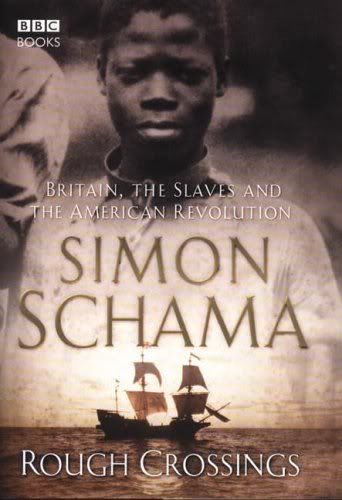
I read in the Times that "Rough Crossings" is scheduled for US release tomorrow. From Adam Hochschild's Amazon review:"distinguished historian Schama has found a little-known story from this era that makes the Founding Fathers look not so glorious. The Revolution saw the first mass emancipation of slaves in the Americas—an emancipation, however, not done by the revolutionaries but by their enemies. Many American rebel leaders were slave owners. To hit them where it most hurt, Britain proclaimed freedom for all slaves of rebel masters who could make their way to British-controlled territory. Slaves deserted their horrified owners by the tens of thousands. One, who used his master's last name, was Henry Washington; another renamed himself British Freedom. The most subversive news in this book is that the British move so shocked many undecided Southern whites that it actually pushed them into the rebel camp: "Theirs was a revolution, first and foremost, mobilized to protect slavery." Even though they lost the war, most British officers honored their promise to the escaped slaves. The British commander in New York at the war's end, where some 3,000 runaway slaves had taken refuge, adamantly refused an irate Washington's demand to give them back. Instead, he put them on ships for Nova Scotia.And there, nearly a decade later, another saga began. More than a thousand ex-slaves accepted a British offer of land in Sierra Leone, a utopian colony newly founded by abolitionists, which for a few years in the 1790s was the first place on earth where women could vote. Sadly, however, financial problems and the British government's dismay at so much democracy soon brought an end to the self-rule the former slaves had been promised. Schama once again gives his readers something rare: history that is both well told and well documented. In this wonderfully sprawling epic, there are a few small errors about dates and the like, and perhaps a few more characters than we can easily keep track of, but again and again he manages to bring a scene, a person, a conversation dramatically to life. Would that more historians wrote like this." I have been reading an interesting book I got at Strand's recently called "Roots and Branch" (a history of African Americans in NY and NJ from 1613-1863) by Graham Hodges and was aware of the British offer. God knows, it would have been a smart move for any slave at the time. It's a wonder that so many African Americans fought on the Patriot side. RE the reference that Hochschild makes "would that more historians write like this"- How true. Yet the Dept of Education is giving away tons of Teaching American History grant monies to hacks and bores teaching "traditional" American History. You can bet Rough Crossings won't be on the reading list or anything by Howard Zinn. Another generation is getting brainwashed
116 Street Then And Now
Sunday, April 23, 2006
Old World Family History Smuggling Tips
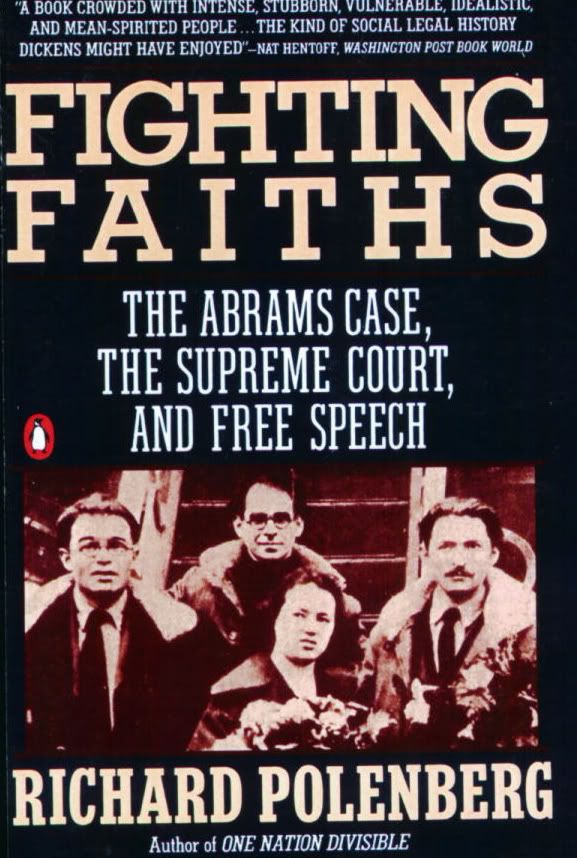
Fighting Faiths
(one died as a result of beatings during his arrest) suffered the rest of their lives. Are we so far away from those times in the current Patriot Act Era? Here's a review: "When it reached the Supreme Court in 1919, the case of Jacob Abrams and four other Russian-Jewish immigrant anarchists who were convicted and eventually deported in 1921 became a precedent-setting test of the First Amendment. In an impressively researched and comprehensive summary of this extraordinarily complex case, Polenberg, author of One Nation Divisible, focuses on the Supreme Court's "clear and present danger" criterion determining limits of free speech, and the reasoning behind the dissents of Justices Holmes and Brandeis, which continued to influence the extent of freedom of expression until the 1969 adoption of the broader "likeness to incite" lawless-action interpretation of the First Amendment. The author recalls the motives that led the individual immigrants to espouse anarchism and what they suffered for their beliefs. He also compares U.S. surveillance, headed by the young J. Edgar Hoover, and prison conditions with the violent confrontations and more brutal treatment to which anarchists were subjected in Russia at the hands of the Cheka (and later PGU) secret police, which disillusioned even such staunch American radicals as Emma Goldman and Alexander Berkman. However, he notes, both governments favored deportation of anarchists."
The East Harlem Connection
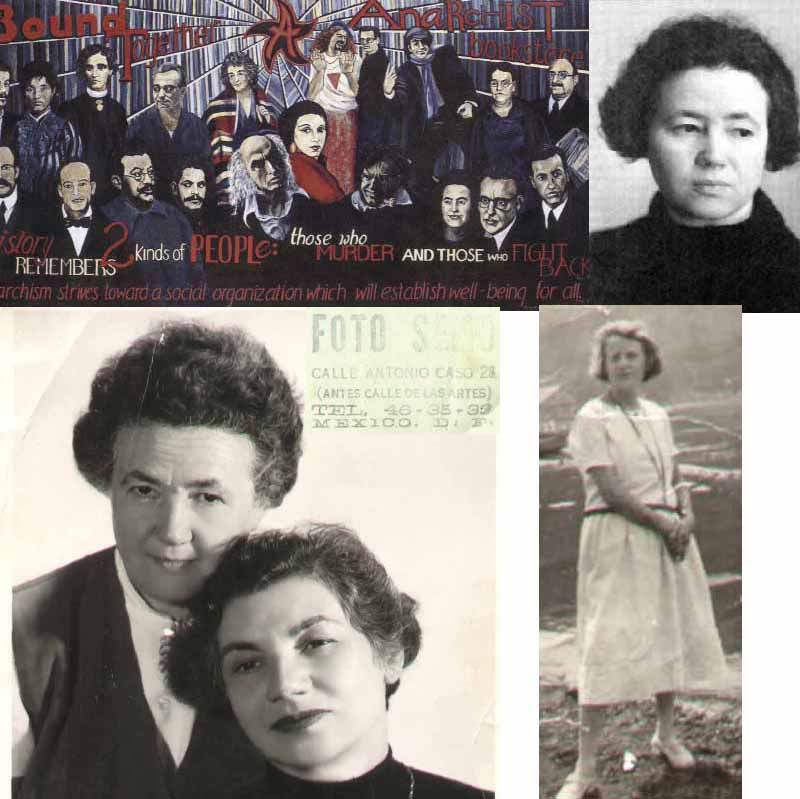
It is more than likely that my wife's great aunts, Fannie and Lisa Luchkovsky were members of the Frayhayt group. They were long time anarchist activists. Perhaps they had spent considerable time at the Easy Harlem location. Last year at a memorial service in Los Angeles I spoke to Fannie's son, Jerry, about some lost family history. (Jerry is a veritable walking treasure trove of history, baseball especially). Jerry told me about the story of Mollie Steimer. Evidently, Fannie and Lisa had to go on the lam during that time because they had also been distributing pamphlets against WWI participation. He said later in their lives they had visited Mollie Steimer in Mexico. I was going through some old pictures we had of Fannie and Lisa and I found one of Fannie with a woman who definitely looked like an older Mollie Steimer. On the back of the photo was a logo from the SEMO Studio in Mexico. SEMO must have been an abbreviation for Senya Fleshin (SE) and Mollie (MO). If you double click on the picture it will enlarge to a size where you can see it clearly. Fannie is pictured separately to the right.
Read Aloud Spartacus
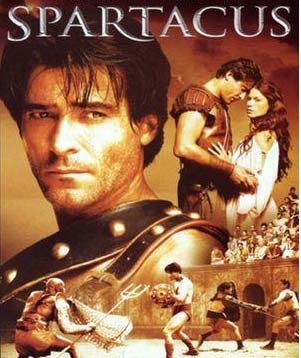
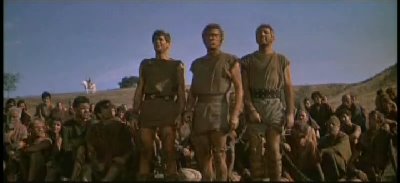
The Putnam Valley library had a copy of Howard Fast's "Spartacus." I scanned one of the segments and then added a narration to it and made it into a quicktime movie. I figured I would give the kids a taste of the inspiration for the movie. One possible online assignment they could do is to try and match the story text with images they could find online. Here's my template version of it as a pdf I found the image above when I did a search for "Capua." I was also surprised to find the following on, of all places, channel4.com/realstories: "Contrary to the celebrated sequence in Stanley Kubrick's 1960 film, Spartacus, the survivors of the battle were never asked to identify Spartacus; he had died on the battlefield. The subsequent mass crucifixion scene, however, is historically accurate: Crassus had 6,000 men crucified along the Appian Way between Capua and Rome – a distance of about 200 kilometres." I'd like to still believe to in the Howard Fast version. After all, who was there doing the reporting, Fox News?
East Harlem History: The Good, The Bad, The Ugly
The good: The late, great Vito Marcantonio, the area's long time progressive Congressmen and a person deserving of a documentary movie treatment. He's pictured in the left of the picture attached. The bad, certain elements surrounding Rao's (the trendy restaurant) and the underbelly of Pleasant Ave. Pellegrino, a Rao's co-owner, is often seen as a FBI agent pursuing Tony Soprano. The ugly? Maybe Ms Maurer once did a workshop there. I've been looking for a family East Harlem connection in vain, but I think I've got something-coming soon. Here's more on the bad: The 1910 king of East Harlem rackets, Giosue Gallucci, ran a number of businesses along this stretch of East 109th Street. At 318 E 109th sat a bake shop owned by Gallucci, who lived in the apartments upstairs and used the shop's backroom as a headquarters. Gallucci also ran a coffeehouse at 336 E. 109th Street. It was there that Aniello "Zopo" Prisco allegedly gunned down Tony Zaccaro and Giuseppe Jacco and that, in later years, Gallucci and his son Luca were themselves killed by rivals. A gambling establishment at the corner of 109th Street and First Avenue was also reportedly the property of Gallucci. In addition to these business ventures, Gallucci extorted protection money from produce merchants on 109th and 110th Streets and ran a lottery. Also here's a recent voice article on east harlem controlled labor corruption by the Voice's Tom Robbins.
Strange Fruit
Listening to Strange Fruit reminded me of some very powerful passages from Striver's Row where Kevin Baker provides the background for Elijah Muhammed's conversion to the Muslim faith. The scenes take place in Elijah's (born Elijah Poole) hometown of Sandersville, Georgia where he comes upon the sights of ritualistic lynchings. Later he would see postcards of these lynchings along with packets of fabric of the clothing of those murdered and other "memorabilia" for sale in local stores. It provides the impetus or his move to Detroit. I combined some of these archived images with Billie's version of Strange Fruit. Beware of the graphic nature. Many of the images come from this excellent sight called withoutsanctuary. The images include lynchings of perceived non-black outside agitators as well. There is also a new powerful film on the murder of Emmett Till (emmetttillstory). The library of congress has series on the anti-lynching crusades of the early 1900's.The pbs site also has a story on the show it produced on the fasscinating history of the song Strange Fruit
Lena Takes The Lead
Yesterday I saw Take The Lead with my daughter Emma. Formulaic, "Fame Redux," but I really enjoyed it. Boy would I like to be Antonio Banderas ("I got plenty of play") for a day. I especially enjoyed hearing the
gorgeous Lena Horne and June Christy getting some play. Whatever happened to Lena after her Broadway special 20 years ago? I think my late friend Janie Miller saw it 5 times. Lena's almost 90 now. This is what I found out, "In 2003, ABC announced that pop star Janet Jackson would star as Horne in a television biopic. In the weeks following Jackson's so-called "wardrobe malfunction" debacle during the 2004 Super Bowl, however, Variety reported that Horne demanded Jackson be dropped from the project. "ABC executives resisted Horne’s demand," according to the Associated Press report, "but Jackson representatives told the trade newspaper that she left willingly after Horne and her daughter, Gail Lumet Buckley, asked that she not take part." Oprah Winfrey told Alicia Keys during a 2005 interview on The Oprah Winfrey Show that she might possibly consider producing the biopic herself, and casting Keys as Horne.
Saturday, April 22, 2006
Synchronicity: Billie Holiday, Knickerbocker Village, House I LIve In
The 2006 PS20 learning fair theme that I worked so diligently on (look in the August archives) for Dr.G (for naught) was to be centered around "Home." It would be a good all purpose unit, cutting across grades and curriculum themes. I even scoped out grade level fiction to support the project. I liked the title, "The House I Live In," from the Sinatra recording. Who wrote that flag waving anthem? Who wrote the lyrics to Billie Holiday's famous song decrying southern lynchings (a song counter to the flag wavers) It was Abel Meeropol, aka Lewis Allan. From spartacus.net: "In 1937 Abel Meeropol, a Jewish schoolteacher from New York, saw a photograph of the lynching of Thomas Shipp and Abram Smith. Meeropol later recalled how the photograph "haunted me for days" and inspired the writing of the poem, Strange Fruit. Meeropol, a member of the American Communist Party, using the pseudonym, Lewis Allan, published the poem in the New York Teacher and later, the Marxist journal, New Masses.
After seeing Billie Holiday perform at the club, Café Society, in New York, Meeropol showed her the poem. Holiday liked it and after working on it with Sonny White turned the poem into the song, Strange Fruit. The record made it to No. 16 on the charts in July 1939. However, the song was denounced by Time Magazine as "a prime piece of musical propaganda" for the National Association for the Advancement of Coloured People (NAACP). Meeropol remained active in the American Communist Party and after the execution of Ethel Rosenberg and Julius Rosenberg he adopted their two sons. He taught at the De Witt Clinton High School in the Bronx for 27 years, but continued to write songs, including the Frank Sinatra hit, The House I Live In.Abel also wrote the lyrics for Billie's famous record, "Strange Fruit." The Meeropols adopted the former Rosenberg children (10 Monroe St., Knickerbocker Village). The lyrics to Strange Fruit: Southern trees bear strange fruit, Blood on the leaves and blood at the root, Black bodies swinging in the southern breeze, Strange fruit hanging from the poplar trees. Pastoral scene of the gallant south, The bulging eyes and the twisted mouth, Scent of magnolias, sweet and fresh, Then the sudden smell of burning flesh. Here is fruit for the crows to pluck, For the rain to gather, for the wind to suck, For the sun to rot, for the trees to drop, Here is a strange and bitter crop.
You can be sure if Meeropol was alive today he wouldn't be a union sellout to the fascistic Tweed steamroller.
The Best Bill(ie)
Bill Murray is great, but Billie Holiday is at the top of the Bill(ie) charts. Steve, aka "secret agent man," Schwartz, my tech gumba at my current school, made arrangements for a group of middle schoolers to do a phone interview with a friend of his who knew Billie pretty well. This gave me an opportunity to delve deeply into Billie's digital biography. What do the TC clones say, "Dig deep?" Or do they search for a teachable moment? Too bad I'm no longer friends with Kyle, aka the the shovel master of bs edujargon. One jewel that I found online was her 1930 Harlem census listing from ancestry.com (She's Eleanor Fagan, her mother is Sadie). I bought a DVD about her at the well stocked B&N in Yonkers (on sale no less for about $12). I used the images from the DVD to put together a couple of poster resources so the kids can familiarize themselves more about her. The image above is early Billie. Dig the pants on tenor great Ben Webster on the left. I also bought a beautifully illustrated (Jerry Pinkney) book about her song "God Bless The Child." It came with a CD of the song as well. I scanned the images and did my best to create a karoke version of it as a slide show.
Bill's Melancholy Is On The Job
Broken Flowers, another fine movie with my depressed soulmate Bill Murray. I just caught up to it on DVD. It also provides for a minor mystery. While Bill is sleuthing to find out whether he has a son he didn't know about, the music of Ethiopian jazz artist Mulatu Astatke provides a haunting accompaniment. But wait, I heard that song before. It sounds like "Song For My Father" by Horace Silver. My sleuthing has Horace composing in 1963 and Astatke in the late 60's. But both tunes are inspired by Ethiopian folk music. It's not like the mystery of 9-11, but interesting. A review from the Filthy Critic of Broken Flowers is also interesting. Here's an excerpt: "Broken Flowers isn't likely to appeal to kids, unless they are like I was at nine, pining away for what could have been at eight. I didn't start smoking unfiltered Camels until I was nearly ten, and it wasn't until I learned that my father took down a full pack of Lucky Strikes every day at eight that I understood the melancholy of missed opportunity. That I didn't black out after eating shoe polish until was nineteen never bothered me until I heard about three kids who would smoke anything--I mean anything--at sixteen. They had already smoked a tennis show when I was still in diapers." Here's a link to the full review. Check out his other reviews, They're good and hell of a lot better than schlockmeisters like Rex Reed
Eugene Bullard: On The Job
Judging from this biographical excerpt, Mr. Bullard was definitely on the job:"Eugene Bullard was the world's first black combat aviator, flying in French squadrons during World War I (1917-18). Before he became a pilot he served in the French infantry and was awarded the Croix de Guerre. Born in a three-room house in Columbus, Eugene James (Jacques) Bullard was the seventh child of Josephine Thomas and William O. Bullard. Bullard's parents, married in Stewart County in 1882, had Creek Indian as well as African American ancestry. William Bullard was born a slave; his parents were the property of Wiley Bullard, a planter in Stewart County. In the early 1890s William Bullard moved to Columbus, where he worked for W. C. Bradley, a rising cotton merchant.
The young Bullard attended the Twenty-eighth Street School from 1901 to 1906. Although his education was minimal, he nonetheless learned to read, one of the keys to his later successes. With his older sister and brothers, Bullard absorbed his father's conviction that African Americans must maintain dignity and self-respect in the face of the prejudice of a white majority determined to "keep blacks in their place" at the bottom of society. Shaken by the near lynching of his father in 1903 and seeking adventure in the world beyond Columbus, he ran away from home in 1906. In Atlanta he joined a group of gypsies (an English clan known by the surname Stanley) and traveled with them throughout rural Georgia, tending and learning to race their horses. The Stanleys brought to his attention that the racial color line did not exist in England. Disheartened that the gypsies were not soon returning home, Bullard left them at their camp in Bronwood in 1909 and found work and patronage with the Zachariah Turner family of Dawson. Friendly and hard working as a stable boy, Bullard won the affection of the Turners, who allowed him to ride as their jockey in horse races at the Terrell County Fair in 1911.
Despite his relationship with the Turners, Bullard was still affronted by racism and he resolved to leave the United States for Great Britain. He did so as a stowaway on a German merchant ship, the Marta Russ, which departed Norfolk, Virginia, on March 4, 1912, bound for Aberdeen, Scotland. In 1912-14, Bullard performed in a vaudeville troupe and earned money as a prizefighter in Great Britain and elsewhere in Western Europe. He appeared in Paris for the first time at a boxing match in November 1913.
At the beginning of World War I, Bullard joined the French army, serving in the Moroccan Division of the 170th Infantry Regiment. The French government awarded him the Croix de Guerre for his bravery at the Battle of Verdun. Twice wounded and declared unfit for infantry service, he requested assignment to flight training. He amassed a distinguished record in the air, flying twenty missions and downing at least one German plane.Between the world wars he owned and managed nightclubs in the Montmartre section of Paris, where he emerged as a leading personality among such African American entertainers as Josephine Baker, Louis Armstrong, and Sidney Bechet. In 1923 he married Marcelle Straumann, the daughter of a wealthy Parisian family. The couple had two surviving children, Jacqueline and Lolita, before separating in 1931. In the late 1930s Bullard joined a French government counterintelligence network spying on Germans in Paris. When Nazi Germany conquered France in 1940 Bullard and his daughters escaped to New York City. He worked there in a variety of occupations for the rest of his life."
If you watched the slide show movie that accompanied the 4/19 "Hold The Line" post you would have seen Eugene Bullard being beaten by cretinous Peekskill thugs at the Paul Robeson concert in 1949. I had never heard of Mr. Bullard until then, but then I realized he has a chapter about him in the Scholastic book, "Black Eagles," which I've seen in several classrooms
The young Bullard attended the Twenty-eighth Street School from 1901 to 1906. Although his education was minimal, he nonetheless learned to read, one of the keys to his later successes. With his older sister and brothers, Bullard absorbed his father's conviction that African Americans must maintain dignity and self-respect in the face of the prejudice of a white majority determined to "keep blacks in their place" at the bottom of society. Shaken by the near lynching of his father in 1903 and seeking adventure in the world beyond Columbus, he ran away from home in 1906. In Atlanta he joined a group of gypsies (an English clan known by the surname Stanley) and traveled with them throughout rural Georgia, tending and learning to race their horses. The Stanleys brought to his attention that the racial color line did not exist in England. Disheartened that the gypsies were not soon returning home, Bullard left them at their camp in Bronwood in 1909 and found work and patronage with the Zachariah Turner family of Dawson. Friendly and hard working as a stable boy, Bullard won the affection of the Turners, who allowed him to ride as their jockey in horse races at the Terrell County Fair in 1911.
Despite his relationship with the Turners, Bullard was still affronted by racism and he resolved to leave the United States for Great Britain. He did so as a stowaway on a German merchant ship, the Marta Russ, which departed Norfolk, Virginia, on March 4, 1912, bound for Aberdeen, Scotland. In 1912-14, Bullard performed in a vaudeville troupe and earned money as a prizefighter in Great Britain and elsewhere in Western Europe. He appeared in Paris for the first time at a boxing match in November 1913.
At the beginning of World War I, Bullard joined the French army, serving in the Moroccan Division of the 170th Infantry Regiment. The French government awarded him the Croix de Guerre for his bravery at the Battle of Verdun. Twice wounded and declared unfit for infantry service, he requested assignment to flight training. He amassed a distinguished record in the air, flying twenty missions and downing at least one German plane.Between the world wars he owned and managed nightclubs in the Montmartre section of Paris, where he emerged as a leading personality among such African American entertainers as Josephine Baker, Louis Armstrong, and Sidney Bechet. In 1923 he married Marcelle Straumann, the daughter of a wealthy Parisian family. The couple had two surviving children, Jacqueline and Lolita, before separating in 1931. In the late 1930s Bullard joined a French government counterintelligence network spying on Germans in Paris. When Nazi Germany conquered France in 1940 Bullard and his daughters escaped to New York City. He worked there in a variety of occupations for the rest of his life."
If you watched the slide show movie that accompanied the 4/19 "Hold The Line" post you would have seen Eugene Bullard being beaten by cretinous Peekskill thugs at the Paul Robeson concert in 1949. I had never heard of Mr. Bullard until then, but then I realized he has a chapter about him in the Scholastic book, "Black Eagles," which I've seen in several classrooms
Friday, April 21, 2006
On The Job
Boy it must be great having a son "on the job" like my former boss (and the best boss anyone would ever want, Dr. Paul Ringel). What a feeling to tell a law officer, "My son is on the job." Well we pseudo intellectuals are always on the job-looking for great stories to entertain the public-slices of real life, blogging verite. Here's a fascinating story of shopping for doors with my pal Janet Chasin, aka the best technology teacher in the city who no one knows about. She also knows how to regrout her bathroom tiles! Pick up the podcast action at the Brooklyn Lowes, not to be confused with the lame, waste of taxpayer dollars' Columbia Lowes pictured on the last slide
Tough Jew Redux
Abe Capon was another tough one, and you can see from his record he was a smart one too. My understanding was that his death might have involved malpractice. He was always in top shape. When he lived in the city he was a regular at the handball courts in Brighton Beach along with his Seward High School pal, Hank Matthow-Walter's brother. This was a record I scanned years ago-it wasn't in the S-T treasure, but my hope is that perhaps some family member googling Abe Capon will find it in cyberspace. Here's something I found that was written shortly after Abe died almost 4 years ago. "In particular we are saddened by the tragic untimely loss of our good friend Abe Capon who lived in Albany, New York. Over the years, Abe would call me, send me letters and share with me his avid interest in sharing his Sephardic traditions and Judeo-Spanish language and music in his community. Abe had a love and commitment to his Jewish heritage and to Israel. His family, his wife Dorothy and his daughter, Linda have made a generous donation to Sephardic House, an institution that was dear to him, to perpetuate his memory. We are proud to announce that all our music cassettes and CD's for sale will now be known as the Abe Capon Music Collection of Cassettes and CD's. In addition we will be dedicating our June 9th Concert featuring Yale Strom and The P'Stromi Ensemble to the memory of Abe Capon. For those of you who did not know Abe, I introduce you to him: Abraham Joseph Capon was American born of Sephardi parents who immigrated in the early 1900's. His father came from Salonika, then under the Ottoman Empire, now Greece; his mother was born in Izmir, Turkey. Abe grew up speaking the Ladino or Judezmo language of his parents. He matured in the multi-cultural environment of the East side of New York where his medieval Spanish dialect mingled with the sounds of Yiddish, Italian, Russian, and Polish. He graduated from Seward Park High School, attended City College of NY, served for three years in the armed forces during WWII. Shortly after, he married and raised two children in Queens, NY. In 1974, he accepted a job opportunity and moved to Albany, NY. He gave lectures at his Temple Israel on Sephardic history, culture, and language. He served as a consultant and made a presentation on his Sephardi experiences for LLAVE, a Sephardic exhibit and lecture series at Sage Junior College in Albany. We will miss Abe."
A Kiss Is Still A Kiss
This is an indispensable book for NYC history fans. There are many references to it in earlier posts that concentrated on the LES. Currently I'm using the Harlem section of the book. I've added a new wrinkle-I'm mixing the text from certain pages with images that the text suggests-the "illustrated book" idea. I've been trying to get students to do the voiceover narrations, but I'm too busy doing whole class demo lessons because that's where it's needed most. Here's a sample with my narration-it was too nice to be inside, so I took a drive to a playground near Fort Hamilton
Thursday, April 20, 2006
Sosinsky And Sons: A Secret Mission
Going back to the treasure trove of old record cards, alphabet S-T. Among the find were the Sosinsky family. I grew up with the Sosinsky brothers in Knickerbocker Village. I was closest to Joel, who was two years younger. As mid teenagers we got into playing golf and we would travel along with a kid named Lee all over the city by train, bus and ferry to play the city courses (usually starting out at 5:00AM).
Joel's father owned a shirt store on Orchard Street, which his brother Ron later took over. About 7 years ago I reunited with Ron and has mother Natalie (one of the most attractive of my Knickerbocker friend's mothers and a community activist as well) to do a local history project with a group of PS20 5th graders. They had the kids visit the store and showed them old documents (100 years old) that they found in an antique safe. Ron did a good job in providing drama. Later Natalie came to the school to be interviewed. When I found Joel's father's card I called him and passed it along during a late evening rendezvous. He was touched. Joel, a very mild mannered kid, who underwent a series of difficult youthful surgeries, now is a lawyer for the Teamsters. Go know! Hey, I finally might have some union "juice," because the UFT sure blows. Here's part of my podcast with Joel. I recounted to Joel my recent reuniting with Mart Babits (who BTW is more than just a social worker, but a very skilled therapist)
When you double click on the image and you get to it on the Flickr site, you can enlarge it again to get a better view. Meyer, Joel's dad, passed away many years ago. He was a pretty smart guy. At PS20 he was in the RA (Rapid Advance) classes, which was the then equivalent of the SP
Joel's father owned a shirt store on Orchard Street, which his brother Ron later took over. About 7 years ago I reunited with Ron and has mother Natalie (one of the most attractive of my Knickerbocker friend's mothers and a community activist as well) to do a local history project with a group of PS20 5th graders. They had the kids visit the store and showed them old documents (100 years old) that they found in an antique safe. Ron did a good job in providing drama. Later Natalie came to the school to be interviewed. When I found Joel's father's card I called him and passed it along during a late evening rendezvous. He was touched. Joel, a very mild mannered kid, who underwent a series of difficult youthful surgeries, now is a lawyer for the Teamsters. Go know! Hey, I finally might have some union "juice," because the UFT sure blows. Here's part of my podcast with Joel. I recounted to Joel my recent reuniting with Mart Babits (who BTW is more than just a social worker, but a very skilled therapist)
When you double click on the image and you get to it on the Flickr site, you can enlarge it again to get a better view. Meyer, Joel's dad, passed away many years ago. He was a pretty smart guy. At PS20 he was in the RA (Rapid Advance) classes, which was the then equivalent of the SP
Desperate Mission
from the Honolulu Star Bulletin, Burl Burlingame: "I knew Joe Kubert had been around forever, but I didn't know he was that old. Nearly 80, he's been in the comics business for more than 60 years. Kubert is more than a master artist -- more on that later -- and he's also noted for two things in the industry: forming the first professional school of comic artists and being the jack-of-all-trades behind the most successful war comic of all time, "Sgt. Rock of Easy Company." And so, when a brand-new "Sgt. Rock" hits comic book stores that is both illustrated and written by Kubert, it's both wonderful and comfortable at the same time." Here's the rest of the article.
I've been trying to promote the use of comic books, comic book sites, graphics on the web and graphic novels as motivating tools and content in the teaching of history and literacy. One simple trick I use in PhotoShop is removing the original captions and have the kids write their own. I haven't influenced many people from my small "corner of the sky," but I keep trying. I've actually begun to see some book publishers producing such versions. Rosen Publishing, for one, did a Harriet Tubman title. Graphic novels are big sellers, I just can't figure out the appeal of the Japanese doe eyed characters. Anyway back "on task", I was this anticipating this spring using Maus with a 6th grade teacher who was the daughter of Holocaust survivors, but that was before a Region 9 LIS Nazi did me in. Moving on, Joe Kubert is terrific-he also has his own holocaust graphic novel called "Yossel" which ranks high with Maus. I read about the Prophecy series above and have purchased the 3 comics published so far. They excitingly combine both World War II history as well as Holocaust history, both late term 6th and 8th grade topics. Here's a slide show of the first book.
Desperate Housewives
Just extending the thread from the last post (omg! that sounds pretty tc doesn't it?-I've been brainwashed)-talk about desperadas-Maria from History of Violence was one. Saw it last night-what a picture-it says a lot of truth, but it just doesn't hang logically together. BTW, Maria Bello, no relation, is one sexy babe and does a great acting job.
Wednesday, April 19, 2006
Desperate Blogger
Bloggers will travel all ends of the earth for a good story. My well digger can always be counted on to tell me about his escapades with women. A lot of the drama centered around the owner of this restaurant in Carmel, NY. I wanted to check out who this desperate woman was so I went there for lunch. Here's my snappy attempt at conversation amidst the backdrop of some rustic charm. Go know that the woman behind. "Small coffee?" had such raging hormones.
Hold The Line
An excerpt from Howard Fast's eyewitness account of The Peekskill Riots: "THE ATTACK STARTS A few minutes after I arrived, a boy came running down from the state road and informed us that the fascists had started the attack and that the road was solidly blocked. All the available boys and men--about 25--ran up to the entrance to the grounds. There we discovered that the double entrance had been blocked, one part with a Legion truck, the other with a stone barricade. As we stood there, the fascists launched their first attack, about 300 of them against our handful. There was a brief melee, in which two of our boys were hurt, quite badly. We noticed now that most of the attackers were heavily liquored up; nor were they teen-age boys, as so many stories reported. Most of them were men between 35 and 50--and one of their leaders was identified as a prominent real estate man of Peekskill. At this point, three sheriffs appeared. They were in plain clothes, with gold badges pinned on. Aside from three other men--who were identified as Justice Department agents, and who stood quietly by--these were the only police we on the inside saw for the next two and a half hours. The three sheriffs argued half-heartedly with the fascists; one of them with sufficient guts could have broken up the thing right there; but all three, in all their actions, were against us and on the side of the fascists. While the sheriffs argued, we formed ourselves into three lines, sending the girls back to the bandstand [leaving the males] stretched across the road, which was embanked at this point. There were exactly 42 of us, and we organized into seven groups of six, with a squad leader for each group. We were about half Negro and half white, half teen-age boys, and half men. We had eight trade unionists among us, four of them merchant seamen. From here on, for the next two hours, we maintained our discipline."
I would say even odds that George Pataki's father was part of that lynch mob Here's the full text of Fast's account and as a rare two for one bonus Here's a slide show I put together consisting of archival images of the concert/riots, some recent pictures of the same site (now a luxury Toll Bros. condo with an adjoing golf course). The sound track is the stirring Pete Seeger/Lee Hays song (not to be confused with Toto's), "Hold The Line"
Spartacus Synchronicity
Howard Fast, AUTHORS NOTE: "In January of 1950, I began to lay out in my mind and assemble material for a book on Spartacus and the servile insurrection which he led. I had always been fascinated by the story of this slave who shook great Rome to her very foundations and who became a deathless symbol of class resistance and class struggle. Not only was there, in our own time, the brave struggle against such odds of Rosa Luxemburg and Karl Liebknecht and their League of Spartacus; but through the centuries the name of Spartacus was always on the lips of the most oppressed, the most wretched, and yet the most militant elements of society. I read a great deal; I struggled with the material, as writers do; and then, in April of that year, I began to write. Shortly afterwards, I was sent to prison, where I found that an American jail is not conducive to creative writing. But l continued my reading and my reconstruction of a background for the story. However, in that time, my concept of what I wanted to do changed. The storm of Korea began while I was in jail; a catalyst had come into the history of my own time and my own land, and living with the price one pays for trying to write truthfully, I decided that I would have to write what most needed to be written. Thus, for two months after I came out of jail, I worked on a narrative account of the Peekskill incident. I finished that, but Spartacus still lived with me. He was no ghost that one could easily set aside - but rather did he more and more take on meaning and purpose for our own time." I was up at my house in Lake Peekskill yesterday and I noticed how the sight (less than a mile from the house and Peter Kendzor's as well) was the scene of the famous Peekskill Riots of 1949. There's a lot of synchronicity involved: The author of Spartacus, Howard Fast, was a prime organizer of the Paul Robeson concert which triggered the riots. Leon Straus, the grandfather of the beautiful Allegra Straus (with whom I had the pleasure of once working with) was in charge of security for the second concert. There was also a sizable involvement of progressive Harlem residents in planning and defending the event. Of course one of heroes, Paul Robeson was at the forefront. The picture above has Robeson, Straus and Fast. Here's the full text of Fast's author's note, including a segment of Spartacus
Cape Verdean Blues 2
"We all have stories about our families and how they came to America. While each of us reflects our individual culture, we share a common bond. Almost everyone living in Rhode Island has family roots in another country. Each group has experienced being new and different and all have brought customs, objects and perspectives that continue to enrich American life. Coming to Rhode Island celebrates the cultural diversity of the Ocean State. In the exhibit's four story galleries, visitors discover the stories of actual people who immigrated to Rhode Island. The galleries are set in their historical context from an English colonist's farm to a Latino bodega in the 1960s. Hands-on activities bring the stories to life. Children climb aboard a replica packet ship to learn about the voyage from the Cape Verde islands and "work" in a simulated 19th century textile mill to understand the life of a French Canadian mill worker in northern Rhode Island.
The exhibit culminates in the Story Center where families find their ancestral lands on a huge globe and tell their immigration stories using magnetic strips of words. Children choose from an assortment of books and activity kits, playing Colonial games of chance and weaving baskets in a variety of traditions. In addition, a video introduces the descendents of the historical immigrants, all of whom are children living in Rhode Island now. The descendent children are the hosts of history hunt, challenging visitors to look for clues as to why their forebears came to America, what they brought, how they changed and what they left behind. Coming to Rhode Island is recommended for children age 7 and up and their adult friends for maximum understanding. Younger children also enjoy pretending in the exhibit's historical environments. Exhibit educators are on hand to encourage fun and learning." This is a great exhibit. I saw it two years ago and immediately thought of trying to recreate a facsimile back in NYC for the PS20 Learning Fair. We had the talent with Sam (the man who could have kids build anything from refrigerator boxes) Zilberzweig and Iris Kufert, the one of the best art teachers in the city. But alas, Iris and I are gone and the hitman (woman) will get Sam soon. Anyway I was back in Providence last week and revisited while babysitting my nephew Ben-actually my daughter Emma did that while I was taking pictures and recording sound segments. Here's a segment of the Cape Verdean portion with a taste of Horace Silver's famous song.
15 Minutes Of Fame
Supposedly everyone has their 15 minutes of fame and I guess I already had mine when I bested St. Joseph's little league juggernaut 3-1 back at the Coleman Oval Field on the LES in 1959? But I think I gained another 15 seconds when I recently met a tech colleague whose father dated the daughter of Yankee Hall of Famer Bill Dickey in the late 1940's. I might have even gained another 10 seconds if I knew some further dickey details, but he didn't reveal them.
Cape Verdean Blues I
"In the second half of the 19th century, many Portuguese, Cape Verdeans and Azoreans immigrated to Fox Point in search of factory and waterfront jobs. By the end of the 19th century, almost 2,000 Portuguese immigrants had settled in the neighborhood, often crowded into low-income rental units. Predominantly Catholic, this immigrant community eventually erected its own church, Our Lady of the Rosary (1885). Portuguese immigration to Fox Point and other areas of Providence and southeastern Massachusetts was heavy throughout the first part of the 20th century until 1924, when immigration laws halted the flow almost completely." - from Fox Point, Providence Neighborhood Profiles. More to follow on the Cape Verdeans in Providence
Monday, April 17, 2006
Harlem Rebellion
This real scene is a backdrop for a critical scene in Striver's Row. It's amazing how bottled up anger can surface amidst the calm so quickly and violently. But then again even with all the yuppification in Harlem recently
there was that recent horrible incident of 13 year old kids (one was a recent transferee to the school I'm in) chasing an NYU student to his death. And there's more of that, it's only that we hear about it more in the mainstream media when it involves a white NYU student. Here's an excerpt about a neighboring jhs: "Winston Riley was named interim acting principal of Intermediate School 172 after Curtis Andrews was bounced as head of the school amid criminal charges reported by the Daily News. Andrews took over the school last Thursday but was stripped of the post after it was revealed he's under indictment for allegedly fleecing a Philadelphia charter school of $200,000. "I'll be vindicated when the time comes," Andrews vowed yesterday. For now, though, Riley will run IS 172, which has gone through four principals in four years and is considered so unsafe that Teach for America pulled its recruits."
119th Street Today
I did some neighborhood exploring to find what that Double V site on119th Street looks like today. I wonder whether any of those people in the 64 year old photo are still there. I'm nuts enough to start knocking on doors to find out. Here's a link to an enlarged version of that image with some out-takes.
The Double V For Victory
One of the many things I learned in reading Striver's Row was the pressure to end some of the humiliations of segregation while Black America's was enlisted to defeat fascism abroad. I was aware of the struggles of the Tuskegee Airmen, but that was tame compared to some of the actual incidents of race wars in southern bootcamps. Above is a picture taken in 1942 on 119th Street. I found at the inmotionaame site Here is a link to a larger image of that site with more background information
Command Decision
Around two months ago I came across one of few DOE people I know who still have a modicum of influence.
When I recommended reading Striver's Row to her and the wonderful experience of having Kevin Baker speak to teachers she became enthused. It seemed that there was this big event: The 5th Annual Curriculum, Community, Collaboration & Celebration Conference A Conference for New York City Public School Educators & Concerned Citizens, Presented by Teachers Network and Deputy Chancellor Carmen Fariña, on April 8th and they were looking for authors to address the teachers. Kevin would have been perfect for the high school grouping. Could I try to reach him she asked? It took a while to reconnect with Kevin-he was away on a book tour-but he gladly accepted the basically pro bono offer. But wait- I was then told they had enough authors and couldn't use Kevin. Check out this list: William Somerset (K-8 )W. Somerset Maugham's "The Fall of Edward Barnard": A Study Guide from Gale's "Short Stories for Students" Elizabeth Mann (3-8) Empire State Building: A Wonders of the World Book Robert Weinstock (K-3)Gordimer Byrd's Reminder Judy Goldschmidt (3-8) Raisin Rodriguez and the Big-Time Smooch Jean Yee Lew (K-5) Millicent Min, Girl Genius Pooja Mikajani (6-12) Javaka Steptoe (K-12)In Daddy's Arms I Am Tall: African Americans Celebrating Fathers.
Now here's an excerpt from award winning reviewer Allen Barra on Striver's Row: Historical fiction generally falls into one of two categories — melodramatic potboilers or lead-footed social tracts. Kevin Baker, the best writer of historical fiction currently practicing — E.L. Doctorow not excepted — sees the possibilities for something more. Baker's novels are filled with the sights, sounds and smells of worlds that even great writers such as Henry James don't know exist, worlds that produce real people who make history. Strivers Row is the third and final entry in what the author calls his "City of Fire" trilogy, and it will send new readers scurrying for the first two novels: Dreamland, which takes place around the turn of the last century with old Coney Island as its backdrop; and Paradise Alley, which is set further back in time in the New York of the Civil War draft riots and is the story of the gangs of New York that Martin Scorsese should have filmed. Strivers Row is the most daring of the three, an attempt to reconstruct the world that produced Malcolm Little, as he was known when he left Michigan for Harlem during World War II, the man who would change America as Malcolm X.
Once again, "Where's Spartacus?"
When I recommended reading Striver's Row to her and the wonderful experience of having Kevin Baker speak to teachers she became enthused. It seemed that there was this big event: The 5th Annual Curriculum, Community, Collaboration & Celebration Conference A Conference for New York City Public School Educators & Concerned Citizens, Presented by Teachers Network and Deputy Chancellor Carmen Fariña, on April 8th and they were looking for authors to address the teachers. Kevin would have been perfect for the high school grouping. Could I try to reach him she asked? It took a while to reconnect with Kevin-he was away on a book tour-but he gladly accepted the basically pro bono offer. But wait- I was then told they had enough authors and couldn't use Kevin. Check out this list: William Somerset (K-8 )W. Somerset Maugham's "The Fall of Edward Barnard": A Study Guide from Gale's "Short Stories for Students" Elizabeth Mann (3-8) Empire State Building: A Wonders of the World Book Robert Weinstock (K-3)Gordimer Byrd's Reminder Judy Goldschmidt (3-8) Raisin Rodriguez and the Big-Time Smooch Jean Yee Lew (K-5) Millicent Min, Girl Genius Pooja Mikajani (6-12) Javaka Steptoe (K-12)In Daddy's Arms I Am Tall: African Americans Celebrating Fathers.
Now here's an excerpt from award winning reviewer Allen Barra on Striver's Row: Historical fiction generally falls into one of two categories — melodramatic potboilers or lead-footed social tracts. Kevin Baker, the best writer of historical fiction currently practicing — E.L. Doctorow not excepted — sees the possibilities for something more. Baker's novels are filled with the sights, sounds and smells of worlds that even great writers such as Henry James don't know exist, worlds that produce real people who make history. Strivers Row is the third and final entry in what the author calls his "City of Fire" trilogy, and it will send new readers scurrying for the first two novels: Dreamland, which takes place around the turn of the last century with old Coney Island as its backdrop; and Paradise Alley, which is set further back in time in the New York of the Civil War draft riots and is the story of the gangs of New York that Martin Scorsese should have filmed. Strivers Row is the most daring of the three, an attempt to reconstruct the world that produced Malcolm Little, as he was known when he left Michigan for Harlem during World War II, the man who would change America as Malcolm X.
Once again, "Where's Spartacus?"
Sunday, April 16, 2006
Friends of Spartacus
Just by chance I came upon the independent community of educator's site. It's excellent and I added it to my linked sites on the sidebar. Some great (actually depressing) stories on the corporatization of the DOE and also the weakened response to this by the UFT. Check out the salaries of the UFT staff and the collusion demanded by unity chapter leaders. I personally have suffered under the non-leadership of one such hack.
A Philosophical Question
On a day of theological importance: Is it possible to find something good in something bad? I really like the way the kids get to talk about, edit and share their work with classmates with the workshop approach. The celebrations are really nice events, it's just they take on such a false aspect when they are forcibly scheduled and teachers live in fear as to whether they are on task with them. Here's a celebration with 4th graders (in official ipod video form) that I just wandered upon. I asked the teacher which child would be a good representative for an interview and she chose wisely. I had never met the young girl in question, yet she was so poised and confident and notice how she just jumped in when I started fumferring. When I later played this for the principal she was so moved that she called the child's mother to praise her accomplishments. This is how podcasts can be used well
With Marco Polo You're Flying Solo In A Clouded Porto (l)
There are no teaching treasures in Marco Polo, especially in regard to the much publicized learning portal supported by the NYSED in conjunction with the UFTTC.
Every tech conference I go to or hear about there is the ubiquitous presence of the lame team of polo schlomo presenters. Someone is reaping the real treasures with this enterprise, but it's not us infantrymen. If you go to this portal you are immediately confronted with a barrage of boring text linking to text laden links. What's the difference between this and reading a lifeless college course book? Where's Spartacus when you need him?
Here's a portion of a recording I made while teaching podcasting to some regional compatriots who have just been exposed to such crap. Notice how judicious Christian is. And btw I feel in many instances it's not the fault of the conference organizers, who are probably pressured politically into utilizing these tech hacks.
Every tech conference I go to or hear about there is the ubiquitous presence of the lame team of polo schlomo presenters. Someone is reaping the real treasures with this enterprise, but it's not us infantrymen. If you go to this portal you are immediately confronted with a barrage of boring text linking to text laden links. What's the difference between this and reading a lifeless college course book? Where's Spartacus when you need him?
Here's a portion of a recording I made while teaching podcasting to some regional compatriots who have just been exposed to such crap. Notice how judicious Christian is. And btw I feel in many instances it's not the fault of the conference organizers, who are probably pressured politically into utilizing these tech hacks.
Talie III
There was a lot more to that Talie story of last week. After the big build up involving the drama of the situation, i.e. the mitzvah mission surrounding my uncle's funeral, a reunion after many years with the original Jewish Fonz and the gift of the miraculously found primary document.
Well, the first thing Talie said when he saw me was, "David, what the hell happened to you. How did you get so fat.?" I thought, it's like reuniting with my late, critical father again.
Another Passover Wish
I hope the flood hasn't finished tending to those worthy of submersion, because here's another crew worthy of deep sixing. Coming soon! It's only been about three years already.
Striver's Row II
The kids loved the story of the Collyer Brothers. I decided to try out the gripping Striver's Row narration by Thomas Penny in combination with matching scanned pages. I chose a scene where Malcolm X is being chased by thieves intent on taking his drug proceeds (this is Malcolm before his religious redemptive conversion). He finally eludes them by making his way into the labyrinth of the Collyer house.
Here's a portion of the selection used as a quicktime movie
BTW the kids took it all in with rapt attention and many remarked how real the scene seemed to them. Too bad audio books are not on the "coaches' play list." I guess Lucy's waiting to license her own.
Here's a portion of the selection used as a quicktime movie
BTW the kids took it all in with rapt attention and many remarked how real the scene seemed to them. Too bad audio books are not on the "coaches' play list." I guess Lucy's waiting to license her own.
Saturday, April 15, 2006
Striver's Row
Due to the long blog hiatus many stories need catching up to. One great one involves the new Kevin Baker book, "Striver's Row." If you haven't read Kevin Baker's books you have a treat awaiting you.They are literate and lively works of historical fiction and they center around NYC. I had the pleasure of getting to know Kevin when I was co-coordinating CSD1's American History Grant with my pal Janet Chasin. He came to speak to a group of teachers about the research he did in writing "Paradise Alley." We "reached out" to him by simply finding him via an internet search (he's a New Yorker) and we found that he was a gracious, down to earth guy-a rarity with someone so intellectually talented. Later Kevin did a turn at The Neighborhood School as a principal for a day. "Striver's Row" centers on Harlem in the early 1940's as seen through the eyes of Malcolm X and a light skinned preacher named Jonah Dove. Jonah is connected via ancestry to a main character in "Paradise Alley" which had taken place about 100 years before. Reading "Striver's Row," actually listening to it on audio CD as well as reading it, was a great experience especially while I was encountering first hand so many of the the same sights so visually amplified by Baker's prose. I found myself seeking out the Harlem locations in the book to see what they looked like today. One of Baker's recurrent Harlem characters were the Collyer Brothers. Their house was located on 128th Street and 5th Avenue
I showed some 5th graders the pictures I took and they were enthralled by stories and archical images of the Collyers I found on the internet.Luckily, or rather synchronitically, I had a whole series of ten comic strip panels from Pat Reynolds' Big Apple Almanac telling the story of the Collyer Brothers in colorful, accessible form. I tried out a technique I've used before with comics and PhotoShop where I removed the original narration or dialogue panels and then had the kids create their own. Here's one example.BTW a new Harlem teaching colleague and NYC history expert, Patrick, told me that even today when cops and firemen encounter a situation with tremendous clutter they call it in as a "Collyer"
I'm Spartacus II
Go know!, as my old friend David Stein would say, that today on the History Channel there would be a viewing of the 2004 version of Spartacus and that it would have a reel vs. real commentary. How did I know-a kid named Angelo (in the 6th grade class from the last post) told me a few weeks ago. What odds would it be that he would take note of that info if he wasn't made aware of the Spartacus story to begin with? I'm no genius, but this is what happens when we expose kids to interesting resources. The 6th graders are into Kirk and of course the violence helps, but here it is pretty tame 1960 violence. I had to backtrack on my plan of gvt dialectic and talk about the Roman Senate and the more subtle forms of autocracy prevalent then. However, in talking about how the Roman republic was not a true republic many of the kids picked up on the comparison to pre Civil War limited voting rights in the USA. I almost attempted to make the bridge to the similarity of symbolism that Osama has to Bush to what Spartacus represented to Crassius. In watching the movie it became so evident to me, but I hesitated to be political with a class that I didn't have "ownership" of. Crassius could have let Spartacus escape from Rome, but he needed to defeat him and demonize him in order to have a chance at being emperor. Anyway, here's literacy connection I made with Spartacus to the components of a short story.I showed the kids how certain scenes in the movie were short stories in themselves.
I'm Spartacus
I came upon a 6th grade class for the first time a few weeks ago and asked where they were in regard to their ss scope and sequence. Anticipating some variation of ancient Egyptian, Roman, Chinese history topics I got "types of gvt" instead! That sent me reeling for a moment. I suspect it was the first chapter of their ss text and that ss wasn't done much in this class so far. Anyway I looked into my bag of movie tricks and saw that I had never found a place for Spartacus and I loved that film. I figured the the dialectic of the Roman autocracy with Kirk's benevolent socialism (courtesy of Howard Fast) might make a good impression. It's gone very well so far. Details to follow.
Subscribe to:
Comments (Atom)