Showing posts with label local heroes. Show all posts
Wednesday, December 12, 2007
Who's Who In Knickerbocker Village History: John J. Lamula
Labels:
knickerbocker village,
local heroes,
lower east side
LaGuardia And Public Housing
Audio is a segment from the Laguardia/Wagner Archives concentrating on LaGuardia's housing record. The tenement conditions on Cherry Street are mentioned in a passage from Jacob Riis. The First Houses on East 3rd Street and Avenue A were the first housing projects built entirely with public funds. Knickerbocker holds that "first" distinction for a "partially" public funded housing project. The beginning of the slide show has images from a LaGuardia visit to PS 147 on Henry and Scammel Streets in the 1940's. Parents were evidently protesting a loss of services at the school. Eventually the school was torn down in the early 1960's and replaced by PS 134. Marty B went to PS 147 in the 6th grade because there was a gifted program available there that wasn't available at PS 177. As mentioned before 147 was the school that the famous Epstein twins went to. There are also images of the original Madison House. This settlement house was raised when the LaGuardia Projects were built in the late 1950's. It would then combine with Hamilton House.
Labels:
knickerbocker village,
local heroes,
lower east side
Tuesday, November 13, 2007
Old Jewish Comedians
I was looking for a picture of Herbie Faye (Fender from Bilko). He was born in NYC in 1899. I had found and photographed the building where he lived in Sunnyside, Queens in 1930. It's part of my "Houses of Famous People Who Lived In Queens" Google Map. (Tony Bennett, W.C. Fields, James J. Corbett, Phil Rizzuto, Judy Holiday, the Marx Brothers, etc.) That's different from my Queens Jazz Map. The search led me Drew Friedman's website. He's an incredible artist whose has a new book of sketches of Old Jewish Comedians. I found some of those sketches and added other images of great old time comedians (not all Jewish). I matched them with a portion of a podcast he did on get illuminated . Here's a link to the book on Amazon
Wednesday, November 07, 2007
Go Left TV
I recently became aware of this new site while listening to Air America and the Mike Papantonio and Robert Kennedy show, "Ring of Fire." This is an edit of a larger clip.
Pete is talking about the 1949 Peekskill Riots. Winds uo that Max Weintraub was there too. Here's a link to when Max talked about that last February
Saturday, November 03, 2007
Flying The Hump With Max Weintraub At Seward Park High School
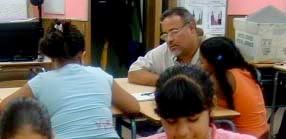
More of the 10/30 "Noah's Ark Delicatessen" talk of some "alta cockas," two Jewish and one Puerto Rican. We were discussing how the new literacy model in NYC schools discourages teachers from extended conversations on subjects. Mini lessons are stressed and kids are supposed to read and research on their own and then "Share" what they've learned with their partners. The problem is that no matter how good a "de-coder or "phonetic master" you are of the written word, you may still lack the worldly experiences necessary to comprehend what you are reading. Good teachers, who know how to make those subjects come alive, are necessary. Miguel Figueroa was one such master, but the brave new world of tc literacy had no use for him. He was capable of taking the most behavior and skill challenged kid and getting them on grade level and beyond, without rigged tests. Max, a retiree, would volunteer in his class to do tutoring and help get those kids into advanced placement junior high schools. He would also subsidize class outings and the the publication of the school's yearbook and pay for a pianist at graduation. Now, in that same school on the Lower East Side, there's no use for him as well. Either classes are out of control or kids are asleep as they spend the required time reading independently. In addition with the new shift towards principal autocracy that same school has hired a retired crony and hack to be a teacher mentor and staff developer. She actually functions more as a spy and as a former union rep is aware of how to stifle democracy. It's similar to retired IRS agents working in the tax divisions of big corporations. Yet Max still funds an after school program at the same place because he cares about the kids and the barely surviving teachers. I don't think I have to spell out for you what the "hump" at 1938 Seward Park HS was. The pictures are scans from my father's yearbook. In one picture I added some graphics of what was occurring in that year. It's a challenge to get the print visible for the small google video interface.
Wednesday, October 24, 2007
Who's Who In Knickerbocker Village History: The Rosenbergs
Perhaps the most famous residents in Knickerbocker Village History. This clip from "Heir To An Execution," has the Rosenberg sons, Michael and Robert Meeropol and Michael's daughter, Ivy (who was responsible for this film) visiting their old apartment. Robert is my age and more than likely would have been in my class at PS 177.
Here's an excellently written review of this excellent 2004 film. It's from Amazon by Dr. Cathy Goodwin:
Overwhelming, sensitive, and understated, February 7, 2005
Fifty years after Julius and Ethel Rosenberg were executed as spies, their granddaughter Ivy Meeropol made this film to understand her grandparents more intimately and humanly.
As a narrator, Meeropol offers charm and charisma. In fact, the whole family seems incredibly normal and, well, nice. Her father and uncle, the Rosenberg sons, survived what many would view as childhood trauma: reading about their parents in the media, visiting their parents in prison, temporary stays in group homes. They were lucky to live in a pre-pop-psych era and even luckier to be adopted by the loving Meeropols.
The Rosenberg sons always believed in the innocence of Julius and Ethel Rosenberg. Through release of formerly classified documents, it's obvious that Julius did some sort of spying. But realistically he probably was a small fish, in over his head, caught up in the government's search for a scapegoat.
Sure, Khruschev mentions the Rosenbergs in his biography, and Julius (but not Ethel) had a couple of code names, but another KGB agent came forward late in his life to say, "They really didn't amount to much." And another accused party member, Miriam Moskowitz, questions the Venona documents when she's interviewed: mostly scraps, she says, except for the Rosenbergs' very complete file.
Ivy's cousin Rachel, a newly-minted lawyer, summarizes the tragedy succinctly. Even if guilty, Ethel and Julius deserved a fair trial, and they didn't get one. The prosecutor engaged in illegal ex parte (out of court) communication with the judge. Ethel's brother David Greenglass has admitted he gave false testimony. The Rosenbergs were accused of accepting a console table with spy equipment; the table turned out to be what they claimed -- an ordinary table they bought at Macy's.
Would the Rosenbergs really have saved their lives if they had turned in their friends? Would they have spent years in prison -- perhaps worse than the death sentence? Was their sacrifice pointless?
The real question should be: Why did they have to make these choices? I recommend watching this DVD along with Capturing the Friedmans, a documentary about a Jewish family accused of child abuse in the 1980's. Once again, district attorneys offered reduced sentences in exchange for accusations. And over and over again, people accused of drug dealing can get reduced sentences only by turning in others. Ironically, those low on the chain often know nobody, or know only undercover agents, so they get longer sentences.
Originally, Ethel was arrested to motivate Julius to confess. Even today prosecutors still attack wives in hopes of "softening" a husband, as in the case of one Enron executive. When the husbands don't crumble, wives who were marginally (or not at all) involved are punished.
So I believe this film raises questions about the logistics of contemporary justice. When faced with long prison terms, many people will say anything to save themselves and their families. They'll invent stories, which will become "evidence" against others, often without independent corroboration. Prosecutors seem to have no qualms about punishing innocent people to nudge the guilty.
And jury verdicts often depend not on logic or reason but on whether they like the defendants. They didn't like Julius and Ethel. They were viewed as hard and detached. But most likely they thought the proceedings were ludicrous -- the table from Macy's was bugged? -- and never expected to be convicted.
Is this what "innocent till proven guilty" means? Do we want to convict criminals based on coerced testimony? Do we want verdicts based on folkloric beliefs about a defendant's demeanor? Those are the real questions for viewers of this documentary.
Labels:
knickerbocker village,
local heroes,
lower east side
Who's Who In Knickerbocker Village History: Whitey Epstein
The reference of Epstein vs. Epstein in Bananas is to Whitey (Sherwood) Epstein, of the famed Epstein's Pharmacy, formerly located on Monroe and Catherine Street. It was one of the stores that was part of Knickerbocker Village.
The following testimony comes from one of the Kuperstein Brothers of Knickerbocker Village (famous in their own right):
"The picture is "Bananas" and the scene is when a lawyer runs into the courtroom(the trial scene of course) and yells "is this the Epstein vs. Epstein case". The line came from Hank(Henry Polansky who was an assistant to the assistant to the associate of Woody Allen on that film. Hank is the brother of Suzie Polansky who is married to Whitey(Sherwood) Epstein-I still can't believe someone would name their sons Edmond, Sherwood and Claude, worse than Harvey, Jerome and Marvin!). By the way Suzie and Hank's father was Abe Polansky who was blacklisted. One of his last films was "Tell Them Willie Boy Is Here" which starred Robert Blake. Hank had absolutely no success making movies including doing porn (guess he was ahead-no pun intended) of his time!
Please rise. Court is now in session.
Judge Seymour Watson presiding.
The People versus Fielding Mellish.
I object, Your Honour.This trial is a travesty.
It's a travesty of a mockery of a sham of a mockery
of two mockeries of a sham. I move for a mistrial. There's not
a single homosexual on that jury. Yes, there is.
Really? Which one? Is it the big guy at the end?
Call the first witness.- And you remember Fielding Mellish?- He's got a record. He was always being picked up
at one demonstration or another.He's a bad apple, a commie.
A New York Jewish intellectual communist crackpot.
l mean, l don't wanna cast no aspersions.Your witness.
Officer Dowd, have you ever had sexual relations with a girl
with really big breasts? Yes, sir. l did.
And how did you find it? Very erotic.
I was... I was just checking.
Swear to tell the truth, the whole
truth and nothing but the truth? l do.
Name? J Edgar Hoover.
Occupation? Head of the FBl. Tell the court why you're dressed like this.
l have many enemies and l rarely go out unless l'm in disguise.
Mr Hoover, in your opinion,is Fielding Mellish a threat
to the security of the United States? Enough to have his phone tapped.
Hello? Hello? Who is this?
Who is this? Hello? Who is this? Can you hold on
one second? Walter, it's for you. All right, l did it! l did it! l'm guilty!
But l couldn't take it any more. She kept tormenting me.
Egging me on.Making a fool of me!
lsn't this Epstein vs Epstein? l'm sorry, l... Sorry.
Sorry to disappoint you, but l've known Fielding for years
and he's a warm, wonderful human being.
Would the clerk read that statement back, please?
''l've known Fielding for years and he is a conniving, dishonest little rat.''
Ok, l just wanted to make sure you were getting it.
You're out of order.- Name?- Sharon Craig.- And you are?- Miss America.
O mio babbino caro Mi piace ?bello, bello
Vo'andare in Porta Rossa A comperarl'anello
Si, si, ci voglio andare E se l'amassi indarno
Tell the court why you think he is a traitor to this country.
l think Mr Mellish is a traitor to this country because his views
are different from the views of the president and others of his kind.
Differences of opinion should be tolerated,
but not when they're too different. Then he becomes a subversive mother.
Call Fielding Mellish.Mr Mellish... what is your nationality?
Well, you might say l have two nationalities.
Are you being coy? Well, l am an American citizen
and also the President of San Marcos.l would not joke with this court
if l were you.- Wouldn't you or couldn't you?- That's enough.
Does the code name Sapphire mean anything to you?
lt doesn't. l swear to God.You swear to God and yet you have no
compunction about teaching evolution.Where were you
on the night of June 3rd? lf you cannot resist disrupting the court,
l order the marshal to bind and gag you. So you followed Fielding Mellish
and overheard him make treasonous remarks about this country?
- l did.- Your witness. Yes, l did.
No. l don't remember. No.
Don't put words in my mouth!
Yes.Yes, it's true. l lied!
Ladies and gentlemen, you will retire for your verdict.
Labels:
knickerbocker village,
local heroes,
lower east side
Monday, October 22, 2007
Who's Who Of Knickerbocker Village: Seth Babits
Seth, who lived at 14 Monroe Street, was a publicist for Palisades Amusement Park in the 1950's-60's. He was also a former gold glove boxer, wrote training manuals and was a classical music aficionado.
Palisades has the rides... Palisades has the fun... Come On Over.
Shows and dancing are free... so's the parking, so gee... Come On Over.
Palisades from coast to coast, where a dime buys the most.
Palisades Amusement Park. Swings all day and after dark.
(bumm, baa, dumm, bumm, bummmm)
Ride the coaster... Get cool... In the waves in the pool.
You'll have fun... so... Come On Over.
(dumm de dum da dum... dum)
Labels:
knickerbocker village,
local heroes,
lower east side
Sunday, October 21, 2007
Who's Who Of Knickerbocker Village: Heinz Norden
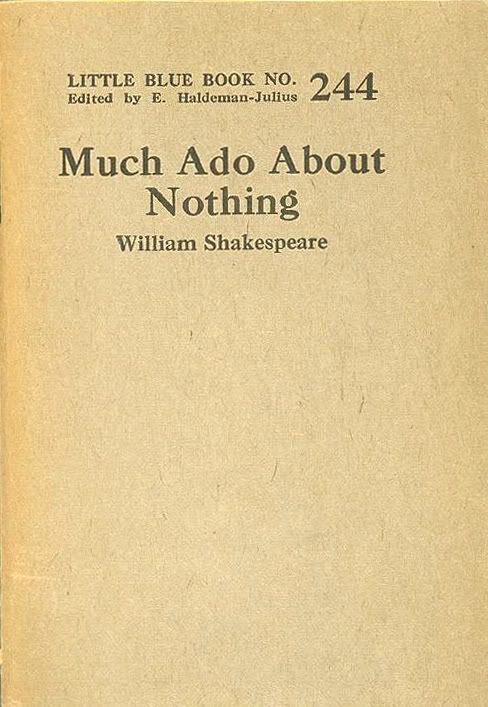
The Heinz Norden who was mentioned as a friend of the Knickerbocker Village suicide victim, Ruth Rundt was quite a guy. Amongst other things he was an author of many of the Little Blue Books from the Heinz Norden. "KTVA Background Story," 194l. Box I, Folder l9, at NYU:
Heinz Norden was born in London, England on December 18, 1905, the son of German parents, Julius and Hermine. The family returned to Germany where Norden received a classical education at a gymnasium. Norden emigrated to the United States in 1924 during the economic depression in Germany. He attended the University of Chicago in 1926 and the New School for Social Research, 1949-50. Norden was married three times: to Helen Ovenden, divorcing in 1926; to Helen Strough Brown, later better known as Helen Lawrenson, social critic and magazine writer, divorcing in 193l. (In 1939 she married Jack Lawrenson, co-founder of the National Maritime Union.) His marriage to violinist Clair Harper in 1944 produced a child, Barbara (b. 1947) who lives in London.
Norden had several careers; he was an editor, a translator from the German, a writer, an administrator for the New York City Housing Authority, and an advertising executive. He was an author for the "Little Blue Books" a series dedicated to workers education on a mass scale, published by Haldeman-Julius in the late 1920s. Between 1935 and 1975 he translated over fifty volumes from the German including important works on current history, politics, and art history. Often his sister Ruth Norden (1906-77) was a co-translator. For his translation of Max Friedlander's fourteen volume work, Early Netherlandish Painting, Norden received the insignia of Chevalier de l'Ordre de Leopold ll, conferred by Badouin King of the Belgians on December 1977. A full list of his writings and translations are published in Contemporary Authors, Volume 53-56.
His work organizing grass-roots movements in which, with others, he tried to educate, agitate, and mobilize a community to understand its problems and power was entirely voluntary. Norden described himself as an "unlabeled radical." Claire Norden characterized him as a "Jeffersonian Democrat." Others who knew him or his work describe him as quick, dynamic, a good and efficient organizer involved in a number of liberal and left causes, a man with political savvy, somewhat of a raconteur.
Norden first became active for tenant's rights when he moved into the newly completed middle-income apartment complex Knickerbocker Village in 1934. Because of poor management from the start, the Knickerbocker tenants were motivated to call a rent strike. It was successful and a settlement was reached in favor of the tenants. They formed the Knickerbocker Village Tenant's Association (KVTA) with Norden as President. The KVTA, one of the first tenant's unions, published a newsletter which lasted into the early 1940s and organized discussion groups and various clubs for the tenants. Of this experience Norden wrote: "Residents who had never had opportunity for self-expression through community activity felt their lives infinitely enriched."
At this time only a handful of isolated tenants groups existed in New York and there was clearly a need to unite all tenants to fight against discrimination in housing, unfair eviction, lack of repairs and direct maintenance, poor heat and water supply, fire-trap housing, and for rent control, government sponsored slum clearance and low-cost housing. Later they had to include a fight against paternalistic management in government housing projects.
With his KVTA experience Norden became one of the founders and leaders in 1936 of the Citywide Tenants Council (CWTC), New York's first permanent coalition of neighborhood tenant's groups (1936-1943). Norden was the executive secretary and later chairperson of the CWTC. He also wrote the column "On the Housing Front" which appeared in tenant and trade union publications. Joseph Spencer wrote of CWTC: "With limited resources and personnel, they succeeded in establishing a stable movement capable of assisting individual families at the grass-roots level and presenting a tenant perspective on long-standing problems and remedies such as public housing and urban redevelopment." Mayor Fiorello LaGuardia and Mrs. Eleanor Roosevelt lent their names as honorary sponsors.
Norden was involved with other organizations too which promoted the cause of tenants. He was vice-president of the Committee to Aid Tenants' Organizations. Its motto was "Help the Slum Dwellers to Help Themselves," and was formed to find funding for CWTC and its affiliates. It also organized a study group for applicants taking the Civil Service examinations for the recently formed Housing Authority.
Norden also belonged to the Citizen's Housing Council, where he presented tenants views to housing experts, architects, social workers, and real-estate people. The CWTC was the forerunner of the present day Metropolitan Council on Housing with many of the same activists from the earlier group working in it. Between the two groups there was almost a decade without tenant organizing because of McCarthyite attacks on the tenant's movement. Norden left the CWTC in 194l when he received the highest grade on the Civil Service housing examination and was appointed second-in-charge of the Application Office of the New York Housing Authority. The post precluded work in grass-roots tenants groups.
Norden served in the United States Army for seven years, 194l-47 and rose from the ranks to the rank of major. He was in G2 Army Intelligence in Germany after World War II, editing the official U.S. German language magazine Heute in Munich. At this time his previous work with tenant organizing resulted in his being persecuted as a `red' and he was dismissed from Heute. He successfully contested his treatment in the federal courts. After this experience he wrote the unpublished manuscript, "How I Overthrew the Government of the United States, or The F.B. & I" in 1950.
Norden entered into advertising and editorial work which took him to Europe. He settled in London in 196l. There, in 1968 he helped found "Group 68, Americans in Britain for United States Withdrawal from Southeast Asia,"(1968-74). It was the off-shoot of a committee formed to support the election of Senator Eugene McCarthy for President. Norden was chairperson from 1968-73. "Group 68" staged many demonstrations, distributed leaflets, held film showings, organized meetings with distinguished speakers, and disseminated information against U.S. involvement in Vietnam. "Group 68" supported draft and war resisters, including two American servicemen; one was courtmarshalled for participating in an Anti-War protest (197l) and the other for refusing to obey a direct order to fly a B-52 bombing mission over Hanoi (1973). It also had a liason relationship with other peace organizations, draft-resister organizations and civil-liberties groups. In 1972-73 they sponsored, along with l50 other groups, the "Vietnam Vigil to End the War," a year-long, daily, noon hour protest in front of the U.S. Embassy in London.
"Group 68" changed its name to "Concerned Americans Abroad," (1974-78) after the Vietnam War to work on other issues of concern. It campaigned for the complete withdrawal of U.S. arms and personnel supporting the regimes of Thieu and Lon Nol, for release of 200,000 political prisoners in Saigon jails, universal, unconditional amnesty for American war resisters, for abolition of the CIA and the impeachment of Richard Nixon. It placed an ad in the International New York Herald Tribune in 1974, asking Americans to write to the House Judiciary Committee in favor of impeachment. It was against the Criminal Justice Reform Bill S.l, and the deportation of Philip Agee, former officer of the C.I.A., and Marc Hosenball, American investigative reporter. "Group 68" and "Concerned Americans Abroad" (CAA) cooperated with other committees: "Democrats Abroad (UK) provided information to Americans abroad who were disfranchised because of absentee ballot red tape. A CAA member and draft resister ran for election as a delegate to the 1976 Democratic Convention.
In later life, Heinz and Claire ran a small business dealing in pharmaceutical antiques. Heinz Norden was killed in a traffic accident while crossing a London street in 1978.
Labels:
knickerbocker village,
local heroes,
lower east side
Saturday, October 20, 2007
Who's Who Of Knickerbocker Village: Joseph Selly
Joseph Selly was the Board President during the Knickerbocker Village Strike in 1935.
The picture is of a Joe Selly, who plays guitar for the Klezmer Mountain Boys. Perhaps a relative? About Joseph Selly, from his 1991 NY Times obituary:
"Joseph Selly, 85, Dies; Former Labor Leader Joseph P. Selly, a former labor leader in New York, died on Wednesday at Northridge Medical Center in Fort Lauderdale, Fla. He was 85 years old and lived in Plantation, Fla. He died of cancer, a family spokesman said. Mr. Selly, who was a native New Yorker, was an architect for the city. He later helped organize one of the first tenants associations in a major housing development, Knickerbocker Village, and became its president. In the early 1930's he became a union organizer and was elected president of the American Communications Association. He was issued a charter by John L. Lewis, head of the Congress of Industrial Organizations, to organize communications workers in the United States. Under Mr. Selly, membership grew to 40,000. After World War II, the association became a target of the Senate Internal Security subcommittee that was investigating "subversives" in the labor movement. It was also investigated in the 1950's, and the association's membership steadily declined until it fell below 4,000. It merged in 1966 with the International Brotherhood of Teamsters. Mr. Selly remained a part of the union leadership until he retired in 1976.He is survived by his wife, the former Anne Claiborne; a brother, Abner, of Plantation, and a grandson.
Labels:
knickerbocker village,
local heroes,
lower east side
Who's Who Of Knickerbocker Village: Edwin Berry Burghum
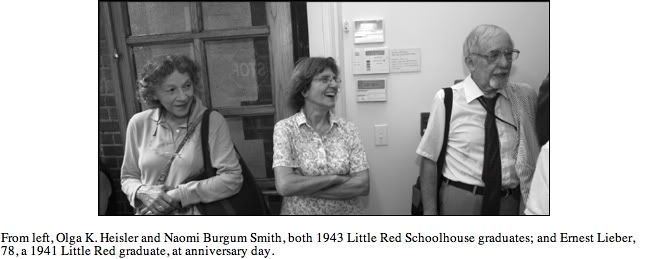
That's a picture of Naomi, Edwin's daughter as she appeared in early this September at the Little Red Schoolhouse Anniversary Day (from the Villager)
Edwin was the editor of the KV newspaper during the tenant strike.
This comes from the Burghum Geneaological Site. The author, in my view, doesn't display the proper outrage as to what happened to Edwin Burhgum and his family as a result of the McCarthy Witch Hunt:
Edwin Berry Burgum was born in Concord on 4th March 1894, the first child of Edwin Gannell Burgum and his wife Addie. In 1915 he graduated from Dartmouth College. Between 1916 and 1920, he worked as an Instructor in English at the University of Pittsburgh. Meanwhile he had time to graduate from Harvard University in 1917. From 1920 to 1923, Berry became Associate Professor of English at the University of Illinois and, in 1924, he became Associate Professor of English at New York University.
On March 22nd 1927, Edwin Berry Burgum married Mildred Rabinowich in New York. Berry was thirty-three years old and Mildred was twenty-one. Berry wrote several books and articles primarily in the field of literary criticism. In 1947 he wrote "The Novel and the World's Dilemma", a book dedicated to his wife and daughter. Others written or edited by him included "The Literary Career of Edward Bulwer, Lord Lytton" (1926), "The New Criticism" (1930), "Ulysses and the Impasse of Individualism" (1941), "William Faulkner's Patterns of American Decadence" and "The Works of James Joyce" (1947). He also edited or contributed to several literary magazines including "Science and Society" and "Accent". In the Spring 1943 edition of Accent, Berry contributed an article entitled "Kafka and the Bankruptcy of Faith."
Dr Edwin Berry Burgum remained at New York University for twenty-eight years. Between 1936 and 1938, he had been president of the College Teachers Union of New York City. In October 1952, an article appeared in the pages of the New York Times. The headline read- "Five Teachers Called By Senate Inquiry." The piece stated that five individuals, including a faculty member at New York University, had been subpoenaed to appear before the Senate sub-committee that was investigating communism in American schools. The faculty member at N.Y.U. was Dr. Edwin Berry Burgum, Associate Professor of English. This was the time of McCarthyism and the communist witch-hunts. Berry appeared before the McCarran Committee on Columbus Day, October 13th 1952. Among the committee members were Senators Ferguson of Michigan and Willis Smith of North Carolina.
Berry, himself, did not confirm or deny his alleged Marxist beliefs. Instead he spoke of freedom and his right under the laws of the American Constitution. Berry, like many other academics at the time, felt a fundamental principle was at stake and invoked both the First and the Fifth Amendments for seventeen of the questions that were put before him. Over the next few months and years, the columns of the New York Times revealed more of the story. Another headline, this time in the New York Times dated October 14th 1952 read - "Ex-Red Describes City Teacher Blocs". A photograph of Berry printed with the story read- "Suspended: Edwin B. Burgum, Associate Professor at New York University, was relieved of his duties yesterday after he refused to tell a Senate sub-committee investigating communism in schools whether he was or had been in the Communist Party." The article spoke of "two hundred college students and other demonstrators marching in front of the Courthouse carrying signs and chanting...We want our professors back."
The Evening News, a publication of Washington Square College, part of New York University, carried the headline - "Student Groups Protest Suspension of Dr. Burgum". A small editorial on the front page said - "The Evening News fully supports Dr Burgum's postion and reiterates its request that the University administration reinstate him to his teaching post." Berry appealled against his suspension and a hearing was convened before the New York University Faculty Committee. Twelve meetings took place, each three hours long, during the spring of 1953. Berry was represented by legal counsel and attempted to justify the principles he felt were at stake.
During all this turmoil, Berry continued with his other activities. The National Council of the Arts, Sciences and Professions, a group founded in part on academic freedom, began a magazine called "The Contemporary Reader". Its first issue was published in March 1953; its editor was Edwin Berry Burgum. Berry wrote... "The Contemporary Reader is being published in response to an increasing dissatisfaction on the part of many writers and readers with our current American literature and their increasing demand for the restoration and promotion of a genuinely democratic literature in our country." In April 1953, a New York Times headline read - "NYU Professor Tied To Reds is Dismissed". Having been suspended, Berry, who had been a member of the New York University faculty from September 1, 1924 through April 30, 1953, was fired from his job. On May 5th the story continued with a headline "NYU Teacher Silent On Query If He's Red". On Wednesday July 1st, 1953, Berry appeared before the U.S. Senate, Senate Permanent Subcommittee on Investigations of the Committee on Government Operations. Click here for the text of Berry's testimony to that Hearing.
In February 1954, a paper was published relating to Edwin Berry Burgum. It was called "Academic Freedom and New York University: the case of Professor Edwin Berry Burgum". It was published by the Committee for the Reinstatement of Professor Burgum. I have to say the arguements for "Academic Freedom" are long and extremely complex, running to seven hard chapters and six appendices; a total of 80 pages!
Four years later, the case was still going on. Still in the New York Times, this time dated Thusday June 7th, 1956. The headline read - "26 Who Signed Brief Called Communists". It said "The chairman of the House Un-American Activities Committee denounced as Communists today the 26 persons who had signed a brief to the Supreme Court." One of those signatories was Edwin Berry Burgum. Despite campaigns from lawers, teachers and unions, Berry was never reinstated. Sadly, the pressure and public disgrace may have proved too much for Berry's wife, Mildred. In July 1957, she took her own life. Mildred had been a psychotherapist and, after training, Berry became a lay analyst and psychotherapist, going on to take over his wife's practice.
Edwin Berry Burgum died on July 2nd 1979, following a long illness. He was 85. The columns of the New York Times had one more announcement about Berry - "BURGUM, Edwin Berry, beloved husband of the late Mildred, devoted father of Naomi, dear grandfather of Tony."
My search for Naomi is described elsewhere. She now works as a teacher and has a son. I do not know if Dr. Edwin Berry Burgum ever was a member of the Communist Party. I do not know whether it really matters now. Berry's politics do appear to have been left-wing and were, at least in part, a reaction to the facism that had developed in Europe during the 1930's and 1940's. On the other hand, he may well have been as intolerant of the "right-wing", as they were of him. What I do know is that Berry's long and distinguished career was destroyed and his home life shattered.
Joe Joseph, a friend of Berrys, has shared an apartment with him for several years during the 1950's and 1960's and said - "To the best of my knowledge, Berry Burgum was not a member of the Communist Party USA. He took the 5th Amendment (that's the right to silence) as a matter of principle." In a letter, Joe Joesph described to me how Berry "....took over his wife's practice. In his usual thoughtfulness, he had evening hours for those who could not come during the day and his fees accommodated those who could not afford much money." Joe's letter about Berry is both moving and personal and reflects the close friendship of the two men."
Labels:
knickerbocker village,
local heroes,
lower east side
Who's Who Of Knickerbocker Village: Harold Baumbach
I did research on some of the leaders of the Rent Strike of 1935. Very interesting.
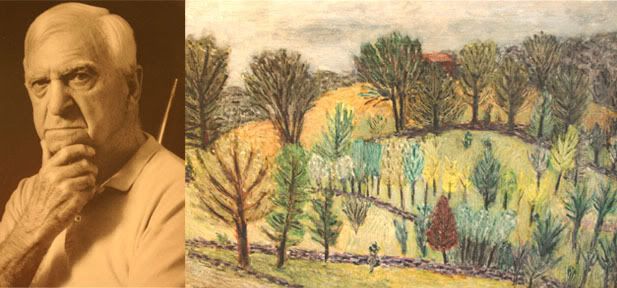
"HAROLD BAUMBACH (1903 - 2002)
American master artist, Harold Baumbach was a well-known painter and printmaker, whose style ranged from figurative to abstract. The son of an upholsterer, on the Lower East Side, New York, who did not want him to be an artist, Baumbach basically taught himself to paint. He first made a mark during the late 1930's as a figurative painter in the style of Bonnard and Vuillard, doing densely patterned street scenes and Brooklyn interiors. During summers he painted landscapes, mostly in upstate New York and New England, then spent vacations in Provincetown, Massachusetts, a thriving art community where his close friends and fellow-artists, Milton Avery and Mark Rothko also vacationed. Over time, Baumbach's work became increasingly abstract, but figures - generic card players, people sitting in parks, cows in fields - were always present as dreamlike devices for explorations in color and spatial relations.
"His real subject was not the world outside of himself but the stuff and texture and light of paint," a review in 1975, in ART NEWS magazine explained. "He always turned everything he saw into his own patterned and textured imagery."
After an eye operation in the late 1980's he became legally blind, trying to paint for two years after that from memory before quitting. In 1992, he had a retrospective the same year at Brooklyn College Museum. His works are also held by several important American museums. He was frequently described as an intimist and was loosely linked with Avery during the 1940's as a modern American painter, but he never belonged to any group, being restless and without a signature style. Strong willed, allergic to fashion, even to success, he persisted in going his own way, refusing to sell to prospective buyers he thought did not admire the work properly and breaking off relations with galleries usually after only a show or two. He had 24 one-man shows in New York. From 1946 to 1966, he also taught painting at the Brooklyn College, New York."
Labels:
knickerbocker village,
local heroes,
lower east side
Tuesday, October 16, 2007
Local Heroes: Rafael Guzman
I learned recently that a former colleague of mine Rafael Guzman passed away. He was only 48. He was a lower east side boy and a wonderful warm and loving teacher. He had a "Simple Gift." He usually had a class of 5th grade bilingual and English language learners. He would spend blocks of time explaining current events and history to his kids, something that is taboo these days. He believed in and was allowed to do project based learning by an old guard principal who believed in that approach. Those principals are ancient history now.
Two summers ago while I worked on developing ideas and materials for a learning fair that was to never be, I "field tested" some of it on his summer school class. It was a lot of fun. To show his appreciation Rafael bought me my first Guayabera shirt. I found some pictures of his class working on projects that summer and I made them into a slide show.
Local Heroes: Michael Winerip
Mission: Making a Love of Reading Happen
By MICHAEL WINERIP
MY youngest of four is now in eighth grade, and recently I attended my final back-to-school night at our middle school. I won’t miss it. I always leave so discouraged.
Each year it seems I hear less and less about what books the students will read and more and more about how they’ll be prepared for the state tests. If my wife or I don’t raise our hands and ask “What novels?” it usually doesn’t come up.
I was not surprised by the recent discouraging results for American students on the national reading tests. Since 2002, when the federal No Child Left Behind law took effect, with its emphasis on standardized testing, student reading scores have made little progress in elementary school and declined in eighth grade.
Several years ago, just as New York’s testing program was being implemented, my twins were in seventh grade and came home with letters saying that a new reading course was being added. I was delighted to see some innovation. I assumed they’d spend the year making their way through the rich selection of middle school and young adult novels and nonfiction books out there. Not until back-to-school night did I realize what was actually going on. The “reading” teacher had a stack of workbooks. They were going to be reading short essays and answering questions: a full year of test prep.
It falls to parents to make a love of reading happen. And though I have labored long and hard at this, I haven’t found it easy, particularly as my kids get older.
From early on, we read together every night. Sometimes Storyman showed up to do the reading — a guy wearing red BVD’s, a beach towel cape and a Zorro mask who appeared to be Dad, but was never confirmed to be. (“We know it’s you, Dad, come on, we really do, admit it.”)
For years I invoked the 20-minutes-a-night reading rule, which was particularly torturous to enforce in the summer. Even into middle school, I’d read aloud to them. When I was given the first Harry Potter book to review for The Times, I read it to them, to get the experts’ opinion.
Mornings, before school, I don’t allow them to watch ESPN “SportsCenter,” so my jock son has developed the habit of reading the sports pages.
On long trips, like the annual 13-hour drive we made for years to Grandma and Grandpa’s cottage in Michigan, we didn’t let them watch movies in the van or listen to music on their portable CD players. We got books on tape from the library, and while they moaned to high heaven, I can still remember driving through the night on Interstate 80 in Pennsylvania and listening to Jerry Spinelli’s novel about an amazing boy named “Maniac McGee,” who could run like the wind, wasn’t afraid to live by himself and somehow had grown up totally oblivious of people’s race. My four sat in the dark Astro van, not making a sound. When I thought they were asleep, I turned it off, but they yelled, “Come on, Dad, we want to keep listening!”
I don’t think it matters so much what they read, as long as they keep at it. I like the droll, macabre, literary quality of the Lemony Snicket series, and I don’t like the bratty, rich Westchester girls of the Clique series, but either way, I’m pleased when my daughter asks to go back to the bookstore because the newest one is out. My own reading tastes weren’t much at her age. I read mostly sports novels, and my favorites were about mediocre athletes who rose up at the crucial moment to win the game.
My wife and I have subscribed to magazines of all sorts for them. Some I like, some I don’t: Teen Vogue, Mad magazine, American Girl, ESPN, Sports Illustrated. The one day each month I can be sure the boys will spend several hours reading is when Surfer and Surfing magazines arrive.
I try to find a book that will match their interests and then drop it in their general vicinity. (This can mean picking it up and dropping it several times.)
At best, my success has been middling. Three of the four read on their own, but it’s not steady; it comes in bursts. Last summer, my least academic child, who was working as a lifeguard six days a week, 10 hours a day, came home and sat for hours, deep into the night, rereading the six Harry Potters in preparation for the seventh. On his own he ordered the new one, picked it up at midnight and devoured it in a few days. Over the summer, my oldest read “Anna Karenina” to get ahead for the Russian lit course that he’s taking this fall at college.
For the last few weeks, before bed, I’ve been reading to my 13-year-old daughter, whose life is way too full of long, exhausting, overprogrammed days. We’re rereading her old picture books: “The Lorax” by Dr. Seuss; “A Bad Case of Stripes” by David Shannon; “The Seven Silly Eaters” by Mary Ann Hoberman. They’re relaxing and fun, and without going too deep into it, I think we’re both pining for a simpler, younger time.
The goal is to make them lifelong readers and therefore lifelong learners. I was a late bloomer and, I’m ashamed to say, didn’t make a fraction of what I should have of my college education. Though I took several history courses, I never understood basic things, like the Civil War. Then, in middle age, I stumbled upon “The Killer Angels,” by Michael Shaara, the Pulitzer Prize-winning historical novel on the Battle of Gettysburg. For the first time I felt what the Civil War was and suddenly had an urgent need to know more, consuming a couple dozen histories, biographies and memoirs over the next few years.
Recently I made a trip south with my twins to look at colleges. We were in Charleston, S.C., on a Friday night. The streets were full of young women from the College of Charleston in summer dresses and young men from the Citadel in their military dress whites and grays. It was something right out of a book.
Two books, actually, both by Pat Conroy. When we got home, I dropped “The Lords of Discipline” near the twin interested in military stuff, and “My Losing Season” near the jock twin.
It’s been weeks and the books sit in their original spots, unopened. But parenting is sometimes a war of attrition, and when it comes to reading, like Colonel Chamberlain at Gettysburg, General Grant at Vicksburg and General Sherman on his march to Atlanta, I believe the cause to be worth the fight, and am determined not to be deterred.
Wednesday, May 23, 2007
Eugene Bullard
I recently watched the DVD of Flyboys. Despite poor reviews I found the film had redeeming qualities. It seemed that the character of the black pilot Skinner was based on Bullard. Research bore that out. I also found that Bullard lived in Harlem in his later years at 80 East 116th Street. Amazingly, with all the renovation that neighborhood has undergone the building is still there. That's a picture of it above. I would think the building deserves a plaque. Here's more on Eugene from wikipedia:
Eugene Bullard (9 October 1894 – 12 October 1961) was the first African-American military pilot.
He was born Eugene Jacques Bullard in Columbus, Georgia, in the United States. His father was known as "Big Chief Ox" and his mother was a Creek Indian; together, they had ten children. Bullard stowed away on a ship bound for Scotland to escape racial discrimination (he later claimed to have had witnessed his father's narrow escape from lynching as a child).
While in the United Kingdom he worked as a boxer and also worked in a music hall. On a trip to Paris he decided to stay and joined the French Foreign Legion upon the outbreak of World War I in 1914. Wounded in the 1916 battles around Verdun and awarded the Croix de Guerre, Bullard transferred to the Lafayette Flying Corps in the French Aéronautique Militaire and was eventually assigned to 93 Spad Squadron on 27 August 1917, where he flew some 20 missions and is thought to have shot down two enemy aircraft.
With the entry of the United States into the war the US Army Air Service convened a medical board in August 1917 for the purpose of recruiting Americans serving in the Lafayette Flying Corps. Although he passed the medical examination, Bullard was not accepted into American service because blacks were barred from flying in U.S. service at that time. Bullard was discharged from the French Air Force after fighting with another officer while off-duty and was transferred to the 170th (French) Infantry Regiment on January 11, 1918, where he served until the Armistice.
Following the end of the war, Bullard remained in Paris. He began working in nightclubs and eventually owned his own establishment. He married the daughter of a French countess, but the marriage soon ended in divorce, with Bullard taking custody of their two daughters. His work in nightclubs brought him many famous friends, among them Josephine Baker, Louis Armstrong and Langston Hughes. At the outbreak of World War II in 1939, Bullard, who spoke German, readily agreed to a request from the French to spy on German agents frequenting his club in Paris.
After the German invasion of the French Third Republic in 1940, Bullard took his daughters and fled south from Paris. In Orléans he joined a group of soldiers defending the city and suffered a spinal wound in the fighting. He was helped to flee to Spain by a French spy, and in July 1940 he returned to the United States.
Bullard spent some time in a hospital in New York for his spinal injury, but he never fully recovered. During and after World War II, when seeking work in the United States, he found that the fame he enjoyed in France had not followed him to New York. He worked in a variety of occupations, as a perfume salesman, a security guard, and as an interpreter for Louis Armstrong, but his back injury severely restricted his activities. For a time he attempted to regain his nightclub in Paris, but his property had been destroyed during the Nazi occupation, and he received a financial settlement from the French government which allowed him to purchase an apartment in New York’s Harlem district.
In the 1950s, Bullard was a relative stranger in his own homeland. His daughters had married, and he lived alone in his apartment, which was decorated with pictures of the famous people he had known, and with a framed case containing his 15 French war medals. His final job was as an elevator operator at the Rockefeller Center, where his fame as the “Black Swallow of Death” was unknown.
Wednesday, April 11, 2007
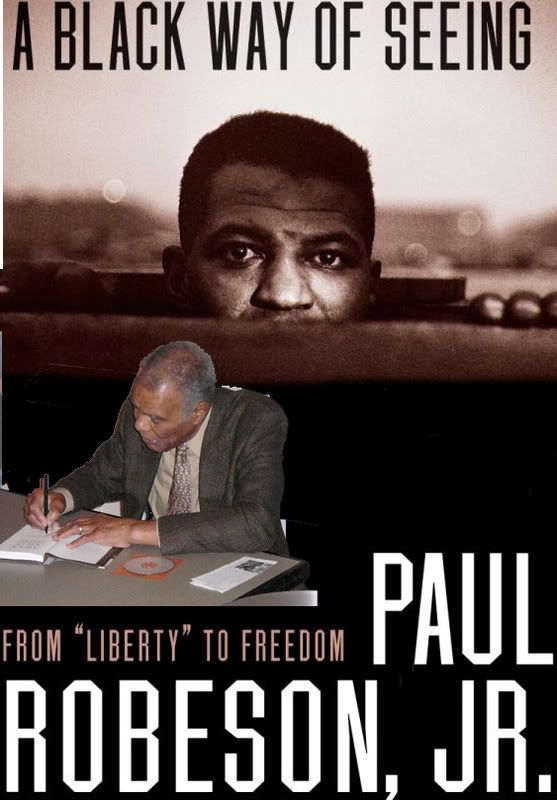
Paul Robeson: The Tallest Tree In The Forest
Monday, April 09, 2007
Give Us Each Day Our Daily Pan
Thursday, April 05, 2007
No Pasaran
video removed
There is a new Lincoln Brigade exhibit at the Museum of the City of New York and a new book out about the Brigade
"No men ever entered the earth more honorably than those who died in Spain," wrote Ernest Hemingway in 1939. Between the years of 1936-1939, an estimated 1,000 Americans, many from New York, died fighting to protect the elected government of the Spanish Republic against a rebellion led by General Francisco Franco and backed by Hitler and Mussolini. Facing Fascism: New York and the Spanish Civil War examines the role that New Yorkers played in the conflict, as well as the political and social ideologies that motivated them to participate in activities ranging from rallying support, fundraising, and relief aid, to fighting--and sometimes dying--on the front lines in Spain. The stories of these New Yorkers will be told through photographs, letters, uniforms, weapons, and an array of personal and historical memorabilia.
the soundtrack, by John McCutcheon
From the farms, from the cities, from every land
Came the Abe Lincoln Brigade
With a dream in their hearts, with a gun in their hands
The Abraham Lincoln Brigade
No pasaran, no pasaran
So sang the Abe Lincoln Brigade
Across the years and the oceans
We still sing the song
Of the Abraham Lincoln Brigade
Cries from the cities, shouts from the hills
The Abraham Lincoln Brigade
The fire in the hearts that is warming us still
The Abraham Lincoln Brigade
No pasaran, no pasaran
So sang the Abe Lincoln Brigade
Across the years and the oceans
We still sing the song
Of the Abraham Lincoln Brigade
All the teachers, the artists
The workers who died
Oh the Abe Lincoln Brigade
Their stories still thrill me
We work side by side
With the Abraham Lincoln Brigade
No pasaran, no pasaran
So sang the Abe Lincoln Brigade
Across the years and the oceans
We still sing the song
The Abraham Lincoln Brigade
So raise glasses and voices
Give them a toast
Of the Abe Lincoln Brigade
Those who die best are the ones who live most
Like the Abraham Lincoln Brigade
No pasaran, no pasaran
So sang the Abe Lincoln Brigade
Across the years and the oceans
We still sing the song
Of the Abraham Lincoln Brigade
No pasaran, no pasaran
So sang the the Abe Lincoln Brigade
Across the years and the oceans
We still sing the song
Of the Abraham Lincoln Brigade
There is a new Lincoln Brigade exhibit at the Museum of the City of New York and a new book out about the Brigade
"No men ever entered the earth more honorably than those who died in Spain," wrote Ernest Hemingway in 1939. Between the years of 1936-1939, an estimated 1,000 Americans, many from New York, died fighting to protect the elected government of the Spanish Republic against a rebellion led by General Francisco Franco and backed by Hitler and Mussolini. Facing Fascism: New York and the Spanish Civil War examines the role that New Yorkers played in the conflict, as well as the political and social ideologies that motivated them to participate in activities ranging from rallying support, fundraising, and relief aid, to fighting--and sometimes dying--on the front lines in Spain. The stories of these New Yorkers will be told through photographs, letters, uniforms, weapons, and an array of personal and historical memorabilia.
the soundtrack, by John McCutcheon
From the farms, from the cities, from every land
Came the Abe Lincoln Brigade
With a dream in their hearts, with a gun in their hands
The Abraham Lincoln Brigade
No pasaran, no pasaran
So sang the Abe Lincoln Brigade
Across the years and the oceans
We still sing the song
Of the Abraham Lincoln Brigade
Cries from the cities, shouts from the hills
The Abraham Lincoln Brigade
The fire in the hearts that is warming us still
The Abraham Lincoln Brigade
No pasaran, no pasaran
So sang the Abe Lincoln Brigade
Across the years and the oceans
We still sing the song
Of the Abraham Lincoln Brigade
All the teachers, the artists
The workers who died
Oh the Abe Lincoln Brigade
Their stories still thrill me
We work side by side
With the Abraham Lincoln Brigade
No pasaran, no pasaran
So sang the Abe Lincoln Brigade
Across the years and the oceans
We still sing the song
The Abraham Lincoln Brigade
So raise glasses and voices
Give them a toast
Of the Abe Lincoln Brigade
Those who die best are the ones who live most
Like the Abraham Lincoln Brigade
No pasaran, no pasaran
So sang the Abe Lincoln Brigade
Across the years and the oceans
We still sing the song
Of the Abraham Lincoln Brigade
No pasaran, no pasaran
So sang the the Abe Lincoln Brigade
Across the years and the oceans
We still sing the song
Of the Abraham Lincoln Brigade
Monday, March 12, 2007
Sugartime 2
Here I put together images I found ( source: www.antekprizering.com/robinson.html) of Sugar Ray with an interview he did with BBC
removed
removed
Wednesday, March 07, 2007
Local Hero: Daniel Garodnick
Council Assails Mayor’s Plan to Give Principals More Autonomy By DAVID M. HERSZENHORN
City lawmakers yesterday harshly criticized the Bloomberg administration’s plans to give many more public school principals wider autonomy in September, telling a top city schools official that there was not enough evidence of success among 322 principals who received additional authority this academic year to justify expanding the program.
At a hearing of the City Council Education Committee, lawmakers spent more than two hours grilling the official, Eric Nadelstern, who is the chief executive of the school system’s empowerment initiative. Under that initiative, principals who agree to meet student performance targets are largely freed from the oversight of superintendents.
“We’re still looking for results,” said Councilman John Liu, a Queens Democrat, demanding that Mr. Nadelstern provide data supporting his claims of improved attendance and graduation rates in the empowerment schools. “You keep touting the success, and we don’t see the success.”
Mr. Nadelstern, a 35-year veteran of the school system, said in his testimony that 29 schools that participated in a pilot program begun in 2004 had better attendance and higher graduation rates, and that schools and principals were better off with principals having more control. “In my 17 years as a principal, I desperately strove to find the empowerment we are now offering,” he said.
But even as council members complained that the administration was moving too quickly to expand principals’ autonomy, Schools Chancellor Joel I. Klein announced a major step yesterday toward holding principals accountable for the results in their schools: the awarding of a five-year, $80 million contract to I.B.M. to develop a vast new storehouse of educational data to track the individual progress of the city’s nearly 1.1 million students.
The new program, the Achievement Reporting and Innovation System, which officials said would be up and running by September, will be used to give each school a letter grade, A to F, and will show whether principals are meeting their performance targets. Under the empowerment program, principals who fail to meet their targets can be removed from their schools, though state tenure law could make it extremely difficult for the administration to fire them.
The new system will track scores on the state’s annual reading and math exams as well as the results of additional exams in each subject to gauge student achievement at regular intervals during the academic year, and, officials said, will allow educators to make complex analyses of student strengths and weaknesses.
In September 2008, the system will be made available to parents, giving them a powerful tool to track their child’s academic progress. “The ARIS system will play a very crucial role,” said James Liebman, the school system’s chief accountability officer, “by empowering principals and teachers and then students and parents as well.”
In announcing the I.B.M. contract, which was awarded early in January, Mr. Liebman emphasized that the administration had received bids from 19 major technology companies — an acknowledgment of criticism the department has faced that it awards too many contracts without the competitive bidding normally required of city agencies.
Such no-bid contracts are permitted under state law, but the administration has come under heavy criticism, particularly over a $15.6 million deal with the consulting firm Alvarez & Marsal, which is working to restructure the school system’s financial operations. As a cost savings measure, the firm proposed changes to school bus routes that infuriated parents when they took effect in January.
At yesterday’s Council hearing, the Education Committee chairman, Councilman Robert Jackson, invoked the bus problems as part of his criticism of the department’s overall performance and as a reason for slowing down any additional widening of principals’ autonomy.
“I’m not confident in the D.O.E.’s ability to make such large-scale reform,” Mr. Jackson said. “All we have to do is look back a month ago to the school bus fiasco.”
In a letter to Chancellor Klein last week, another Education Committee member, Councilman Daniel R. Garodnick, a Manhattan Democrat, raised similar concerns. “If the recent school bus route changes have taught us anything, it is that we should not sacrifice careful implementation in pursuit of bold reforms,” he wrote.
At yesterday’s hearing, Mr. Garodnick said that principals were not being given enough information to choose from among three different types of support organizations that they are being offered in place of traditional superintendents for the next school year.
Mr. Garodnick also said that council members were concerned about the “sheer absence of consultation with us and with parents.”
Labels:
DOE rants (aka skata nafas),
local heroes,
politics
Subscribe to:
Posts (Atom)